
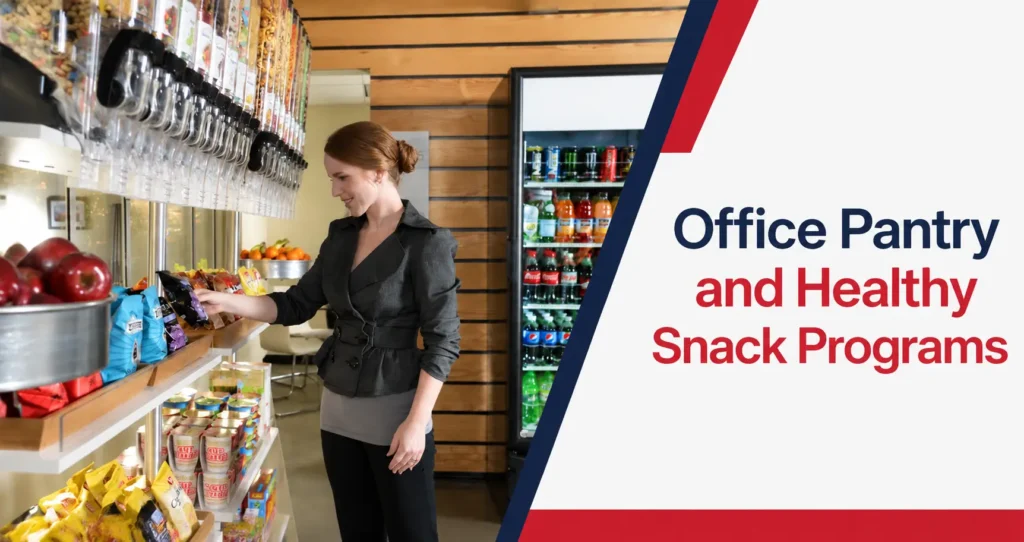
A well-planned break room can become an important part of the workplace experience. Employees spend long hours at their jobs, and having convenient access to snacks, beverages, and light meals can make the workday easier while reducing the time businesses spend managing refreshment supplies internally.
An office pantry service provides a managed solution for companies that want to offer workplace refreshments without handling purchasing, inventory tracking, restocking, and product organization themselves. Instead of assigning these responsibilities to office managers or employees, businesses can work with a refreshment provider that helps design, maintain, and adjust the program based on actual workplace needs.
Unlike traditional vending, office pantry programs are usually employer-sponsored. Employees can access approved snacks and beverages without making individual purchases. These programs can include a combination of familiar snacks, healthy alternatives, fresh food options, beverages, coffee supplies, and products designed around different employee preferences.
For businesses throughout St. Charles County and surrounding Missouri communities, an effective pantry program should be built around the workplace itself. Employee headcount, work schedules, available space, budget, and company culture all influence what type of setup will work best. A small office may only need a simple snack area with beverages and coffee supplies, while a larger workplace may require refrigerated storage, multiple stocking locations, and more frequent service visits.
This guide explains how office pantry services work, what products can be included, how office snack delivery is managed, and how businesses can create a workplace snack program that remains useful over time.
What Is an Office Pantry Service?
An office pantry service is a managed workplace refreshment program where an employer provides snacks, drinks, and other food products for employees. The service provider helps plan the assortment, supply products, organize the pantry area, and maintain inventory based on workplace demand.
A professional pantry program is designed to reduce the daily responsibilities associated with managing workplace refreshments. Instead of employees or office managers purchasing supplies, monitoring inventory levels, and replacing products when they run out, the provider manages the ongoing service process.
Depending on the workplace, an office pantry may include a combination of packaged snacks, beverages, breakfast items, fresh food, coffee supplies, and products that support different dietary preferences. The exact selection depends on employee expectations, workplace size, available storage, and the company’s refreshment goals.
Best Vending offers managed office pantry service for businesses throughout St. Charles County and surrounding Missouri communities.
How an Office Pantry Program Works
A successful workplace pantry program starts with understanding how the business operates. The number of employees is important, but other factors such as shift schedules, break patterns, available space, employee preferences, and existing refreshment services also affect the final setup.
The goal is not simply to fill shelves with products. A well-designed pantry should provide the right combination of snacks and beverages while keeping inventory practical and easy to manage.
Understanding Workplace Needs
Before creating a pantry program, the provider reviews the workplace environment and identifies the requirements that will influence product selection and service frequency.
This evaluation may consider employee count, visitor traffic, number of shifts, break schedules, available pantry space, refrigeration needs, existing coffee or water programs, product preferences, dietary requests, storage capacity, and budget expectations.
Understanding these details helps determine how much product is needed, how often deliveries should occur, and what type of pantry format will provide the best experience for employees.
A manufacturing facility with multiple shifts may need different stocking patterns than a corporate office with a hybrid workforce. Similarly, a small professional office may require a simpler setup compared with a larger workplace with hundreds of employees.
Planning the Budget and Service Format
Every workplace has different expectations for refreshments. Some companies may want a basic selection of snacks and drinks, while others may prefer a more complete workplace food program with breakfast items, fresh products, coffee supplies, and beverages.
The budget determines how extensive the program can become, but it should also consider actual employee usage rather than simply focusing on the number of products provided.
A workplace snack program may be structured around a monthly budget, employee count, selected product categories, delivery frequency, or a customized service level based on consumption patterns.
A clear plan helps businesses avoid unnecessary spending while ensuring employees receive products that are useful and consistently available.
Selecting Products Employees Will Use
Product selection is one of the most important parts of an office pantry program. A pantry should provide variety instead of focusing on only one type of snack or beverage.
A balanced assortment may include traditional break room snacks, healthier alternatives, beverages, breakfast options, fresh food, and coffee supplies. The right mix depends on the workplace and employee preferences.
For example, a pantry filled only with chips and cookies may not meet the needs of employees looking for protein-based snacks, breakfast options, or lower-sugar choices. A better approach is to create a selection that offers different categories so employees can find products that match their preferences.
Delivery, Organization, and Ongoing Restocking
Office snack delivery is more than simply dropping off products. A managed pantry service includes organizing products, maintaining inventory, and adjusting the program as employee demand changes.
Products may be placed in dedicated pantry areas, snack displays, shelves, refrigerators, beverage stations, or grab-and-go sections depending on the workplace setup.
Regular service visits help ensure products remain organized and available. Popular items can be increased, slow-moving products can be replaced, and fresh items can be adjusted according to actual consumption patterns.
A successful workplace snack program should continue evolving after launch. Employee preferences change, work schedules shift, and business needs develop over time. A flexible pantry service allows the program to adapt instead of following the same product plan indefinitely.
Why Businesses Offer Workplace Snack Programs
A workplace pantry is more than a collection of snacks placed in a break room. When properly planned, it becomes a workplace amenity that supports employee convenience, improves the break room experience, and reduces the internal effort required to manage refreshments.
Businesses use pantry programs for different reasons, but the most successful programs are designed around how employees actually work. A warehouse with multiple shifts may need quick-access food and beverages throughout the day, while a corporate office may focus more on meeting refreshments, coffee supplies, and employee convenience.
Convenient Access to Workplace Refreshments
One of the biggest advantages of an employer-sponsored pantry is providing employees with easy access to snacks, drinks, and light meals without requiring them to leave the workplace.
Employees with shorter breaks, busy schedules, or limited nearby food options can benefit from having refreshments available on-site. This is especially useful for workplaces where employees cannot easily leave during working hours or where restaurants and convenience stores are not located nearby.
A well-stocked pantry gives employees a simple way to grab a snack between tasks, during meetings, or between shifts. This convenience can make the break room a more functional part of the workplace rather than just a place with seating and appliances.
Reducing Internal Supply Management
Without a managed pantry program, workplace teams often spend valuable time handling refreshment-related tasks. Someone has to purchase products, monitor supplies, organize storage areas, replace expired items, and respond when employees request different options.
An office pantry service reduces much of this administrative workload by managing product planning, delivery, organization, and restocking.
Instead of making refreshment management another responsibility for office managers or employees, businesses can rely on a structured service process that keeps supplies available and organized.
Creating a More Useful Break Room
A break room should support the people who use it every day. Empty cabinets, limited snack options, or inconsistent supplies can reduce its value for employees.
Adding a workplace snack program can make the break room more practical by providing a consistent selection of snacks, beverages, and other refreshments. Companies can create an environment where employees have access to products that support different preferences, whether they need a quick snack, a morning beverage, or something between shifts.
A pantry can also complement other workplace amenities such as coffee stations, water programs, vending machines, or micro markets.
Supporting Different Work Schedules
Many workplaces operate beyond a traditional 9-to-5 schedule. Manufacturing facilities, warehouses, healthcare locations, and other organizations may have employees working early mornings, evenings, nights, or weekends.
A managed pantry allows businesses to provide refreshments during these different schedules instead of relying only on nearby restaurants or stores.
When planning a workplace snack program, businesses should consider all employees who use the facility. Stocking decisions should account for different shifts so that refreshments remain available throughout the workday.
Employee Wellness and Choice
Many companies are focusing more on employee wellness, and food choices can become part of that workplace experience. An effective program does not need to remove traditional snacks completely. Instead, businesses can create balance by offering a variety of options that include familiar favorites alongside healthier alternatives.
Employee wellness snacks may include products such as protein bars, nuts, fruit, yogurt, whole-grain options, lower-sugar beverages, and other choices that fit different preferences.
The goal of a workplace pantry is to provide access and variety, allowing employees to choose products that work for their individual needs.
What Products Can Be Included in an Office Pantry?
The best pantry programs are based on employee demand rather than a fixed product list. Different workplaces have different expectations, so the selection should reflect the environment, workforce, and available storage.
A complete office pantry may include traditional snacks, healthy alternatives, beverages, breakfast products, fresh food, coffee supplies, and products for different dietary preferences.
Traditional Break Room Snacks
Traditional snacks remain popular in many workplaces and can provide familiar options employees already enjoy. A balanced pantry may include products such as chips, crackers, pretzels, popcorn, cookies, granola bars, snack bars, and other packaged items.
These products can work alongside healthier options instead of replacing them. Offering variety allows employees to choose according to their personal preferences.
Healthy Office Snacks
The demand for healthy office snacks has increased as businesses look for ways to create more flexible workplace refreshment options.
Healthy snack choices can include:
- Nuts and seeds
- Trail mix
- Protein bars
- Whole-grain snacks
- Fruit-based products
- Fresh fruit
- Yogurt
- Lower-sugar options
- Better-for-you snack alternatives
A workplace should avoid making unsupported health claims about food products. Instead, products should be clearly labeled so employees can review ingredients and nutritional information before making their own choices.
Breakfast Products
Many employees arrive early or begin work without having time for breakfast before reaching the workplace. Adding breakfast options can make a pantry more useful throughout the entire day. Depending on the workplace, breakfast products may include oatmeal, breakfast bars, cereal cups, muffins, fruit, yogurt, granola, breakfast sandwiches, and ready-to-drink beverages.
Breakfast options can be particularly useful for offices, warehouses, manufacturing facilities, and workplaces operating multiple shifts.
Fresh Food Options
Larger pantry programs may include refrigerated products that provide employees with more substantial choices. Fresh food options may include sandwiches, wraps, salads, fruit cups, prepared meals, yogurt, cheese products, and refrigerated snacks.
Fresh products require proper storage, rotation, and ordering practices. A good pantry provider should monitor demand carefully so businesses can maintain availability while avoiding unnecessary waste.
Beverage Selection
Drinks are an important part of most workplace refreshment programs.
An office pantry may include:
- Bottled water
- Sparkling water
- Flavored water
- Juice
- Iced tea
- Soft drinks
- Sports drinks
- Ready-to-drink coffee
- Other beverage options
Water remains an important part of workplace hydration, especially in physically demanding environments or workplaces where employees spend significant time away from traditional office settings.
Coffee and Hot Beverage Supplies
Many businesses combine pantry programs with coffee service because both support the overall break room experience. A pantry may include coffee-related supplies such as coffee beans, ground coffee, single-cup products, tea, creamers, sweeteners, cups, lids, and other serving items.
A managed office coffee and water service can work alongside pantry delivery when businesses want one provider to support multiple refreshment needs.
Supporting Different Dietary Preferences
Employees have different tastes and dietary requirements. A flexible pantry program can include options that support a wider range of preferences when available.
Products may include:
- Gluten-free options
- Dairy-free products
- Vegetarian choices
- Vegan products
- Lower-sugar alternatives
- High-protein snacks
- Whole-grain products
Businesses should avoid describing a pantry as allergen-free unless that can be verified. Employees should always review product labels and ingredient information based on their own dietary needs.
Employee Wellness Snacks Without Restricting Choice
A successful workplace snack program should provide options rather than create restrictions. Employees have different preferences, job demands, and dietary goals. A balanced pantry can include both traditional snacks and better-for-you alternatives.
For example, a workplace may offer bottled water alongside soft drinks, nuts alongside packaged snacks, protein bars alongside cookies, and fresh fruit alongside other convenient options.
Product placement can also influence visibility. Businesses may choose to make a variety of products easily accessible instead of placing healthier choices where employees are less likely to notice them.
A workplace pantry should support employee choice rather than act as nutritional guidance.
Office Pantry Service vs. Vending Machines
Office pantry services and vending machines both provide workplace refreshments, but the experience and payment structure are different.
| Feature | Office Pantry | Vending Machines |
|---|---|---|
| Payment | Usually employer-sponsored | Employee purchases products |
| Access | Open shelves and coolers | Machine-based access |
| Product flexibility | Highly customizable | Limited by machine capacity |
| Fresh food | Available with proper refrigeration | Available in selected setups |
| Best fit | Employee benefit programs | General workplace convenience |
When an Office Pantry Makes Sense
A pantry program may work well for businesses that want to provide refreshments as an employee benefit, offer flexible product choices, support meetings, or create a shared workplace amenity. Companies with a defined refreshment budget often choose pantry programs because they can control product selection and create a customized employee experience.
When Vending Makes More Sense
Vending machines may be better suited for workplaces that want employee-paid options, limited-space solutions, public access, or secured product storage.
Many businesses also combine both approaches. A company may provide selected snacks and beverages through a pantry while offering additional purchase options through vending machines.
Office Pantry Service vs. Micro Market
Office pantry programs and micro markets can both improve the workplace refreshment experience, but they serve different purposes.
A micro market provides an open retail-style environment where employees select products from shelves, refrigerated coolers, and displays before completing payment through a self-checkout kiosk. An office pantry usually works as an employer-sponsored benefit where the company provides selected snacks and beverages for employees.
The right option depends on the workplace’s goals, budget, employee expectations, and available space.
| Feature | Office Pantry | Micro Market |
|---|---|---|
| Payment | Employer-sponsored | Employee self-checkout |
| Product access | Free access to selected products | Employees purchase products individually |
| Checkout | Usually not required | Self-service kiosk required |
| Product variety | Based on company program | Retail-style product selection |
| Fresh food | Available with proper storage | Commonly available through refrigerated displays |
| Best fit | Employee benefit programs | Larger workplaces needing more variety |
A company that wants to provide complimentary snacks, beverages, and employee wellness options may prefer an office pantry. A workplace that wants broader product choices and employee purchasing flexibility may consider a micro market.
Some businesses use both solutions together. For example, an employer may provide coffee, water, and selected healthy office snacks through a pantry while allowing employees to purchase additional meals and beverages through a workplace micro market.
Businesses considering a larger self-service refreshment setup can explore a workplace micro market as part of a complete break room strategy.
Choosing the Right Office Pantry Provider
Selecting an office pantry provider is not only about finding someone who can deliver snacks. A successful program requires reliable service, suitable product selection, and the ability to adjust as workplace needs change.
Businesses should evaluate providers based on how well they understand workplace operations and whether they can create a program that fits employee demand. For example, companies looking for workplace refreshment solutions in Chesterfield can explore local vending and break room options designed around employee needs, facility size, and service requirements.
Reviewing Product Selection
A strong pantry provider should offer enough flexibility to support different workplace preferences.
Businesses should consider whether the provider can supply:
- Traditional break room snacks
- Healthy snack options
- Fresh food
- Beverages
- Breakfast products
- Coffee supplies
- Dietary preference options
- Seasonal products
A workplace snack program should evolve over time. Products that employees use frequently should remain available, while items with limited demand may need to be replaced.
Understanding Delivery and Restocking
Reliable office snack delivery is one of the most important parts of a successful pantry program. Before choosing a provider, businesses should understand how service visits are handled, including:
- Delivery schedules
- Product organization
- Inventory checks
- Product rotation
- Fresh food management
- Restocking procedures
- Product adjustments
A pantry that is consistently stocked creates a better employee experience than a program that only receives occasional attention.
Reviewing Service Flexibility
Workplaces change over time. Employee numbers increase, schedules shift, and product preferences develop.
A good pantry provider should be able to adjust the program based on:
- Employee feedback
- Product popularity
- Seasonal demand
- Budget changes
- Workplace growth
- Shift changes
A flexible approach helps businesses avoid paying for products employees do not use while keeping popular items available.
Understanding Costs and Program Details
Before starting a workplace pantry program, businesses should understand what is included in the service.
Important considerations include:
- Product costs
- Delivery frequency
- Service schedule
- Equipment requirements
- Refrigeration needs
- Program adjustments
- Payment structure
A clear agreement helps both the business and provider maintain realistic expectations.
Office Pantry Programs for Different Workplaces
The best pantry setup depends on the type of workplace, employee schedules, and daily operations. A corporate office, warehouse, healthcare facility, and manufacturing location may all need different products and service schedules.
Corporate Offices
Corporate workplaces often use pantry programs as an employee benefit and workplace convenience solution.
Common needs may include:
- Coffee supplies
- Beverages
- Healthy office snacks
- Meeting refreshments
- Breakfast items
- Grab-and-go products
Hybrid work schedules should also be considered when planning inventory because employee attendance may change throughout the week.
Warehouses and Distribution Centers
Warehouses often have employees working longer shifts or physically demanding roles. These workplaces may benefit from products such as:
- Water
- Filling snacks
- Protein-focused options
- Breakfast products
- Beverages available throughout multiple shifts
Stocking schedules should consider all employees, including evening and overnight teams.
Manufacturing Facilities
Manufacturing workplaces often require convenient refreshment options that fit scheduled breaks.
A pantry setup should consider:
- Employee shift patterns
- Break timing
- Product storage
- Workplace safety requirements
- Easy access locations
The service plan should support employees without interfering with production areas or operational requirements.
Healthcare Workplaces
Healthcare facilities often operate around changing schedules and extended hours. A pantry program can support employees with convenient access to:
- Coffee
- Water
- Snacks
- Breakfast products
- Refrigerated items
The placement and management of the pantry should follow workplace policies and remain separate from patient-care areas.
Schools and Education Facilities
Schools and educational facilities may use pantry programs for staff areas, administrative offices, and employee break rooms.
Product selection should consider:
- Staff preferences
- Campus schedules
- Available space
- Facility policies
Customer-Facing Businesses
Dealerships, service centers, and other customer-facing businesses may use pantry programs for employees, visitors, or both. Businesses should define which products are intended for employees and which refreshments are available in customer areas.
Planning an Effective Office Pantry Space
A successful pantry program requires more than selecting products. The physical space should allow employees to access refreshments easily while keeping products organized.
Important factors include:
- Available shelf space
- Counter space
- Refrigerator capacity
- Storage areas
- Product visibility
- Employee movement
- Delivery access
- Cleaning requirements
Products should not block important workplace areas such as coffee equipment, sinks, exits, or shared workspaces. A well-organized pantry may separate different product categories so employees can quickly find what they need.
For example, snacks, beverages, coffee supplies, breakfast products, and dietary preference items can each have dedicated areas.
Reducing Waste in Workplace Snack Programs
A successful pantry program should provide enough products without creating unnecessary waste. Businesses can improve efficiency by reviewing actual usage patterns and adjusting inventory accordingly.
Fresh products require careful planning because ordering too much can result in expired items, while ordering too little may leave employees without options. Providers can help reduce waste by monitoring product demand, rotating inventory, adjusting delivery quantities, and replacing products that employees do not use.
The goal is not simply to have full shelves. The goal is to maintain a useful selection that matches employee needs.
Combining Pantry Service With Other Break Room Solutions
An office pantry can work as a standalone program or as part of a larger workplace refreshment strategy.
Many businesses combine pantry services with:
- Office coffee programs
- Water solutions
- Vending machines
- Micro markets
- Meeting refreshments
- Fresh food options
Combining services allows businesses to create a more complete employee experience while simplifying management through fewer service providers. For example, a company may provide coffee, water, and complimentary snacks through an office pantry while using vending machines or a micro market for additional employee choices.
Common Office Pantry Mistakes to Avoid
Offering Limited Product Variety
A pantry filled with only one type of product may not satisfy different employee preferences. Businesses should provide a balanced selection that includes different snack categories, beverages, and options for various dietary needs.
Ignoring Employee Preferences
Every workplace has different expectations. Products that work well in one company may not be popular in another. Reviewing employee feedback and monitoring product usage helps create a more effective workplace snack program.
Overstocking Fresh Products
Fresh food requires careful planning. Ordering too much can increase waste, while ordering too little can reduce availability. Delivery schedules should match actual consumption patterns.
Forgetting Different Shifts
Businesses with multiple shifts should make sure refreshments are available for all employees, not only those working during standard office hours.
Failing to Review the Program
Employee preferences and workplace conditions change over time. A pantry program should be reviewed regularly to update products, adjust quantities, and maintain value.
Build a Workplace Snack Program Around Your Team
A successful office pantry is not defined by how many products it contains. It is defined by how well it supports the employees who use it. The right program combines convenient access, practical product selection, reliable service, and flexibility. Whether a business needs traditional break room snacks, healthy office snacks, beverages, breakfast items, or fresh food options, the program should reflect the workplace environment.
Reliable office snack delivery is equally important. Products should arrive on schedule, inventory should match actual demand, and the service should adapt as employee needs change.
Best Vending provides office pantry service and workplace refreshment solutions for businesses throughout St. Charles County and nearby Missouri communities. Organizations in areas such as Maryland Heights can combine pantry programs with vending, beverage, and break room solutions designed around their employees and workplace environment.
Frequently Asked Questions
An office pantry service may include snacks, beverages, coffee supplies, breakfast products, fresh food options, product delivery, restocking, and inventory management. The exact setup depends on the workplace’s needs, budget, and employee preferences.
Office pantry programs are generally funded by the employer. The company decides which products are provided and how the program is structured based on its workplace goals.
Office snack delivery involves scheduled product deliveries, pantry organization, restocking, inventory review, and adjustments based on employee usage. Service frequency depends on workplace size, product demand, and the type of products included.
Yes. A workplace pantry can include healthy office snacks such as nuts, protein bars, fruit, whole-grain products, yogurt, and other better-for-you options alongside traditional snacks.
Restocking frequency depends on employee count, product usage, workplace schedule, fresh food requirements, and storage capacity. Some workplaces may need frequent service, while smaller offices may require less frequent deliveries.
Yes. Office pantry programs can be customized for smaller workplaces with compact snack areas, beverage options, coffee supplies, and scheduled deliveries.
Businesses can begin by reviewing employee needs, available space, budget, product preferences, and service expectations. A provider can then help design a pantry program that fits the workplace.