
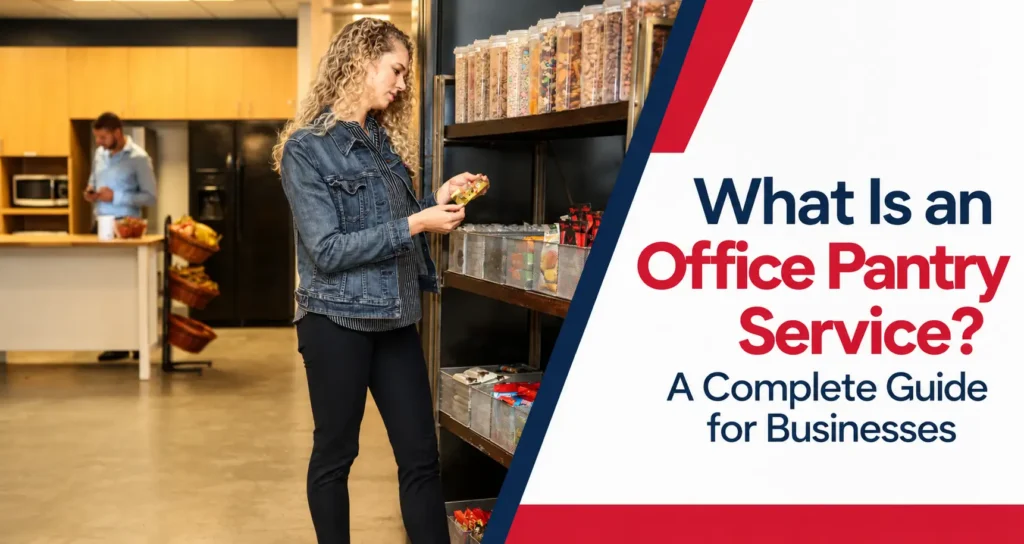
An office pantry service is a managed workplace refreshment program that gives employees convenient access to snacks, beverages, and other food options during the workday. Instead of asking office managers or employees to purchase and maintain supplies themselves, businesses can work with a provider that manages product selection, delivery, stocking, and ongoing service. The exact setup can vary depending on workplace size, employee preferences, available space, and the company’s refreshment goals.
For businesses considering new workplace amenities, an office pantry can be more than a cabinet stocked with snacks. A well-planned program can become a regular employee amenity while reducing the administrative work required to keep refreshments available. It can also give businesses greater control over the types of products they provide, from traditional snacks and beverages to healthier choices, breakfast items, and fresh food.
Understanding what an office pantry service actually includes is important before choosing a program. Businesses need to consider employee count, typical attendance, product preferences, available storage, and replenishment needs. This guide explains how office pantry programs work, what managed service involves, and how businesses can determine whether this type of workplace refreshment program fits their needs.
What Is an Office Pantry Service?
An office pantry service is a professionally managed program that supplies and maintains snacks, beverages, and other refreshments for employees in a workplace. Depending on the provider and program structure, the service can include product planning, ordering, delivery, stocking, inventory adjustments, and ongoing support. Instead of assigning these tasks to an internal employee, the business works with a provider that manages the pantry.
The physical setup can vary from one workplace to another. Some companies may have a dedicated pantry or break room with shelves, refrigerators, and beverage stations, while others may use a smaller snack area integrated into an existing office space. The goal is to give employees easy access to refreshments without requiring the business to manage every detail internally.
An office pantry is also generally different from a traditional vending setup because the refreshments are usually provided as an employer-sponsored workplace amenity. Employees can access the products supplied by the company without making an individual purchase for each item. For a broader overview of pantry programs, product planning, and employee refreshment strategies, see the Office Pantry & Healthy Snack Programs guide.
What Does an Office Pantry Program Include?
An office pantry program can include much more than recurring snack deliveries. The provider and business typically work together to determine which products should be offered, how much inventory is appropriate, where products will be stored, and how frequently the pantry should be serviced. These decisions should reflect workplace needs rather than follow a standard product list.
Depending on the workplace, a program can include packaged snacks, healthier alternatives, beverages, breakfast foods, fresh products, and other refreshments. Some companies may want a simple selection of snacks and drinks, while larger workplaces may need refrigerators, fresh food, multiple pantry areas, and more frequent service.
A managed program may include:
- Product selection based on employee preferences and consumption patterns
- Scheduled delivery and pantry replenishment
- Inventory review and adjustments
- Stocking and organization of products
- Flexible product changes as workplace needs evolve
- Ongoing service and program support
The exact services depend on the provider and business needs. A program should be flexible enough to change as employee preferences, workforce size, and workplace schedules change.
How Does a Workplace Pantry Program Work?
A workplace pantry program usually begins with an assessment of the business and its employees. The provider needs to understand workforce size, operating schedules, available space, product demand, storage requirements, and company goals before recommending a service approach. A 30-person professional office, for example, may need a very different program from a 300-person facility operating multiple shifts.
Product selection follows the initial assessment. Businesses can decide whether they want a basic assortment of snacks and beverages or a broader program that includes breakfast foods, fresh products, healthier options, and other workplace refreshments. The product mix can then be adjusted as the business learns more about actual demand.
Once the program is established, products are delivered according to an agreed service schedule and stocked within the designated pantry area. Over time, the provider can review product demand and make recommendations about which items should be added, reduced, or replaced. This helps prevent the product mix from becoming outdated.
What Is a Managed Pantry Service?
A managed pantry service means the business does not have to manage workplace refreshments internally. Instead, a provider takes responsibility for operational tasks such as product planning, ordering, delivery, stocking, inventory review, and program adjustments. The exact services vary, but the central idea is to reduce the recurring administrative work associated with maintaining a workplace pantry.
This can be especially useful for office managers, facility teams, and administrative staff who already have multiple responsibilities. Without a managed program, someone internally may need to determine what products are running low, purchase supplies, transport them to the workplace, organize storage, monitor expiration dates, and repeat the process every time inventory needs replenishment.
A managed pantry service shifts much of that recurring work to a specialized provider while allowing the business to remain involved in important decisions. Companies can still establish budgets, communicate employee preferences, approve product categories, and provide feedback. The provider handles the recurring work needed to keep the program running.
What Is a Corporate Pantry Service?
A corporate pantry service is an office pantry program designed around the needs of corporate workplaces. These environments can include headquarters, professional offices, technology companies, financial organizations, administrative facilities, and businesses with multiple departments or locations.
Corporate pantry programs need to balance employee needs with practical operating requirements. A company may want its pantry to support employee convenience, collaboration areas, meetings, or broader workplace amenities while also maintaining reasonable control over costs and inventory.
The scale of a corporate pantry can vary considerably. A smaller office may need a compact snack and beverage station, while a larger headquarters may require multiple pantry areas, refrigeration, fresh food, beverages, and regular service visits. The setup depends on the company’s workforce, facility, budget, and employee expectations.
What Is a Workplace Pantry Service?
A workplace pantry service is a refreshment program designed around the daily needs of employees at a particular worksite. Because the term workplace covers more than traditional offices, pantry programs can also be used in warehouses, manufacturing facilities, healthcare workplaces, educational environments, and other organizations.
The service should reflect how employees actually use the workplace. A facility with early morning and overnight shifts may require different stocking patterns from a standard corporate office, while a hybrid workplace may need a different service schedule because employee attendance changes throughout the week.
A workplace pantry service should therefore be customized to the setting. The goal is not simply to fill shelves, but to create a refreshment program that fits the workplace.
What Products Can an Office Pantry Offer?
The products offered through an office pantry depend on employee preferences, budget, storage capacity, and workplace requirements. A pantry should provide enough variety for different tastes without filling the space with products employees rarely use.
Traditional choices can include chips, crackers, popcorn, cookies, granola bars, and other packaged snacks. Health-focused options may include nuts, trail mix, protein bars, fruit, yogurt, whole-grain products, and lower-sugar alternatives. Beverages can include bottled water, sparkling water, juice, soft drinks, flavored water, and ready-to-drink options.
Breakfast products can also be useful in workplaces where employees arrive early or work extended shifts. Depending on the available storage and refrigeration, a pantry may include oatmeal, cereal, fruit, yogurt, breakfast bars, and other convenient foods.
The goal is not to offer every possible item. Instead, businesses should create a product mix that provides variety while remaining practical to stock and manage.
How Should Businesses Choose Products for an Office Pantry?
Product selection should begin with employee needs and purchasing patterns rather than assumptions. Businesses can consider the type of work employees perform, when they take breaks, how long they typically remain on-site, and what refreshment options are already available nearby.
Employee feedback can also provide useful direction. A short survey or feedback process can show whether employees want more healthy choices, breakfast products, beverages, fresh food, or familiar snack brands. Product usage is another important indicator because items that consistently move quickly can reveal what employees value most.
An office pantry does not need to contain only healthy or premium products. It should provide enough variety for employees to make their own choices while ensuring that the program remains financially and operationally practical for the business.
How Often Does an Office Pantry Need Service?
There is no universal service schedule for an office pantry. A small workplace with limited demand may need periodic replenishment, while a large facility with multiple shifts may need more frequent deliveries and stocking.
The type of products also affects service requirements. Fresh and refrigerated products generally need closer inventory management than shelf-stable snacks, particularly when the business wants to minimize waste and maintain product quality.
Employee count, consumption patterns, workplace schedules, storage capacity, and product categories should all be considered when determining service frequency. The goal is to keep products available without overstocking the pantry.
Office Pantry Service in Earth City
Businesses in Earth City can use workplace refreshment programs to make snacks and beverages more convenient for employees throughout the workday. Because local workplaces have different operating needs, a pantry program should reflect the specific facility rather than use the same product mix for every business.
Companies can consider employee schedules, available pantry space, refrigeration, workforce size, and the products employees are most likely to use. A managed pantry can also reduce the workload for local office and facility teams by handling product purchasing, delivery, and replenishment.
For businesses with broader refreshment needs, a pantry program can also work alongside other workplace services. This allows companies to provide employer-sponsored snacks through the pantry while using other refreshment options when needed.
Office Pantry Programs in Troy
For businesses in Troy, an office pantry program can provide snacks and beverages without requiring internal teams to manage every purchase and restocking task. The appropriate setup depends on factors such as workforce size, operating schedule, facility type, available storage, and employee preferences.
A smaller professional office may benefit from a compact pantry with snacks and beverages, while a larger employer may require more frequent service and a broader selection. The product mix can also be adjusted over time, with popular items receiving more space and low-demand products being replaced.
Office Pantry vs. Traditional Snack Purchasing
Some businesses manage workplace snacks internally by assigning an office manager or another employee to purchase products from local stores or wholesale suppliers. This can work for a small workplace with limited refreshment needs, but it can become more time-consuming as the workforce or product variety grows.
Internal purchasing requires someone to monitor inventory, determine what needs to be purchased, place orders, transport supplies, organize storage, and manage products that may expire or become unpopular. These tasks may seem small individually, but they add recurring work for teams with other responsibilities.
An office pantry service shifts much of this operational responsibility to a provider. The business can still maintain control over its budget, preferred product categories, and employee experience while reducing the amount of internal time spent on recurring snack management.
Office Pantry vs. Vending Machines
An office pantry and vending machine both provide workplace refreshments, but they differ in how employees access the products.
| Feature | Office Pantry | Vending Machine |
|---|---|---|
| Access | Employer-sponsored refreshments | Individual product purchases |
| Product Display | Open shelves, cabinets, or refrigerators | Products displayed inside a machine |
| Payment | Typically no individual payment | Employees purchase products |
| Product Variety | Can include snacks, beverages, breakfast foods, and fresh options | Selection depends on machine capacity |
| Management | Can include managed delivery and stocking | Managed equipment, inventory, and restocking |
| Best For | Companies offering refreshments as an employee amenity | Workplaces seeking convenient automated product access |
Neither option is automatically right for every workplace. Some companies may prefer an employer-sponsored pantry, while others may want the automated convenience of vending. Businesses can also use both when they want to provide complimentary refreshments while maintaining additional paid product options.
Office Pantry vs. Micro Market
A micro market provides a more retail-style refreshment setup than a traditional pantry. Products are generally displayed on open shelves and refrigerated displays, while employees use self-checkout technology to purchase their selections.
An office pantry, by contrast, is generally designed around employer-sponsored refreshments. The company determines the products it wants to provide, while employees access those products without making an individual purchase for each item.
| Feature | Office Pantry | Micro Market |
| Product Access | Employer-provided refreshments | Employee-selected purchases |
| Shopping Experience | Simple pantry or snack area | Store-like self-service environment |
| Checkout | Usually not required | Self-checkout technology |
| Product Range | Customized employer-sponsored selection | Wider retail-style assortment |
| Fresh Food | Can be included depending on setup | Commonly suited to fresh and refrigerated products |
| Best For | Employee amenities and sponsored refreshments | Workplaces wanting broader self-service food and beverage access |
Businesses can also use these options together. A company could provide selected snacks through a pantry while using a micro market to offer additional meals, beverages, and products that employees purchase individually.
How an Office Pantry Program Supports Employee Experience
Workplace refreshments can be a practical employee amenity because they are available for employees to use during the workday. Someone may need a quick snack between meetings, a beverage during a long shift, breakfast after arriving early, or something convenient during a short break.
Having these options on-site can reduce the need for employees to leave the workplace for food or drinks. A clean and consistently stocked pantry can also make shared workplace areas feel more useful and welcoming.
A pantry is only one part of the employee experience and does not replace compensation, benefits, workplace policies, or other employee programs. Its value comes from providing a practical amenity that employees can use regularly.
What Makes an Office Pantry Program Successful?
A pantry program depends heavily on consistency. Products need to be available when employees expect them, the pantry should remain organized, and fresh products need appropriate inventory management and rotation.
Employee feedback is also important because preferences can change over time. A provider should be able to respond when employees request different products, consumption patterns change, or workplace schedules change.
Businesses should also review the program periodically instead of assuming that the original product mix will remain effective indefinitely. A pantry does not need the largest selection; it needs products that employees use and that the organization can manage effectively.
Common Mistakes Businesses Make With Office Pantry Programs
One common mistake is choosing products based only on what management assumes employees want. Without employee feedback or usage information, businesses can spend money on items that receive little interest while popular options run out quickly.
Another issue is failing to consider different employee schedules. A workplace with multiple shifts may need refreshments available at different times of day, while a hybrid office may have changing attendance patterns throughout the week.
Overstocking is another concern, particularly when fresh or refrigerated products are involved. A full pantry may look impressive, but unnecessary inventory can increase waste and operating costs.
Finally, businesses sometimes treat a pantry as a fixed program instead of reviewing it as needs change. Employee preferences, workforce size, attendance patterns, and business needs can change, so the program should be reviewed and adjusted accordingly.
Is an Office Pantry Service Right for Your Business?
An office pantry service can suit businesses that want to provide employer-sponsored refreshments while reducing the time internal teams spend managing supplies. It can be particularly useful when a company has consistent employee demand, wants to strengthen workplace amenities, or needs a more structured approach to snack and beverage management.
Before starting a program, businesses should consider workforce size, available space, budget, employee preferences, storage requirements, and expected service frequency. A smaller business may need a straightforward snack and beverage program, while a larger company may benefit from fresh food, refrigeration, breakfast products, and multiple refreshment areas.
The key consideration is whether the program fits the workplace. The program should account for employee behavior, facility requirements, and business priorities rather than rely on a standard package.
Getting Started With an Office Pantry Program
Starting an office pantry program begins with understanding the current workplace environment. Businesses should identify what employees already have access to, where gaps exist, how many people regularly use the facility, and which refreshments employees prefer.
From there, the business can establish a realistic budget and decide which product categories matter most. Some organizations may prioritize healthy snacks and beverages, while others may need breakfast items, fresh food, coffee supplies, or products for extended work schedules.
A managed provider can then help determine an appropriate product mix and service schedule based on those requirements. After launch, employee feedback and product usage can help refine the program as workplace demand changes.
For businesses looking specifically for a managed workplace pantry solution, Best Vending’s Office Pantry Service provides a relevant service option for building a customized workplace refreshment program.
Frequently Asked Questions
An office pantry service is a managed workplace refreshment program that provides employees with snacks, beverages, and other food options. A provider can manage product delivery, stocking, inventory, and ongoing service based on workplace needs.
An office pantry program starts by assessing workplace and employee needs, followed by product selection, delivery, stocking, and inventory management. The program can be adjusted as employee preferences and consumption patterns change.
A managed pantry service can include product planning, ordering, delivery, stocking, inventory review, product adjustments, and ongoing service support. The exact services depend on the provider and the program structure.
A corporate pantry service is a workplace refreshment program designed for corporate offices and similar professional environments. It can provide employer-sponsored snacks, beverages, breakfast products, and other refreshments based on workplace needs.
Yes. An office pantry can include a combination of traditional snacks and healthier choices such as nuts, fruit, protein bars, whole-grain products, yogurt, and lower-sugar alternatives.
Restocking frequency depends on employee count, product demand, workplace schedules, storage capacity, and the types of products being provided. Fresh products may require more frequent service than shelf-stable items.
The two options serve different purposes. An office pantry is generally employer-sponsored and provides open access to selected refreshments, while vending machines provide automated access to individually purchased products. Some businesses use both.
Yes. Product selection, delivery frequency, storage requirements, and program size can be adjusted based on workplace conditions, preferences, and business goals.