
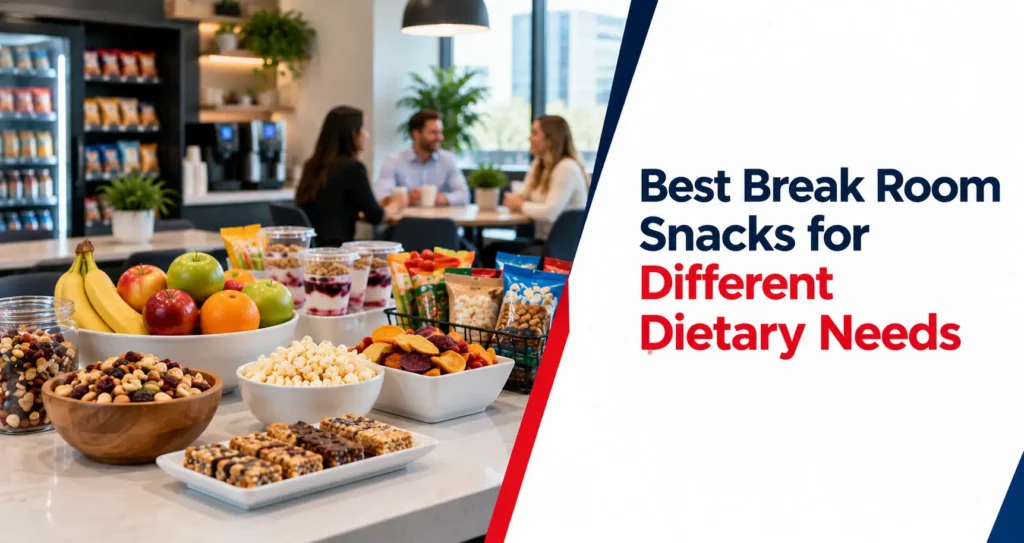
Choosing snacks for a workplace sounds simple until you consider how differently employees eat. One person may avoid animal products, another may need gluten-free food, and someone else may prefer snacks with more protein or less added sugar. A break room filled with popular products can still leave some employees with few suitable choices, even when the company has invested in a generous refreshment program.
For office managers, HR teams, and business owners, the challenge is creating a snack selection that serves a diverse workforce without becoming difficult or expensive to manage. The goal is not to accommodate every preference with a separate pantry or turn the break room into a specialized food store. It is to offer a thoughtful range of options, provide reliable product information, and make everyday refreshments more accessible.
The best break room snacks for employees should reflect the people who use the workplace. A corporate office with a small team may need a different assortment from a warehouse operating multiple shifts, while employees with dietary restrictions may need more than the standard selection of chips, cookies, and granola bars. Understanding those differences can help businesses build a more practical refreshment program.
This guide explores vegan, gluten-free, vegetarian, high-protein, and low-sugar office snacks, along with the considerations that matter when selecting and organizing them. It also explains how companies can create a more inclusive pantry experience while maintaining product quality, managing costs, and keeping refreshments convenient for employees.
Why Dietary Variety Matters in Workplace Break Rooms
A workplace snack program should offer meaningful choices to the employees who use it. When the entire selection consists of similar products, employees with dietary restrictions may find that few items meet their needs. Even employees without specific restrictions often appreciate having alternatives to conventional packaged snacks.
Dietary preferences vary for many reasons, including personal taste, ethical choices, food allergies, ingredient sensitivities, and individual nutrition goals. Some employees follow vegetarian or vegan eating patterns, while others avoid gluten or prefer particular macronutrient profiles. These preferences should not be treated as interchangeable because they involve different ingredients and considerations.
Providing variety can make the break room more welcoming without requiring an unusually large assortment. A few carefully selected products from different categories may offer more useful choices than an extensive inventory of nearly identical snacks. The important distinction is whether employees can find something appropriate for their preferences.
Businesses should also recognize that dietary restrictions involving allergies or medical conditions require particular care. A product that appears suitable based on its general ingredients may still carry allergen warnings or cross-contact risks. Accurate labeling and accessible product information are therefore essential parts of a responsible workplace snack program.
Vegan Office Snacks for Plant-Based Employees
Vegan office snacks are products made without animal-derived ingredients. Depending on the product, suitable choices may include fruit, selected nuts, seeds, plant-based bars, popcorn, crackers, and vegetable-based snacks. However, packaged foods should be checked individually because ingredients and manufacturing practices vary.
A vegan snack assortment can provide useful variety for employees who avoid meat, dairy, eggs, honey, and other animal-derived ingredients. Many plant-based options are also appealing to employees who do not follow a strictly vegan diet. This makes them practical additions to a shared break room rather than products intended exclusively for one group.
Popular Vegan-Friendly Snack Options
Businesses can consider products such as roasted chickpeas, selected trail mixes, fruit bars, seed-based snacks, and properly labeled plant-based protein bars. Fresh fruit and vegetable portions may also work well when suitable handling and storage are available. Offering different textures and flavors helps the selection feel like a normal part of the pantry rather than a limited specialty category.
Packaged products require closer examination. Some granola bars contain honey, chocolate products may include milk ingredients, and flavored crackers can contain dairy-based seasonings. Even products commonly associated with plant-based eating should be reviewed using the manufacturer’s ingredient information.
An effective vegan snack selection includes options for different parts of the workday. A light fruit-based snack may suit an afternoon break, while roasted legumes or selected protein bars can provide a more substantial choice. The best assortment combines convenience with flavors employees genuinely enjoy.
Gluten-Free Office Snacks for Employees Avoiding Gluten
Gluten-free office snacks are especially important for employees who need to avoid gluten-containing ingredients. Gluten occurs naturally in wheat, barley, rye, and related grains, and it can also appear in ingredients used in processed foods. Businesses should therefore avoid assuming that a snack is gluten-free simply because it does not look like bread or another grain-based product.
Potential options include fresh fruit, certain nut and seed products, appropriately labeled popcorn, selected rice-based crackers, and packaged snacks specifically identified as gluten-free. Whole, unprocessed foods may be naturally free from gluten, but manufacturing and cross-contact considerations still matter for packaged products. Employees who must strictly avoid gluten need accurate product information.
Choosing Appropriately Labeled Products
For packaged gluten-free office snacks, manufacturer labeling is particularly useful. In the United States, foods carrying a gluten-free claim must meet FDA requirements, including limits on unavoidable gluten presence. Businesses should rely on accurate labeling rather than informal assumptions about the product’s ingredients.
Products made with oats also deserve attention because manufacturing conditions can affect gluten cross-contact. An ordinary oat-based bar should not automatically be described as gluten-free. Selecting appropriately labeled products gives employees more reliable information when determining what they can eat.
The pantry should also make products easy to identify without creating misleading assurances. Grouping packaged gluten-free choices together can improve convenience, but employers should not describe an entire shared snack area as gluten-free unless they can substantiate that claim. Clear product information is more useful than broad promises that cannot be verified.
Vegetarian Office Snacks for Everyday Variety
Vegetarian office snacks can provide a wide range of workplace refreshment choices. Depending on the employee’s specific vegetarian eating pattern, options may include dairy products, certain egg-containing foods, fruit, vegetables, nuts, crackers, granola bars, and other meat-free snacks. Businesses should recognize that vegetarian preferences vary and that not every employee follows the same approach.
A balanced vegetarian assortment can include both shelf-stable and refrigerated products. Individually packaged cheese portions, selected yogurt products, trail mix, fruit, and whole-grain snacks may work well when ingredients and storage requirements are appropriate. Employees who prefer plant-based choices can also select many of the vegan options already included in the pantry.
The main challenge is avoiding assumptions about processed foods. Some products contain gelatin, animal-derived flavorings, or other ingredients that may not align with an employee’s dietary preferences. Manufacturer ingredient information should guide the selection rather than product appearance alone.
Offering vegetarian office snacks does not require a separate food station in most workplaces. A thoughtfully selected general assortment can include vegetarian-friendly products alongside other refreshments. Making those choices easy to identify helps employees find suitable snacks without unnecessary effort.
High-Protein Office Snacks for More Filling Choices
High-protein office snacks may appeal to employees who prefer more substantial food between meals. Protein-containing snacks are available in several convenient forms, including selected bars, nuts, seeds, dairy products, and certain roasted legumes. These products can provide alternatives to conventional snacks without requiring a full meal preparation area.
Protein content varies considerably across different snacks, even when packaging uses similar marketing language. A bar advertised as protein-focused may contain a different amount of protein from a yogurt cup or serving of roasted chickpeas. Businesses should review nutrition facts rather than relying exclusively on product names.
Practical Protein-Focused Snack Choices
Protein bars are popular because they are portable and require little storage or preparation. They can work well in offices where employees need something convenient between meetings, although sugar content, ingredients, and protein quantities vary. Providing more than one flavor or formulation can make this category more appealing.
Other possibilities include individually packaged nuts, roasted chickpeas, seed mixes, and refrigerated yogurt or cheese products. Some options may also meet vegetarian or plant-based preferences, depending on their ingredients. These overlaps can help businesses provide more variety without purchasing a completely separate product for every dietary category.
The amount of protein an individual needs depends on personal circumstances, and employers do not need to make nutritional recommendations on employees’ behalf. Their role is to make appropriately labeled choices available. Employees can then select products that align with their preferences and individual requirements.
Low-Sugar Office Snacks Without Sacrificing Flavor
Low-sugar office snacks may interest employees who want to monitor their sugar intake or reduce added sugars in everyday foods. Businesses can consider selected nuts, seeds, lightly seasoned savory products, unsweetened options, and packaged foods with suitable nutrition profiles. The challenge is identifying products that employees actually enjoy rather than choosing items based only on promotional claims.
A snack does not necessarily have low sugar content simply because it is marketed as natural, organic, or made with fruit. Granola bars, dried-fruit snacks, and flavored yogurt can contain different amounts of naturally occurring or added sugars. Reading the Nutrition Facts panel helps employees make more informed choices.
Understanding Added Sugar and Product Selection
When comparing products, businesses can review the amount of added sugar per serving as well as portion size. Unsweetened varieties may provide useful alternatives, but taste and employee preferences still matter. A pantry filled entirely with products employees dislike will not become more successful simply because the items meet a particular nutritional objective.
Savory snacks can also contribute to a lower-added-sugar assortment. Selected crackers, nuts, seeds, and popcorn may provide options for employees who prefer something crunchy rather than sweet. Sodium and other nutritional information should still be considered, since low sugar does not automatically mean a product is nutritionally preferable in every respect.
The best approach is to provide choices rather than impose restrictions. Employees who prefer lower-sugar snacks should have practical alternatives, while colleagues who enjoy conventional products can continue making their own decisions. A balanced break room selection supports variety without turning refreshment service into dietary supervision.
Comparing Snack Options for Different Dietary Needs
Several snack categories can serve more than one dietary preference, but suitability always depends on the specific product. A seed-based snack may work for some vegan and gluten-free diets, while a yogurt product may fit certain vegetarian or high-protein preferences but not vegan requirements. Businesses should use dietary categories as a starting point and confirm individual product information before making claims.
| Dietary Preference | Potential Snack Options | Important Considerations |
|---|---|---|
| Vegan | Fruit, roasted chickpeas, selected plant-based bars, seed mixes | Check for dairy, honey, gelatin, and other animal-derived ingredients |
| Gluten-Free | Fresh fruit, appropriately labeled popcorn, selected rice crackers | Check gluten-free claims and possible cross-contact |
| Vegetarian | Fruit, selected yogurt, cheese portions, nuts, snack bars | Check gelatin and other animal-derived ingredients |
| High-Protein | Protein bars, roasted legumes, nuts, selected dairy snacks | Compare protein per serving and other nutrition information |
| Low-Sugar | Unsweetened nuts, seeds, selected savory snacks | Review total sugar, added sugar, and serving size |
This comparison shows why product selection should be based on more than a single dietary label. Some items can satisfy several preferences, while others may appear suitable but contain ingredients that make them inappropriate for a particular employee. The manufacturer’s packaging remains the primary reference for packaged food.
Understanding Food Allergies and Cross-Contact in Shared Break Rooms
Dietary preferences and food allergies should not be treated as the same thing. Some employees avoid certain foods by choice, while others may experience serious reactions to particular ingredients. A workplace pantry should make accurate product information available without suggesting that a shared environment is automatically safe for every allergy.
In the United States, the nine major food allergens identified for labeling purposes are milk, eggs, fish, crustacean shellfish, tree nuts, peanuts, wheat, soybeans, and sesame. Packaged foods subject to federal labeling requirements must identify major allergens used as ingredients. Employers should encourage employees to review current packaging because formulations can change.
Cross-contact is another consideration. A product may not intentionally contain a particular allergen but could still present a risk depending on manufacturing or handling circumstances. Advisory statements such as “may contain” are voluntary, so the absence of such wording should not be interpreted as a guarantee of safety.
Businesses should avoid promising an allergen-free pantry unless they can verify the complete arrangement. Maintaining original packaging, avoiding unlabeled mixed snack containers, and following appropriate cleaning and food-handling practices can help employees access reliable information. Workers with severe allergies should be able to make decisions based on their own requirements and the relevant manufacturer details.
Designing a More Inclusive Break Room Snack Selection
An inclusive snack program does not require a separate station for every dietary preference. Most workplaces can begin by selecting a manageable range of products with different ingredients, flavors, and nutritional characteristics. A well-organized pantry allows employees to identify options without feeling singled out for their dietary choices.
Presentation is important because even appropriate products are less useful when employees cannot find them. Businesses may organize snacks into recognizable categories, keep packaging visible, and provide enough room for people to access products comfortably. If a product requires refrigeration, its storage conditions should be maintained consistently.
Employers should also respect privacy. Employees may choose to share dietary preferences, but they should not be required to disclose personal medical information simply to request different refreshments. A voluntary feedback process can help identify useful product categories without collecting unnecessary sensitive details.
The overall goal is a professional, convenient break room where employees have meaningful choices. Dietary variety can become a normal part of workplace refreshments rather than something treated as unusual or difficult to accommodate.
Practical Ways to Balance Variety and Budget
Providing options for several dietary preferences does not mean a business needs to purchase dozens of specialty products. A smaller assortment can work well when individual items appeal to several employee groups. For example, selected fruit products, appropriately labeled seed snacks, and certain plant-based options may broaden choice without greatly increasing the number of products stocked.
Specialty products may carry different costs, packaging requirements, or shelf lives. Companies should consider whether a proposed item is suitable for regular stocking or would be better introduced in smaller quantities. Fresh and refrigerated foods can also affect the budget because their storage and handling requirements differ from those of packaged snacks.
A practical workplace assortment should combine familiar favorites with selected alternatives. Employees without dietary restrictions still need appropriate choices, while those with specific needs should not be left with only one or two products. The ideal balance depends on the workforce and available refreshment budget.
Program costs should be evaluated as part of the overall employee amenity rather than through individual product prices alone. A manageable selection that employees regularly use can provide more value than a large assortment that frequently results in waste.
Snack Preferences Across Different Workplaces
Workplace conditions can influence which snack formats are most practical. Employees working in a corporate office may have access to a kitchen or refrigerator, while a manufacturing facility may require packaged products suited to scheduled breaks. Dietary variety should be maintained within the limits of the facility’s actual food-service capabilities.
Corporate and Professional Offices
Professional workplaces often benefit from a combination of individually packaged snacks and selected fresh products. Employees may want something convenient between meetings, during afternoon breaks, or while working through a busy schedule. Vegan, vegetarian, gluten-free, and protein-focused choices can be integrated into the same pantry without requiring a complicated layout.
An office with suitable refrigeration may also offer selected dairy snacks and fresh food. Businesses should consider how much space is available and whether employees regularly use the break room. The assortment can remain relatively compact while still providing several dietary alternatives.
Warehouses and Manufacturing Facilities
Warehouses and production environments may have employees working extended hours or rotating shifts. Products that are convenient to store and consume during designated breaks can be particularly useful. Individually packaged snacks may also make ingredient information easier to review than unlabeled bulk containers.
Employees on different shifts should have reasonable access to the available assortment. If specialty products are consistently unavailable later in the day, the pantry may not serve the entire workforce equally. Workplace schedules should therefore be considered when determining how products are distributed and replenished.
Break Room Snack Options for Chesterfield Workplaces
Businesses in Chesterfield, Missouri can create more accommodating refreshment areas by offering snacks suited to different dietary preferences. A professional office may want a combination of familiar packaged products, vegetarian-friendly choices, and selected gluten-free options, while a larger corporate facility may benefit from additional variety. The exact selection should reflect the workplace rather than a universal snack list.
Chesterfield employers can also consider how employees access product information. Maintaining visible packaging makes it easier for people to review ingredients before selecting a snack. A well-organized break room can offer dietary variety while remaining convenient for employees who simply want a quick refreshment.
For workplaces with multiple departments, accessibility is another consideration. A pantry should be located and organized so employees can use it without unnecessary disruption to their day. Convenient access and appropriate product choices can work together to make the break room more useful.
Dietary-Friendly Workplace Snacks in Union, MO
Employers in Union, Missouri may have different refreshment needs depending on workforce size, schedules, and available break room space. A smaller office may prefer a focused assortment of packaged snacks, while a larger facility could support refrigerated options and more product categories. Neither approach needs to sacrifice the ability to offer useful dietary alternatives.
For Union businesses, clearly labeled products can make vegan, gluten-free, and other specialty choices easier for employees to identify. Familiar snacks can remain part of the program alongside appropriate alternatives. The result is a more flexible assortment that accommodates different preferences without requiring extensive food preparation.
A practical pantry should also reflect how employees use their breaks. Workers with limited time may prefer individually packaged products, while employees with access to a shared kitchen may appreciate a broader selection. The appropriate format depends on facility conditions and employee needs.
How a Managed Office Pantry Can Support Dietary Variety
A workplace pantry requires ongoing product selection, ordering, stocking, and organization. When the assortment includes several dietary categories, keeping product information visible and maintaining appropriate storage become especially important. A managed service can help businesses coordinate these practical responsibilities without assigning every task to office managers.
Our office pantry service allows employers to explore refreshment programs built around workplace size, employee preferences, and available budgets. Businesses can discuss the types of products they want to provide, including suitable alternatives for different dietary preferences. The final assortment should still be evaluated according to product availability and manufacturer information.
For broader information about how pantry programs operate, the Office Pantry Service & Healthy Snack Programs guide explains workplace pantry planning, product selection, and ongoing service arrangements. It provides useful context for employers deciding how sponsored refreshments should fit into their workplace environment. Dietary variety can be one consideration within a wider program designed around employee convenience.
A managed pantry does not remove the need for careful product decisions. Employers should continue communicating preferences and reviewing product information, while the provider supports practical replenishment and program organization. Clear responsibilities help the service remain consistent and manageable.
Common Mistakes to Avoid When Choosing Dietary-Friendly Snacks
Creating a more inclusive snack assortment involves more than purchasing a few specialty products. Businesses should consider whether employees can identify suitable options, whether the products remain available, and whether packaging information is accessible. Several avoidable mistakes can reduce the usefulness of an otherwise thoughtful program.
Common mistakes include:
- Assuming every plant-based product is vegan without reviewing ingredients
- Describing naturally gluten-free ingredients as proof that a packaged product is gluten-free
- Confusing vegetarian and vegan dietary requirements
- Assuming high-protein snacks automatically contain little added sugar
- Removing original packaging and making ingredient information unavailable
- Using broad allergen-free claims that cannot be verified
- Stocking dietary alternatives without considering employee preferences
These issues can often be addressed through more careful product selection and clear communication. Employers do not need to provide nutritional advice or manage employees’ individual diets. Their responsibility is to offer practical choices and avoid misleading information.
Creating a Break Room That Works for More Employees
A successful break room snack program should make refreshments convenient for employees with different preferences. Vegan, gluten-free, vegetarian, high-protein, and lower-sugar options can all contribute to a more flexible assortment, but no single category will serve everyone. The strongest programs combine familiar favorites with clearly identified alternatives.
For workplace decision-makers, the focus should remain on practicality. Products need to fit the available space, work with the facility’s storage conditions, and remain appropriate for the company’s budget. Employees should also be able to review ingredients and choose snacks according to their own requirements.
A well-planned pantry can provide that variety without becoming unnecessarily complicated. Rather than trying to offer every specialty product, businesses can establish a balanced assortment that reflects employee needs and remains manageable over time. The goal is to create a welcoming workplace refreshment experience supported by accurate information and dependable service.
Best Vending helps businesses throughout St. Charles County and surrounding Missouri communities develop workplace refreshment programs that fit their teams and facilities. Companies interested in providing a broader selection of employee snacks can contact Best Vending to discuss available pantry options, product preferences, and service requirements.
Frequently Asked Questions
The best break room snacks include a variety of products that accommodate different preferences, such as selected plant-based bars, appropriately labeled gluten-free crackers, protein-containing snacks, fruit, nuts, and lower-sugar options. Businesses should choose products based on employee needs and accurate manufacturer information. Offering several categories is generally more useful than relying on a single type of snack.
Potential vegan office snacks include fresh fruit, roasted chickpeas, seed mixes, selected popcorn, and appropriately labeled plant-based bars. Packaged products should be reviewed for ingredients such as dairy, honey, and other animal-derived components. Employees should have access to the original product information before selecting snacks.
Possible options include fresh fruit and packaged products that meet gluten-free labeling requirements, such as selected popcorn, rice crackers, and snack bars. Businesses should not assume that every grain-based or oat-based snack is gluten-free. Manufacturer labeling is particularly important for employees who need to avoid gluten strictly.
High-protein office snack options may include selected protein bars, roasted legumes, nuts, yogurt, cheese portions, and certain seed-based products. Protein quantities and other nutritional characteristics vary between products. Businesses should compare labels and provide several choices rather than assuming all protein-focused snacks offer the same nutritional profile.
Potential options include unsweetened nuts, seeds, selected savory crackers, and other products with suitable nutrition profiles. Businesses should review added sugar, total sugar, and serving sizes when comparing packaged snacks. Low-sugar claims should be based on product information rather than assumptions about ingredients or marketing descriptions.
Yes. Vegetarian eating patterns may include certain animal-derived foods such as dairy or eggs, while vegan diets exclude animal-derived ingredients. This means a yogurt or cheese snack may suit some vegetarian employees but would not be appropriate for someone following a vegan diet. Product ingredients should always be checked.
Employers should preserve ingredient information, avoid unsupported allergen-free claims, and consider the possibility of cross-contact in shared spaces. Employees need access to accurate manufacturer information so they can assess products against their individual requirements. A shared pantry should not be represented as entirely allergen-free unless that can be substantiated.
Yes. A small office can provide several dietary options without maintaining a large inventory by selecting products that fit multiple categories. For example, appropriately labeled plant-based or gluten-free products may appeal to more than one employee group. The selection should remain practical for the workplace's budget and storage capacity.
Yes. An office pantry program can be designed to include selected vegan, vegetarian, gluten-free, protein-focused, and lower-sugar snacks depending on product availability and employer preferences. A managed provider can help organize product selection and replenishment. Businesses should still rely on accurate product labels when communicating dietary suitability to employees.