
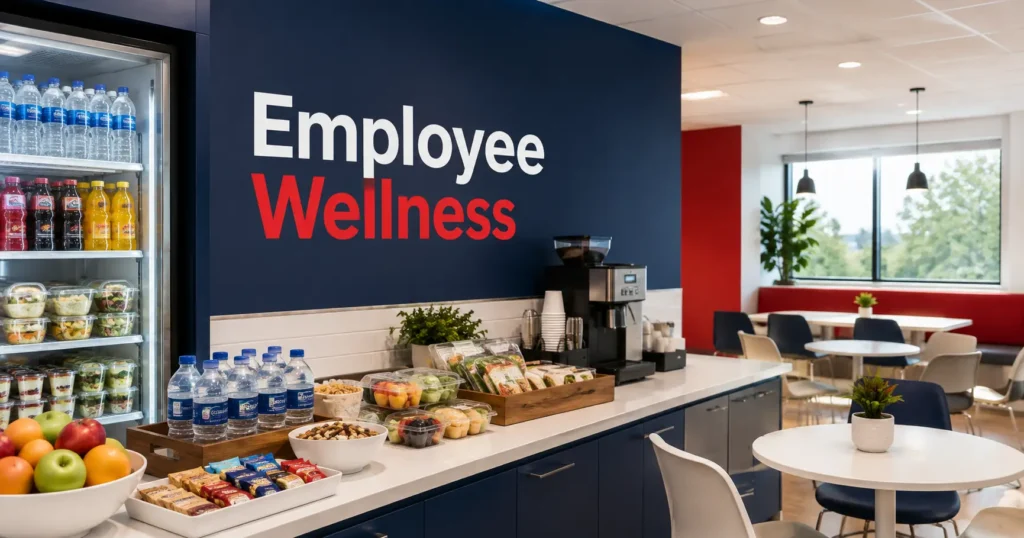
An employee wellness program does not need to begin with a gym, fitness challenge, or complicated benefits platform. It can start with practical improvements that employees can use during an ordinary workday, including access to drinking water, balanced food choices, comfortable break areas, and refreshments that remain available across every shift.
Food and beverage access alone does not create a complete wellness strategy. However, it can support a broader program by making hydration, meal breaks, and better-for-you choices more convenient. Employees are more likely to use a workplace benefit when it is easy to understand, easy to access, and suitable for their schedule.
For St. Charles County businesses, the most effective program will depend on workplace size, employee preferences, work demands, operating hours, and available break room space. An office, warehouse, manufacturing facility, healthcare workplace, and customer-facing business may all require different approaches.
What Is an Employee Wellness Program?
An employee wellness program is a coordinated set of workplace resources, policies, and benefits designed to support employee well-being. Programs may address physical health, mental health, financial well-being, work-life balance, workplace safety, or access to useful everyday amenities.
A refreshment program can support that broader effort by improving access to water, meals, snacks, and comfortable break periods. It should not be presented as medical care or nutritional advice. Its purpose is to give employees practical choices and reduce common barriers, such as limited break time, inconvenient food access, or a lack of suitable options during later shifts.
The strongest programs reflect the actual workforce instead of following a generic corporate template. Employers should consider employee schedules, physical work demands, dietary preferences, and how often people can realistically leave the property.
Why Do Refreshments Matter in Workplace Wellness?
Employees make food and beverage decisions throughout the workday. When the only available options are inconvenient, frequently empty, or unsuitable for the people using them, the workplace benefit provides little practical value.
A well-planned refreshment setup supports wellness by making basic needs easier to meet. Employees can refill a water bottle, find a quick breakfast, choose a protein-focused snack, or purchase a meal without spending most of their break traveling to another location.
Refreshments are also highly visible. Unlike a benefit that employees use once or twice a year, the break room may be used every day. That regular interaction makes food, hydration, cleanliness, and equipment reliability important parts of the employee experience.
What Makes a Workplace Refreshment Program Successful?
A successful program is not measured by the number of products placed in the break room. It succeeds when employees use it, products remain available, the service fits the work schedule, and the employer can manage the cost without creating unnecessary administrative work.
The Program Has a Clear Purpose
Employers should first decide what they want the program to accomplish. One business may want to improve drinking water access, while another wants to provide breakfast for early-shift employees or reduce trips offsite during short breaks.
A clear purpose helps determine which equipment, products, and service format make sense. It also prevents the business from adding features that look impressive but do not solve a real workplace problem.
The purpose should be specific enough to guide later decisions. “Improve employee wellness” is broad, while “provide dependable water and food access for all three shifts” gives the program a clear direction.
Employees Have Meaningful Choices
Employees have different tastes, dietary preferences, budgets, and energy needs. A useful program provides variety without trying to serve every possible preference at once.
The selection may include water, lower-sugar drinks, familiar snacks, protein items, breakfast products, fresh food, and occasional treats. Offering choice is usually more practical than removing every indulgent product or labeling the entire program as healthy.
Product packaging and nutrition information should remain visible whenever possible. Employees can then make their own decisions based on ingredients, serving size, dietary needs, and personal preferences.
Refreshments Are Easy to Access
Accessibility includes more than placing equipment inside the building. Employees need enough time to use it, enough room to move through the area, and a payment process that does not create unnecessary delays.
A refreshment area located far from production teams may provide little value during a short break. Similarly, one small coffee machine may not serve an entire department during a scheduled shift change.
The workplace should review equipment placement, walking distance, break schedules, and peak traffic. Best Vending’s office break room planning guide provides additional information about matching equipment and layouts to workplace needs.
Later Shifts Receive Equal Access
A program cannot support the full workforce if products are available only during standard office hours. Second-shift, third-shift, weekend, and early-morning employees need dependable access as well.
Product capacity and restocking schedules should reflect the number of people working during each period. A shelf that is full at 9:00 a.m. but empty by 4:00 p.m. may create frustration rather than strengthen the employee experience.
Multi-shift locations should review usage by shift instead of looking only at total daily demand. Additional equipment, separate product areas, or adjusted service timing may be required. Industrial employers can also review how warehouse vending machines for multi-shift teams support food, drinks, hydration, and reliable refreshment access for employees working outside standard daytime hours.
Equipment and Products Remain Reliable
Employees quickly stop using a program when machines regularly fail, payment readers do not work, water tastes inconsistent, or popular products remain unavailable. Reliability has a greater long-term effect than the appearance of the equipment on installation day.
The provider should have a clear process for maintenance, refunds, restocking, product rotation, and service requests. Responsibilities should also be divided clearly between the provider and the workplace. A managed vending machine inventory management process can also help track product demand, improve restocking decisions, and reduce recurring out-of-stock issues.
Employees need a simple way to report problems. Facility managers and HR teams should not have to contact several vendors to resolve one break room issue.
Choose a Refreshment Format That Supports the Program
Different service formats can support different wellness goals. The decision should be based on employee count, product demand, available space, and whether the employer or employee will pay for the refreshments.
Vending equipment can provide compact and secure access to snacks and drinks. It may work well for smaller workplaces, public areas, or locations where products need to remain enclosed.
A micro market offers open shelves, refrigerated coolers, fresh meals, and self-checkout technology. This format can support larger teams that need more variety and more substantial food throughout the day. Businesses considering that format can review Best Vending’s workplace micro market options.
An employer-sponsored pantry allows the company to provide selected snacks and beverages as a workplace benefit. The employer controls the product categories and budget, while a managed provider can handle delivery and restocking.
Coffee and filtered water can support nearly every format. A managed office coffee and water service may include brewing equipment, coffee supplies, water filtration, cups, condiments, filter replacement, and ongoing support.
How Can Employers Encourage Participation?
Employees are more likely to participate when the program is simple, visible, and aligned with their routines. Complicated rules or unclear payment arrangements can discourage use even when the product selection is strong.
Communication should explain what is available, where it is located, which products are employer-sponsored, and which require payment. New employees and later-shift teams should receive the same information as daytime office staff.
Employee feedback should remain easy to provide. A short survey, product request form, or designated workplace contact can identify missing options and recurring service issues without creating a complicated process.
Participation should not be forced or presented as a measure of employee health. The program should provide useful resources while allowing people to make their own decisions.
How Do You Know Whether the Program Is Working?
A workplace wellness program should be reviewed using practical indicators rather than assumptions. Employers can consider product use, employee feedback, out-of-stock frequency, equipment service history, waste, and the amount of internal time spent managing supplies.
High participation is not the only sign of success. A water station may be valuable even if it does not generate product sales, while a pantry may require adjustment if large quantities regularly expire.
Feedback can also reveal differences between departments or shifts. Daytime employees may be satisfied while overnight teams report limited options. Reviewing those differences helps the employer improve access without rebuilding the entire program.
The program should be reviewed when employee count, work schedules, attendance patterns, or workplace priorities change. A refreshment setup that worked for 40 employees may need different capacity when the location grows to 100.
Common Reasons Workplace Wellness Programs Underperform
One common problem is choosing benefits without first understanding employee needs. A trendy amenity may receive little use if it does not fit the workforce, schedule, or physical environment.
Another issue is treating the initial product selection as permanent. Employee preferences change, seasonal demand affects beverage use, and new shifts may create different food requirements. A managed program should adjust rather than repeat the same delivery indefinitely.
Programs also underperform when responsibilities are unclear. Employees may not know who handles an empty machine, damaged product, payment issue, or water dispenser problem. The employer and provider should establish a straightforward service process before launch.
Poor access can undermine an otherwise strong program. Crowded layouts, distant break rooms, limited equipment capacity, and daytime-only restocking can prevent employees from using the benefit when they need it.
Employee Wellness Programs for St. Charles County Workplaces
Workplaces across St. Charles, St. Peters, O’Fallon, Wentzville, Chesterfield, Maryland Heights, Earth City, and nearby Missouri communities have different employee wellness needs. Local offices may prioritize coffee, water, and lighter refreshments, while warehouses and manufacturing facilities may need hydration, filling food, and reliable overnight access.
Nearby restaurant availability can also affect the program. Employees at an industrial facility may have fewer offsite options than teams working near a commercial district. Short break periods make onsite access even more important.
A local workplace refreshment program should be planned around daily attendance, shift patterns, available space, and employee demand. The service should also be flexible enough to change when the business grows or adjusts its operating schedule.
Build a Program Employees Can Use Every Day
A successful employee wellness program focuses on practical access rather than appearances. Employees need refreshments that fit their schedules, reliable equipment, suitable product variety, and a break room that is easy to use.
The program should begin with clear goals and remain flexible after launch. Employee feedback, service history, usage patterns, and workplace changes can guide future improvements without requiring a complete redesign.
Food and beverage services should support the wider employee experience rather than operate as an isolated perk. When hydration, food access, service reliability, and shift coverage are planned together, the break room can become a useful part of a broader workplace wellness strategy.
Frequently Asked Questions
An employee wellness program may include resources related to physical health, mental well-being, financial support, workplace safety, work-life balance, and everyday amenities. The right components depend on employee needs, company size, work schedules, and available resources.
Refreshments can support employee wellness by improving access to drinking water, meals, snacks, and break-time choices. They are most useful when products remain available, equipment works reliably, and every shift has reasonable access.
A program does not need to offer only products labeled as healthy. A balanced selection can include water, protein items, fresh food, familiar snacks, lower-sugar beverages, and occasional treats so employees have meaningful choices.
Small businesses can begin with one or two practical improvements, such as filtered water, dependable coffee, comfortable seating, or a limited refreshment selection. The program can expand after employee demand and ongoing costs become clearer.
The program should be reviewed after launch and whenever employee count, schedules, attendance, or workplace needs change. Regular feedback and service information can help identify gaps before they become recurring problems.
Employers should plan product capacity, equipment access, and restocking around every shift. Later teams should not be limited to whatever remains after daytime employees have used the break room.
A useful refreshment program can contribute to the employee experience by providing a visible and convenient workplace benefit. Its value depends on reliability, relevance, communication, and whether employees can use it during their actual work schedule.
An internal HR, office management, or facilities contact should coordinate with the service provider. The provider may manage equipment, delivery, restocking, and maintenance, while the workplace handles communication, routine cleaning, and program approvals.