Warehouse employees often work on schedules that do not match restaurant hours. Early-morning crews may arrive before nearby businesses open, while second- and third-shift employees may have few food choices available during their breaks. Short break periods can make leaving the property impractical even when stores or restaurants are nearby.
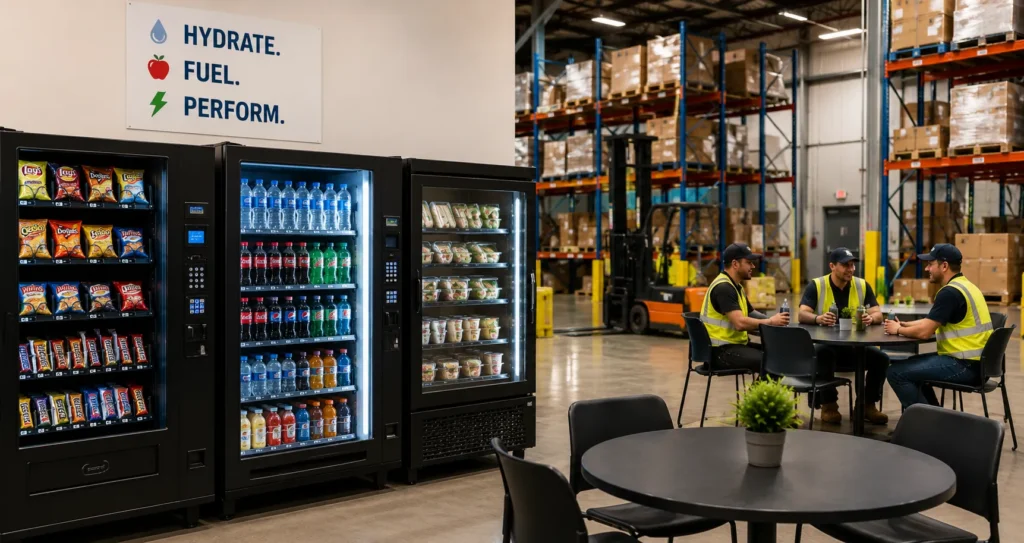
Well-planned warehouse vending machines give employees onsite access to drinks, snacks, and selected food throughout the workday. The equipment can remain available across multiple shifts without requiring the employer to operate a cafeteria or assign staff to manage products internally.
The right setup depends on more than employee count. Shift changes, scheduled breaks, physical work demands, available floor space, hydration needs, and restocking capacity all affect which equipment and products will work best. A warehouse refreshment program should be designed around the facility’s daily operation rather than copied from a traditional office.
Why Do Warehouses Need a Different Vending Setup?
Warehouses often have concentrated traffic during scheduled breaks. Dozens of employees may reach the break room at the same time, creating long lines if the location has only one small machine or limited payment options. Equipment capacity and placement must account for these short periods of heavy use.
Product demand can also differ from a standard office. Employees performing physical work may look for cold water, sports drinks, filling snacks, breakfast products, and more substantial food. A machine stocked mainly with candy and soft drinks may not support the range of needs found across a long or physically demanding shift.
Operating hours create another challenge. Products that are fully stocked in the morning may be nearly empty by the time an overnight crew begins work. A suitable service plan must consider each shift separately instead of treating daily usage as one general number.
What Should Warehouse Vending Machines Provide?
A warehouse vending program should offer enough variety to support different break times, preferences, and energy needs. The product mix does not need to be oversized, but it should include more than several versions of the same snack.
Cold drinks are usually an important part of the setup. Bottled water, sparkling water, zero-sugar beverages, sports drinks, iced tea, juice, energy drinks, and traditional soft drinks may all have a place depending on employee demand. Water should remain easy to find and available across every shift.
Snack selections may include chips, crackers, popcorn, nuts, trail mix, protein bars, cookies, candy, pastries, and breakfast products. A balanced machine can offer familiar favorites alongside products labeled as lower-sugar, whole-grain, high-protein, or portion-conscious.
Facilities with enough demand may also include refrigerated food. Sandwiches, wraps, salads, yogurt, breakfast items, cheese packs, and prepared meals can give employees more substantial choices when leaving the facility is difficult. Providing convenient access to hydration, balanced snacks, and more substantial food can also support a broader employee wellness program, especially for teams working long or nontraditional shifts.
How Should Vending Support First, Second, and Third Shifts?
Multi-shift access is one of the most important parts of warehouse break room planning. A program cannot serve the full workforce when the first shift receives most of the available products and later teams are left with empty selections.
The provider should review employee count by shift, not just total headcount. A facility may have 200 employees, but the demand will look different if 120 work during the day and the remaining 80 are divided between evening and overnight crews. Equipment capacity and stocking levels should reflect those patterns.
Restocking timing also matters. Some facilities may benefit from service before a major shift change, while others need larger product quantities that can last until the next scheduled visit. Sales and inventory information can help identify which products sell out early and whether certain shifts require a different selection.
Communication with shift supervisors can provide additional context. Sales data may show that bottled water sells quickly, while supervisors may explain that the shortage happens specifically before the overnight crew begins.
Choosing the Right Industrial Vending Machines
The best equipment depends on expected traffic, product demand, available room, and the number of break areas inside the facility. A single combination machine may work for a smaller warehouse, but a large distribution center may require separate snack, beverage, and refrigerated food machines.
High-capacity beverage machines can be especially useful in physically demanding environments. Separate equipment for water and cold drinks may reduce congestion and protect product availability during scheduled breaks.
Cashless payment should also be considered. Employees may not carry bills or coins during a shift, so card readers, tap-to-pay, and mobile wallet access can make purchases faster. Payment instructions should be clearly visible, and employees need a simple way to report failed transactions or refund concerns.
Machine placement should support safe movement. Equipment should not block emergency exits, production routes, lockers, time clocks, or areas where employees gather before returning to work. Delivery drivers and service technicians also need enough access to restock and maintain the equipment.
When Does a Micro Market Make More Sense?
Traditional vending works well when products need to remain enclosed, floor space is limited, or employee traffic does not support a larger setup. However, some warehouses eventually outgrow the capacity and variety available through machines alone.
A micro market uses open shelves, refrigerated coolers, food displays, and a self-checkout kiosk. Employees can purchase several products in one transaction and choose from a broader range of package sizes, meals, and fresh food. Large warehouses with controlled access and steady daily traffic may find this format more practical than adding several additional machines.
Facilities comparing the two options can review Best Vending’s workplace micro market service to understand how open shelving, refrigeration, payment technology, and fresh food can fit into a larger break room. Some locations may use vending in smaller employee areas while operating one central market in the main break room.
Hydration Needs Deserve Separate Planning
Hydration should not depend entirely on bottled water inside a vending machine. Warehouses with physical work, warm areas, outdoor loading activity, or long walking distances may need filtered water stations in addition to purchasable beverages.
A managed water program can provide bottleless dispensers, hot and cold water, filtration, filter replacement, and ongoing equipment support. The number and placement of water stations should reflect facility size, employee movement, and access during every shift.
Best Vending’s office coffee and water service can complement industrial vending machines with managed hydration equipment and supplies. Although the service page uses office-focused language, water systems can also support warehouses, distribution centers, manufacturing facilities, and other workplaces with significant daily demand.
Coffee may also be useful for early and overnight teams. Brewer capacity, product quantities, and cleaning responsibilities should be planned around shift traffic rather than standard daytime office use.
Restocking Warehouse Vending Machines
Reliable restocking is essential in a multi-shift environment. A machine that regularly sells out before the evening shift will eventually lose employee trust, even if it offers a strong product selection after each service visit.
Service frequency should be based on transaction volume, machine capacity, product type, and shift patterns. Shelf-stable snacks may be delivered in larger quantities, while refrigerated products require more careful rotation and temperature management.
During a service visit, the provider may refill products, review expiration dates, inspect payment equipment, clean product areas, and check machine operation. Remote inventory monitoring can also help the service team identify fast-selling items before arriving at the location. Businesses that need more detail on product tracking and replenishment can review how vending machine inventory management helps providers monitor demand, plan restocking, and reduce recurring shortages.
The initial service schedule should not be treated as permanent. Seasonal demand, workforce growth, overtime, and new production schedules can all change product usage. A provider should be able to adjust quantities and visit frequency when the facility’s operation changes.
Reducing Break Room Management for Warehouse Staff
Without managed service, warehouse employees or administrative staff may be asked to purchase drinks, unload products, fill refrigerators, track inventory, and remove expired food. Those tasks can become difficult when the facility has several shifts or more than one break room.
A managed vending program places product purchasing, machine stocking, inventory review, and equipment support with the service provider. The employer still needs an internal contact for communication, but that person should not be responsible for shopping and filling machines.
Clear responsibilities help the program run smoothly. The agreement should explain who handles routine cleaning, spills, technical repairs, refunds, damaged products, and changes to the product mix. Employees should also know how to report a problem without relying on a supervisor to contact several departments.
For broader planning, Best Vending’s workplace break room guide explains how space, services, equipment, and employee needs can be considered together.
Common Warehouse Vending Problems
One common problem is installing too little capacity. A machine may appear sufficient during normal traffic but create long lines when an entire department begins its break at the same time. Reviewing peak use is more useful than looking only at average daily transactions.
Another issue is using the same product mix for every shift. Overnight employees may prefer breakfast items, coffee drinks, or more substantial food, while daytime teams may purchase different products. Reviewing demand by time of day can improve the selection.
Poor placement can also reduce use. Machines located too far from work areas may not be practical during a short break, while equipment placed in a crowded hallway can create safety and traffic concerns.
Service reliability remains equally important. Employees may stop using the equipment when payment readers fail, popular drinks remain empty, or maintenance requests take too long to resolve.
Warehouse Vending Services in St. Charles County
St. Charles County includes office parks, industrial facilities, manufacturing operations, distribution centers, and warehouse locations with very different staffing patterns. Facilities in O’Fallon, St. Charles, St. Peters, Wentzville, Earth City, Maryland Heights, and nearby Missouri communities may operate standard daytime schedules or continue across multiple shifts.
Local conditions can affect break room planning. A warehouse located near restaurants may still need onsite food because employees have short breaks. A facility in an industrial area may have few nearby options during evening and overnight hours.
Local service routes can support more responsive stocking and equipment maintenance. The final recommendation should account for employee count, shift changes, break schedules, product demand, available space, and the number of refreshment areas inside the building.
Build a Refreshment Setup Around Every Shift
Effective vending machines for warehouses should make food and drinks available to the whole workforce, not only employees who arrive first. Equipment capacity, payment technology, product selection, hydration access, and restocking schedules must work together.
The program should also remain flexible. Product demand can change when the facility adds employees, changes production schedules, begins seasonal overtime, or opens another shift. Regular review allows the service provider to adjust without replacing the entire setup.
Best Vending has served Missouri businesses since 1978 and provides vending, micro market, coffee, water, and related workplace refreshment solutions throughout St. Charles County and surrounding service areas.
Frequently Asked Questions
The best equipment depends on employee count, shift traffic, available space, and product demand. Large facilities may need separate snack, beverage, and refrigerated food machines, while a smaller warehouse may use one combination machine.
A useful selection may include bottled water, sports drinks, soft drinks, protein bars, nuts, chips, crackers, breakfast products, candy, and refrigerated meals. The final mix should be adjusted according to actual employee purchases.
Equipment should remain accessible throughout the night, and stocking levels should protect product availability for later shifts. Coffee, breakfast items, filling snacks, cold drinks, and cashless payments may be especially useful for overnight teams.
Restocking frequency depends on transaction volume, machine capacity, employee count, shift schedules, and the types of products being sold. Busy multi-shift facilities may need more frequent service than smaller daytime workplaces.
Yes. Card readers, contactless payments, and mobile wallets can make transactions faster and reduce the need for employees to carry cash. The provider should also offer a clear process for payment issues and refunds.
A micro market may be better for a large, controlled-access facility that wants more fresh food, product variety, and self-checkout. Traditional vending may be more suitable when space is limited or products need to remain enclosed.
Yes. Large facilities may use several vending locations to reduce walking time and crowding. Each location should be planned according to nearby employee traffic and service access.
Under a managed service agreement, the vending provider generally handles product stocking and technical support. The workplace and provider should confirm responsibilities for routine cleaning, refunds, damage, and service reporting before installation.