A workplace break room can become another administrative responsibility when employees must purchase products, check supplies, organize deliveries, and respond whenever popular items run out. What begins as a simple snack shelf can quickly require regular shopping, product rotation, storage management, and coordination between several departments.
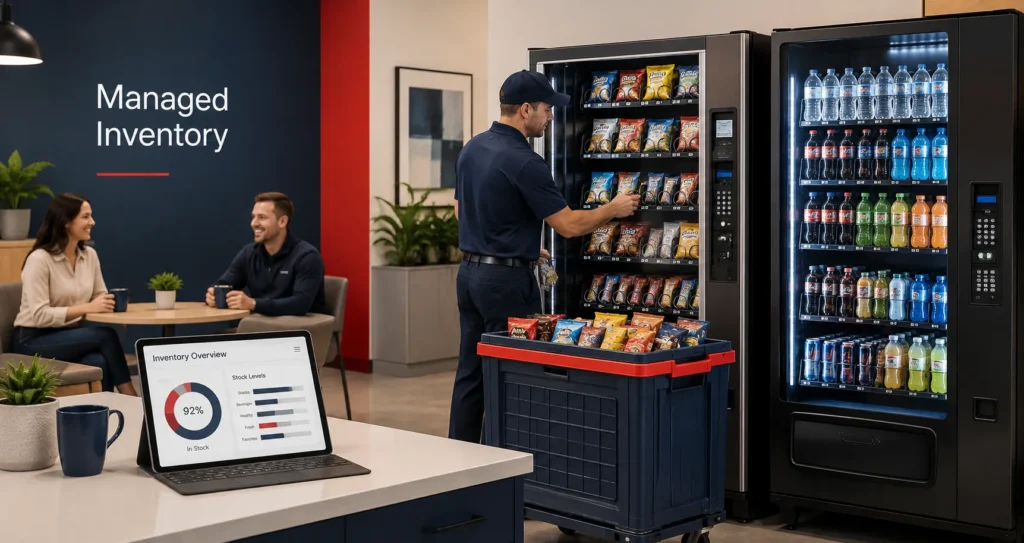
Managed vending machine inventory management moves most of that work to a refreshment provider. The provider tracks product demand, restocks equipment, rotates inventory, and adjusts the selection based on how the workplace actually uses it. Employees receive convenient access to refreshments, while office managers and facility teams spend less time managing individual products.
For businesses in St. Charles County, this approach can support offices, warehouses, manufacturing facilities, healthcare workplaces, schools, dealerships, and other locations. The right program depends on employee count, shift schedules, equipment type, product demand, and whether the workplace needs packaged snacks, beverages, or refrigerated food.
What Is Vending Machine Inventory Management?
Vending machine inventory management is the process of tracking products inside a machine, planning replenishment, reviewing sales, rotating inventory, and maintaining suitable stock levels. It helps the service provider understand which products are selling, which selections are running low, and which items should be replaced.
A managed program may use transaction data, remote machine monitoring, route-driver observations, and employee feedback. These information sources help the provider plan each service visit instead of relying only on a fixed delivery schedule. The process can also reduce repeated shortages and unnecessary overstocking.
Inventory management is not limited to counting products. It also includes monitoring expiration dates, organizing machine selections, maintaining product variety, and deciding how much of each item should be loaded into the equipment.
Why Manual Break Room Stocking Becomes Difficult
Internal stocking often works when a workplace is small and product demand is limited. As employee count grows, the person responsible for the break room may need to place frequent orders, receive deliveries, store extra cases, and track which products disappear fastest.
The workload becomes more complicated when the facility operates several shifts. Daytime employees may consume most of the available products, leaving evening or overnight teams with fewer choices. Someone must then determine whether the problem is product quantity, delivery timing, storage capacity, or uneven distribution.
Fresh and refrigerated products create additional responsibilities. Sandwiches, salads, yogurt, fruit, and prepared meals require date checks, reliable refrigeration, and more careful ordering than shelf-stable snacks. Without a clear inventory process, the workplace may experience both shortages and avoidable waste.
What Does a Managed Vending Provider Handle?
A managed vending provider takes responsibility for the product and equipment tasks included in the service agreement. The exact arrangement varies by location, but it should reduce the amount of daily purchasing and stocking assigned to the employer.
A managed program may cover:
- Product purchasing and delivery
- Machine filling and product rotation
- Inventory and sales review
- Expiration-date checks
- Product selection adjustments
- Payment equipment monitoring
- Technical service and repair coordination
- Employee product requests and refund support
The workplace still needs an internal contact who can report access changes, unusual demand, or recurring concerns. That person should coordinate with the provider rather than personally buying products or filling machines.
A managed vending service can be particularly useful for businesses that no longer want HR, administrative, or facilities employees to handle break room inventory themselves.
How Vending Machine Inventory Tracking Works
Inventory tracking begins with knowing what was placed in the machine and what has been purchased since the previous service visit. In a basic program, the route driver may inspect each selection, record shortages, and compare product levels during every visit.
Compatible modern equipment may also transmit sales and inventory information remotely. Cashless readers, machine telemetry, and inventory software can help providers identify fast-selling products, low-stock selections, and possible equipment issues before the driver arrives.
Remote data does not eliminate the need for an in-person inspection. The driver still needs to check packaging, product dates, machine cleanliness, dispensing components, and the physical condition of the equipment. Technology improves planning, while the service visit confirms that the machine is operating correctly.
Best Vending’s vending technology explains how connected systems, cashless payments, remote monitoring, and warehouse automation can support more accurate service.
How a Vending Machine Restocking Service Prevents Shortages
A vending machine restocking service should be based on actual demand instead of an arbitrary schedule. A small office may need less frequent service, while a high-traffic warehouse or manufacturing facility may require larger quantities or additional visits.
Providers often establish target inventory levels, sometimes called par levels, for each machine and product category. These targets indicate how much inventory should normally be available based on machine capacity and expected sales. Par levels can change when employee count, operating hours, or seasonal demand changes.
The product mix should also be reviewed during restocking. A selection that repeatedly sells out may need more machine space, while a slow-moving product may need to be replaced. This approach keeps the machine useful without filling every row with excessive quantities of unpopular items.
Product Selection Should Change With Demand
The first product assortment is an informed starting point, not a permanent plan. Employee preferences become clearer after the equipment has been in use for several weeks, and transaction data can reveal patterns that surveys may not capture.
A workplace may request healthier products but consistently purchase a mix of traditional and better-for-you options. Another location may have strong demand for breakfast items during the first shift and refrigerated meals during the evening. The provider should use these patterns to build a selection that serves the whole workplace.
Seasonal demand also matters. Bottled water and sports drinks may move more quickly during warmer months, while coffee drinks or more substantial snacks may become more popular during colder weather. Regular product reviews help the program respond without requiring a complete equipment change.
Fresh Food Requires More Careful Inventory Control
Fresh food can make a break room more useful, especially when employees cannot easily leave for breakfast or lunch. It also requires closer attention to refrigeration, expiration dates, package condition, and realistic stocking quantities.
Overstocking refrigerated food can create waste, while stocking too little may leave employees without meaningful meal options. A managed provider should review demand by product and adjust quantities as buying patterns become clearer.
Temperature-controlled equipment must remain operational, and service personnel should check products during visits. Employees should also have a straightforward way to report a warm cooler, damaged package, expired item, or refrigeration concern.
Larger workplaces that need broader fresh-food capacity may find that a workplace micro market provides more flexibility than adding several refrigerated machines. Open coolers and self-checkout technology can support additional package sizes and meal categories, but the inventory still requires professional management.
How Managed Inventory Supports Multiple Shifts
Inventory planning should consider when products are purchased, not only how many products sell in one day. A facility may appear to have sufficient total inventory while still failing to serve second- or third-shift employees.
Sales by time of day can reveal whether certain products are consistently gone before later teams begin their breaks. The provider may respond by increasing capacity, moving high-demand products into additional selections, changing service timing, or installing equipment closer to another department. Warehouses and industrial facilities can also review how warehouse vending machines for multi-shift teams are planned around product capacity, hydration, cashless access, and availability for second- and third-shift employees.
Facilities should also communicate overtime schedules, seasonal staffing, and planned shift changes. A sudden increase in headcount can create shortages even when the previous inventory plan worked well. Updating the provider before the schedule changes allows product levels to be adjusted in advance.
Which Workplaces Benefit Most From Managed Inventory?
Any organization that spends significant internal time purchasing, organizing, or monitoring refreshments may benefit from a managed program. The strongest need often appears at locations with larger teams, multiple shifts, several break areas, or frequent product turnover.
Warehouses and manufacturing facilities may need high-capacity drink and snack service across long operating hours. Corporate offices may want reliable refreshments without assigning supply orders to reception or office management staff. Healthcare organizations and public facilities can also review healthcare vending solutions for staff and visitors when planning inventory around irregular hours, public traffic, fresh food, and dependable product availability.
Schools, dealerships, distribution centers, and residential properties may also use managed inventory when traffic is steady enough to support service. The provider should assess each location rather than recommending the same equipment and delivery frequency for every workplace.
Managed Vending Compared With Internal Break Room Stocking
Internal stocking gives the employer direct control over every product purchase, but it also places the workload on company employees. Managed vending transfers product purchasing, inventory review, restocking, and machine support to a service provider.
| Responsibility | Internal Stocking | Managed Vending |
|---|---|---|
| Buying products | Workplace staff | Service provider |
| Tracking product use | Manual internal review | Provider records and machine data |
| Filling equipment | Workplace staff | Route service team |
| Checking product dates | Workplace staff | Included in service visits |
| Adjusting selections | Internal purchasing decision | Provider review with workplace input |
| Equipment support | Employer coordinates repairs | Provider manages according to agreement |
The best choice depends on budget, workplace size, and how much control the employer wants. A small snack cabinet may remain easy to manage internally, while several vending machines or refrigerated food areas usually require a more organized service process.
Signs a Workplace Has Outgrown Manual Stocking
Manual purchasing may no longer be practical when the break room begins consuming significant administrative time. Repeated shortages, excess storage, expired products, and complaints from later shifts often indicate that the current approach needs to change.
Common warning signs include:
- Office staff shop for break room products every week
- Popular drinks and snacks regularly run out
- Several departments place separate supply orders
- Fresh food expires before employees use it
- Later shifts receive fewer choices
- Extra cases occupy offices, hallways, or storage rooms
- No one knows who should report equipment problems
One isolated issue may be easy to correct internally. When several of these problems occur repeatedly, a managed inventory and restocking program may provide a more reliable solution.
Managed Break Room Inventory in St. Charles County
Businesses across St. Charles, St. Peters, O’Fallon, Wentzville, Earth City, Maryland Heights, Chesterfield, and surrounding Missouri communities operate with different staffing and service needs. An office may need weekly snack and drink replenishment, while a multi-shift warehouse may require greater capacity and more frequent product review.
Local route service can make stocking and equipment support easier to coordinate. The provider can review product performance, respond to workplace changes, and adjust deliveries based on demand in the individual facility.
A business planning a broader refreshment strategy can review Best Vending’s break room planning guide to compare vending, micro markets, coffee, water, and pantry formats. Inventory management should then be matched to the selected service rather than treated as a separate afterthought.
Reduce Break Room Work Without Reducing Employee Choice
A workplace does not need to manage every box, bottle, expiration date, and product request internally. Managed vending machine inventory allows a service provider to handle routine purchasing, stocking, rotation, and product analysis while the employer focuses on workplace needs and employee communication.
The strongest program combines reliable service with flexibility. Inventory levels should change when demand changes, product selections should reflect actual use, and later shifts should receive reasonable access. Equipment and service processes should also be clear enough that employees know where to report a problem.
Best Vending has served Missouri businesses since 1978 and provides vending, micro market, coffee, water, pantry, and related refreshment services throughout St. Charles County and nearby communities. Its managed approach can help local businesses maintain useful break rooms without assigning ongoing inventory work to their own teams.
Frequently Asked Questions
Vending machine inventory management is the process of tracking products, reviewing sales, planning restocking, rotating inventory, and adjusting selections. It helps the provider keep suitable products available without relying only on manual estimates.
Tracking may use transaction records, cashless payment data, machine telemetry, route-driver inspections, and employee feedback. Available technology depends on the equipment and service program.
Restocking frequency depends on employee count, machine capacity, product demand, work shifts, and whether the machine contains fresh food. High-traffic locations may require more frequent service than small offices.
The provider usually recommends an initial assortment based on workplace type and expected demand. Employee requests, transaction data, supplier availability, and machine capacity can guide future changes.
Tracking can reduce repeated shortages, but it cannot guarantee that every item will always remain available. Sudden demand, schedule changes, delivery issues, or equipment problems may still affect product availability.
Product rotation and date checks are commonly included during regular service visits. The specific responsibilities should be confirmed in the service agreement.
Yes. Product levels, machine capacity, and restocking schedules can be planned around later shifts. Reviewing sales by time of day can help identify where availability needs improvement.
It can be suitable when the location has enough regular use to support service. A provider should review employee count, space, operating hours, and expected demand before recommending equipment.