Healthcare and public facilities serve people on schedules that rarely fit a standard workday. Hospital employees may work overnight, clinic staff may have unpredictable breaks, and visitors may spend hours onsite without easy access to food or drinks. Government buildings, libraries, courthouses, and community facilities may also need refreshments for employees and members of the public.
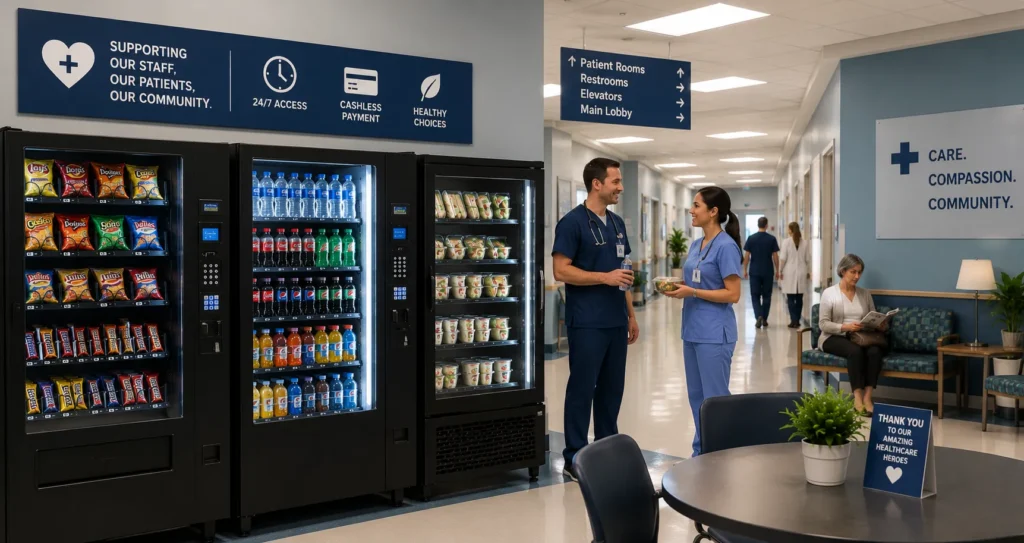
Well-planned hospital vending machines provide convenient access to snacks, beverages, and selected fresh food without requiring a staffed cafeteria in every part of the building. Equipment can remain available before, during, and after normal business hours, giving authorized users another option when nearby food service is closed or difficult to reach.
The right setup depends on the type of facility, daily traffic, operating hours, security requirements, available space, and the people who will use the machines. A staff-only hospital break room needs a different product mix and placement strategy than a public waiting area inside a municipal building.
Why Do Healthcare Facilities Need Reliable Vending Access?
Hospitals, urgent care centers, clinics, medical offices, and long-term care facilities often operate around demanding schedules. Employees may not be able to leave during a short break, and overnight teams may have fewer onsite food choices than daytime staff. Visitors may also need refreshments while waiting for appointments, procedures, or updates.
Healthcare vending machines can help fill these access gaps. A machine placed near a staff lounge may provide drinks and filling snacks during a late shift, while another unit in a public waiting area may offer simple, familiar products for visitors. The equipment should be selected and stocked according to the users in each part of the facility.
Availability matters as much as variety. Employees will stop relying on the service if popular products remain empty, card readers frequently fail, or refrigerated equipment does not work consistently. Ongoing restocking and maintenance should therefore be part of the planning process from the beginning.
Who Uses Hospital Vending Machines?
A hospital vending program may serve several groups with different needs. Staff members may want breakfast products, bottled water, coffee drinks, or more substantial food during long shifts. Visitors may prefer familiar snacks and beverages that are easy to purchase and carry.
Patients may also encounter vending equipment, although product placement and communication should follow facility policies. A vending provider should not assume that every product is appropriate for every user or care environment. Ingredient labels, package information, and clear pricing should remain visible whenever possible.
Contractors, emergency personnel, volunteers, and support teams may also use the machines. Reviewing traffic by location helps determine whether equipment should be placed in a public corridor, staff-only area, administrative wing, or separate employee break room.
What Should Healthcare Vending Machines Offer?
A useful product selection should reflect the facility’s hours and the needs of the people using the equipment. A machine filled mainly with candy and soft drinks may provide limited value to employees working a long overnight shift. At the same time, removing every familiar snack can reduce use and make the program feel unnecessarily restrictive.
A balanced assortment may include bottled water, sparkling water, tea, juice, sports drinks, traditional beverages, nuts, crackers, protein bars, chips, cookies, breakfast items, and selected refrigerated food.
For staff-focused areas, convenient access to hydration, balanced snacks, and fresh food can also support a broader employee wellness program without limiting employees to only one type of refreshment. Hospitals with enough daily demand may also consider sandwiches, wraps, yogurt, salads, fruit cups, and prepared meals.
Product quantities should be based on actual use. Refrigerated items require more careful rotation than shelf-stable snacks, while high-demand drinks may need additional machine capacity. Employee requests and transaction data can help the provider refine the selection after installation.
Supporting Overnight and Irregular Healthcare Shifts
Healthcare teams often work early mornings, evenings, weekends, and overnight hours. A refreshment program designed only around daytime traffic may leave later employees with empty selections or fewer useful products.
The provider should review headcount and demand by shift. If most bottled water and fresh food are purchased before the evening team arrives, the facility may need greater capacity, adjusted stocking quantities, or a different service schedule. Looking only at total daily sales can hide problems affecting specific groups.
Coffee and hydration also deserve separate attention. A managed coffee and water service can complement vending with filtered drinking water, hot beverages, brewing supplies, and equipment support. This combination may be especially useful in staff lounges and administrative areas that operate beyond normal office hours.
Choosing Equipment for Hospitals and Clinics
Different areas of a healthcare facility may require different equipment. A small clinic may use one combination machine with snacks and cold drinks, while a hospital may need several units across staff lounges, waiting rooms, and administrative areas.
Cashless payment is particularly useful in facilities where employees and visitors may not carry coins or bills. Credit cards, debit cards, contactless payments, and mobile wallets can make transactions faster. Payment instructions should be easy to understand, and the provider should offer a clear process for refunds or failed transactions.
Machine placement should support safe movement and routine facility operations. Equipment should not obstruct entrances, hallways, seating, clinical workflows, or service routes. The facility should also consider noise, lighting, electrical access, security cameras, and the ability of delivery staff to reach the machine without disrupting patients or employees.
When Does a Micro Market Fit a Healthcare Workplace?
Traditional vending works well when space is limited, products need to remain enclosed, or the area is open to public traffic. Larger staff-only environments may need more product variety and fresh food than machines can comfortably hold.
A micro market uses open shelving, refrigerated coolers, and a self-checkout kiosk. Employees can compare products, read labels, and purchase several items in one transaction. Hospitals, medical campuses, and larger healthcare facilities may consider this format for controlled-access staff areas with steady daily use.
Best Vending’s micro market service can support locations that need fresh meals, grab-and-go food, cold drinks, and broader product selection. Traditional machines may still remain in public waiting areas or smaller departments while the central employee break room uses a market.
Vending Machines for Public Buildings
Public buildings have different traffic and security needs than healthcare facilities, but they face a similar challenge: employees and visitors may spend long periods onsite without convenient food or beverage access.
Vending machines for public buildings may be suitable for:
| Facility Type | Common Users | Typical Refreshment Need |
|---|---|---|
| Government offices | Employees and visitors | Drinks and quick snacks |
| Courthouses | Staff, visitors, and legal professionals | Convenient packaged products |
| Libraries | Employees and patrons | Quiet, easy-to-carry refreshments |
| Community centers | Staff, families, and program participants | Broad snack and beverage variety |
| Municipal facilities | Employees and authorized visitors | Daily workplace refreshments |
Public areas generally benefit from enclosed equipment, clear pricing, and straightforward payment options. Staff-only break rooms may support a broader selection, depending on employee count and available refrigeration. Product planning should reflect the facility’s purpose. A library may need quieter equipment and products that are easy to carry, while a community center may serve families, event participants, and employees at different times of day.
Public Access, Security, and Placement
A public facility must consider who can reach the equipment and when. Machines installed in an unrestricted lobby may experience different traffic than equipment located behind a staff-only entrance. That distinction affects product selection, payment options, security, and expected sales volume.
Visible machines can help visitors find refreshments, but placement should not create crowding near security checkpoints, reception desks, or busy entrances. The facility should also consider trash and recycling containers so packaging does not accumulate in waiting areas.
Security cameras and transaction records may support monitoring, particularly in unattended spaces. The provider and facility should agree on how damage, service interruptions, or repeated payment issues will be reported and resolved.
Restocking and Product Rotation
Healthcare and public facilities need dependable stocking because the equipment may serve people throughout a long operating day. A machine that regularly empties before the overnight shift or afternoon visitor period will not provide consistent value.
Restocking frequency should account for product capacity, employee count, public traffic, operating hours, and fresh food demand. Remote inventory monitoring may help the provider see which selections are close to selling out before a scheduled visit. Service staff can then arrive with products that better match current usage. Facilities that need more detail on product tracking and replenishment can review how vending machine inventory management helps providers monitor demand, plan restocking, and reduce recurring shortages.
Fresh and refrigerated products need careful rotation. Expiration dates, cooler operation, packaging condition, and demand should be reviewed during service visits. Quantities can be increased or reduced as the provider learns which products the facility actually uses.
Supporting Staff Without Creating More Administrative Work
A vending program should reduce internal purchasing and stocking responsibilities rather than create another task for healthcare or public-sector employees. Facility managers should not need to buy products, fill machines, track every item, or coordinate technical repairs themselves.
A managed provider can handle product purchasing, machine stocking, inventory review, payment technology, and equipment service. The facility still needs a designated contact who can communicate schedule changes, access requirements, and recurring concerns.
Responsibilities should be clearly defined before installation. Routine cleaning around the equipment, spill response, technical maintenance, refunds, and product requests may involve different people. A simple service process helps avoid delays when a problem occurs.
Healthcare and Public Facility Vending in St. Charles County
Healthcare providers and public organizations across St. Charles County operate in a range of settings. Clinics in St. Charles may need staff refreshments during standard business hours, while healthcare facilities in O’Fallon or St. Peters may operate across several shifts. Municipal buildings, libraries, community centers, and public offices may serve both employees and visitors.
Local planning should consider operating hours, public access, controlled staff areas, nearby food options, break duration, and delivery restrictions. A facility located near restaurants may still need onsite vending because staff cannot easily leave during a short or unpredictable break.
Businesses and organizations planning a broader employee refreshment area can also review Best Vending’s break room planning guide. The final setup should be based on the building, user groups, and service expectations of the individual facility.
Plan Vending Around the People and Facility
Effective hospital vending machines must support more than general snack access. They should account for overnight employees, visitors, public traffic, fresh food needs, hydration, payment convenience, and the operational requirements of the building.
Healthcare and public facilities should also plan for ongoing service before selecting equipment. Product variety will matter less if machines are frequently empty or difficult to repair. Clear communication, reliable restocking, and suitable placement help the program remain useful after installation.
Best Vending has served Missouri organizations since 1978 and provides managed refreshment solutions across St. Charles County and surrounding communities. Service options can be adjusted for hospitals, clinics, government buildings, libraries, community centers, and other public-facing locations.
Frequently Asked Questions
Hospital vending machines may include bottled water, tea, juice, sports drinks, snacks, protein bars, breakfast products, and refrigerated food. The final selection should reflect staff schedules, visitor traffic, available equipment, and actual demand.
Yes. Vending equipment can remain accessible around the clock when installed in an approved area. Product capacity, building access, and restocking should be planned for overnight and weekend users.
Cashless systems can make purchases easier for staff and visitors who do not carry coins or bills. Machines may accept cards, contactless payments, and mobile wallets, depending on the equipment.
Possible locations include staff lounges, waiting areas, administrative areas, and approved public corridors. Placement should consider user access, electrical service, facility traffic, security, and the ability to restock equipment without disrupting operations.
Refrigerated machines may provide sandwiches, wraps, salads, yogurt, breakfast products, and prepared meals. Fresh food requires suitable refrigeration, regular date checks, and demand-based stocking.
Yes. Government offices, courthouses, libraries, community centers, and municipal facilities may use vending to serve employees and visitors. Equipment and product selection should match public access, security, operating hours, and facility policies.
A micro market may be suitable for a large, controlled-access staff area that needs more fresh food and variety. Traditional vending may remain the better option in public areas or locations with limited space.
Under a managed service, the provider generally handles stocking, inventory review, payment equipment, and technical support. The facility and provider should confirm responsibilities for cleaning, access, refunds, and service reporting before installation.