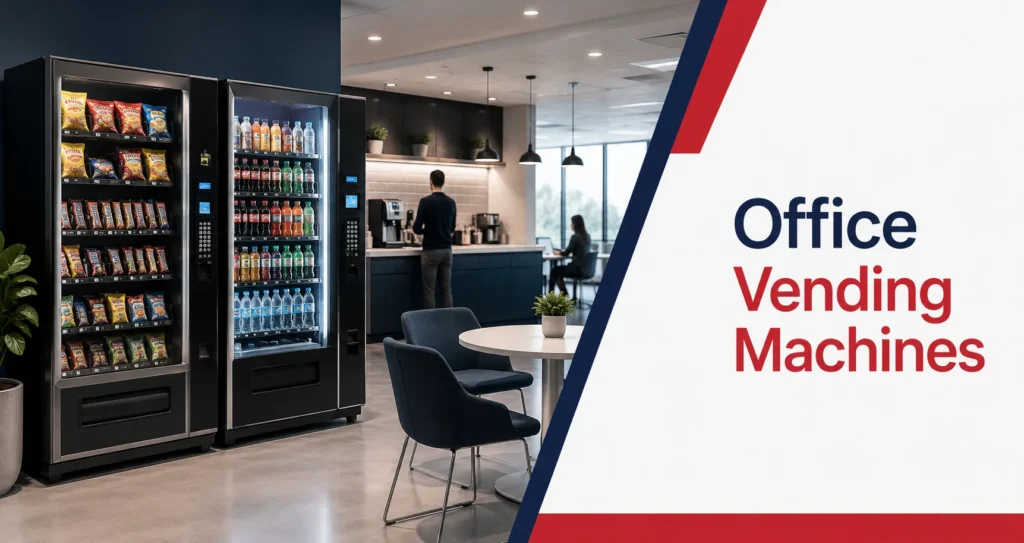
Employees do not always have time to leave work when they want a drink, a quick snack, or a more filling option. A well-stocked vending area gives them convenient access to refreshments without requiring the business to operate a cafeteria or manage inventory on its own.
Modern office vending machines can offer much more than candy bars and canned soda. Workplaces can provide traditional favorites, healthier snacks, cold beverages, fresh food, and cashless payment options in a compact space.
For St. Charles County businesses, the right vending setup depends on team size, hours of operation, available break room space, and employee preferences. A small office may need one combination machine, while a warehouse operating around the clock may require several machines, frequent restocking, and broader food and beverage choices.
This guide explains machine types, product selection, payment technology, maintenance, restocking, and the questions businesses should ask before choosing a vending provider.
How Do Office Vending Machines Work?
An office vending service typically includes the machine, product selection, stocking, payment setup, regular restocking, and equipment support. The vending company reviews the workplace, recommends suitable machines, installs the equipment, and monitors product demand.
A complete program may include:
- Snack vending machines
- Beverage vending machines
- Combination machines
- Refrigerated fresh food machines
- Healthy vending machines
- Cashless payment systems
- Product rotation
- Inventory monitoring
- Restocking and maintenance
The workplace provides suitable space and electrical access. The vending provider manages the products and ongoing service according to the agreed program.
Why Workplaces Add Vending Machines
Convenience is usually the first reason businesses consider vending. Employees can quickly buy food or drinks during a short break without leaving the property. The benefits extend beyond convenience, especially at workplaces where nearby food options are limited.
Employees Stay Onsite During Breaks
Driving to a convenience store or restaurant can take up most of a short break. Onsite refreshments allow employees to spend more time resting and less time traveling. This can be especially useful for warehouses, manufacturing facilities, schools, healthcare offices, and businesses located away from retail areas.
Refreshments Remain Available Throughout the Day
Restaurants and cafeterias may not match early morning, evening, or overnight schedules. Vending machines can remain available across multiple shifts. Employees working outside standard business hours still have access to drinks, snacks, and food without depending on nearby stores being open.
Businesses Avoid Managing Products Themselves
Keeping a break room stocked sounds simple until someone has to purchase supplies, track product use, clean shelves, remove expired products, and handle complaints. A managed office vending service transfers much of that responsibility to a vending provider. The company handles product selection, restocking, rotation, and machine service.
The Program Can Change Over Time
Employee preferences are not fixed. One workplace may use more bottled water during summer, while another sees demand for coffee drinks during colder months. Product selections can be adjusted when certain items sell quickly, perform poorly, or no longer fit the needs of the team.
How an Office Vending Machine Service Works
A reliable service begins before a machine arrives. Workplace size, operating schedule, traffic, and product demand all influence the recommendation.
1. Workplace Assessment
The vending provider reviews the proposed location and gathers information about the business.
Important details include:
- Number of employees
- Number of shifts
- Hours of operation
- Available floor space
- Electrical access
- Break schedules
- Existing coffee or pantry programs
- Food and beverage preferences
- Expected daily usage
A small professional office may need a different setup from a distribution center with hundreds of employees.
2. Machine Recommendation
After reviewing the workplace, the provider recommends one or more machines based on expected use. The equipment may include separate snack and drink machines, a combination unit, or a refrigerated machine for fresh food. Larger facilities may need several machines in different locations.
Placement matters as well. Machines should be visible and easy to reach without blocking doorways, walkways, seating, or food preparation areas. Businesses that are still in the planning stage can review how to get a vending machine installed at your workplace for more information about site review, power, delivery access, equipment selection, and setup.
3. Product Planning
The initial product mix should include familiar choices while allowing room for employee feedback. Snack categories may include chips, crackers, candy, granola bars, nuts, cookies, protein products, and healthier packaged options. Drink selections may include water, soda, juice, tea, energy drinks, sports drinks, and low-sugar beverages.
Workplaces interested in fresh food may also consider sandwiches, wraps, salads, breakfast items, and refrigerated meals.
4. Installation and Payment Setup
Once the equipment is selected, the vending provider installs the machines and confirms that payment systems are working.
Modern machines may accept:
- Credit cards
- Debit cards
- Mobile wallets
- Apple Pay
- Google Pay
- Tap-to-pay
- Cash, depending on the machine
Clear pricing and simple payment instructions reduce confusion during the first few days of service.
5. Restocking and Ongoing Support
After installation, the provider restocks products based on usage and handles equipment service when needed. Sales information, inventory monitoring, driver observations, and customer feedback can all help determine which products should stay, change, or receive more space.
Types of Office Vending Machines
Not every machine serves the same purpose. Understanding the main options makes it easier to choose equipment that fits the workplace.
| Vending Machine Type | Typical Products | Best Fit |
|---|---|---|
| Snack vending machine | Chips, candy, crackers, bars, nuts | Offices and facilities needing packaged snacks |
| Beverage vending machine | Water, soda, juice, tea, energy drinks | Workplaces with strong cold-drink demand |
| Combination machine | Snacks and drinks in one unit | Small offices or limited spaces |
| Refrigerated food machine | Sandwiches, salads, meals, dairy products | Larger teams and multi-shift facilities |
| Healthy vending machine | Better-for-you snacks, water, protein items | Wellness-focused workplaces |
Snack Vending Machines
Snack vending machines offer packaged items with a longer shelf life. They work well in offices, schools, warehouses, dealerships, and employee break rooms. Product variety matters. A machine filled with five versions of the same type of snack may look full while still feeling limited. A stronger mix includes salty, sweet, protein-focused, and lighter choices.
Beverage Vending Machines
Beverage vending machines keep cold drinks organized and available throughout the day. Depending on the equipment, products may be displayed in bottles, cans, or both. Water is often one of the most important products, especially in warehouses, manufacturing facilities, gyms, and workplaces where employees perform physical tasks.
Combination Machines
Combination machines place snacks and beverages in one cabinet. Their smaller footprint can work well for a small office or a location with moderate traffic. The tradeoff is capacity. A combination unit generally holds fewer products than separate snack and beverage machines, so it may require more frequent service at a busy workplace.
Refrigerated Fresh Food Machines
Fresh food vending can provide more substantial options for employees who need breakfast, lunch, or a quick meal. Because these products require temperature control and careful rotation, the service plan must account for expiration dates, sales volume, and food safety.
Healthy Vending Machines
The phrase healthy vending machines usually refers to machines stocked with a stronger selection of better-for-you products rather than a completely different type of equipment.
Possible products include:
- Nuts and trail mixes
- Protein bars
- Whole-grain snacks
- Reduced-sugar beverages
- Bottled water
- Sparkling water
- Fruit-based snacks
- Lower-sodium items
- Refrigerated yogurt
- Fresh salads or sandwiches
A balanced machine can still include familiar treats. Employees are more likely to use the service when they have choices rather than a restricted menu.
How to Choose a Vending Machine for an Office
Choosing a vending machine for office use starts with daily demand, not appearance alone. Several questions can narrow the options.
How Many People Will Use It?
Employee count provides a starting point, but total traffic may include customers, visitors, students, drivers, contractors, or patients. A small office with frequent visitors could use more products than a larger workplace where employees rarely use the break room.
How Much Space Is Available?
Measure the proposed area before selecting equipment. Leave space for doors to open, employees to stand comfortably, and service personnel to reach the machine. Electrical outlets should be nearby, and the floor should support the equipment without creating a trip hazard.
When Will Employees Use It?
Workplaces with several shifts may need greater capacity and more frequent service. Offices with predictable daytime schedules may have concentrated demand during mornings, lunch, and afternoon breaks. Usage patterns also affect product choices. Morning traffic may support breakfast bars and coffee drinks, while overnight teams may prefer filling snacks and refrigerated meals.
What Refreshments Are Already Available?
A workplace that already offers coffee, filtered water, and pantry snacks may use vending mainly for cold beverages and fresh food. Another business may need vending to serve as its primary break room refreshment option.
Do Employees Want Food, Snacks, or Both?
Packaged snacks are easy to manage, but employees working long shifts may want something more substantial. When fresh meals are a priority, a refrigerated vending machine or micro market may offer a better experience than snack-only equipment.
What Should Be Stocked in Office Vending Machines?
A successful product mix reflects the people using the machines. Familiar national brands can create initial interest, while employee feedback helps refine the selection.
Build a Balanced Snack Mix
A balanced snack machine may include:
- Chips and pretzels
- Crackers and popcorn
- Candy and chocolate
- Cookies and pastries
- Granola and protein bars
- Nuts and trail mix
- Gluten-free choices
- Lower-sugar products
- Plant-based snacks
Too many similar products can reduce variety. For example, stocking several cheese crackers but no nuts, protein items, or sweet choices may leave some employees without a useful option. Businesses that want a deeper framework for product selection can review our guide to the best vending machine snacks for workplaces, including options for offices, warehouses, schools, and multi-shift teams.
Include Several Beverage Categories
Cold drink preferences vary widely. A workplace may need a combination of:
-
- Bottled water
- Sparkling water
- Soda
- Diet and zero-sugar drinks
- Iced tea
- Juice
- Sports drinks
- Energy drinks
- Flavored water
Seasonal demand can change. Water and sports drinks may sell faster during warmer months, while coffee-based beverages may perform better in cooler weather. For a closer look at water, soft drinks, tea, sports drinks, energy drinks, and other cold beverage categories, see our guide to vending machine drinks for workplaces.
Make Healthy Choices Easy to Find
Healthy products should not be treated as an afterthought. Give them visible placement and enough variety to compete with traditional snacks. Clear product information can also help employees identify options that fit dietary preferences.
Avoid describing every product as healthy. A specific description such as “lower-sugar,” “high-protein,” or “whole-grain” is more useful than a broad wellness claim.
Review Sales Before Removing Familiar Products
Employee requests matter, but actual sales data provides another perspective. People may say they want certain items and then consistently purchase something else. A thoughtful vending program uses both feedback and buying patterns when adjusting products.
Cashless Vending Machines and Modern Payment Technology
Cashless payment has become an important part of workplace vending. Many employees no longer carry coins or small bills, which can reduce machine use when card and mobile options are unavailable. Cashless vending machines may support credit cards, debit cards, tap-to-pay, and mobile wallets. Some machines can also continue accepting cash. Businesses comparing cash, cards, contactless readers, and mobile wallets can review our guide to vending machine payment methods for a more detailed explanation of each option.
A smooth payment system offers several practical advantages:
- Faster transactions
- Less dependence on exact change
- Easier purchases during short breaks
- Access for employees who carry only a phone or card
- Better reporting for the vending provider
Payment technology should be clearly labeled. Employees need to know which methods are accepted and what to do if a transaction fails.
Inventory Monitoring and Smart Vending Technology
Modern vending technology can help providers understand what is selling before a service visit. Remote inventory information may show:
- Products that are close to selling out
- Items with slow sales
- Machine sales activity
- Payment system status
- Possible equipment errors
- Demand by day or time
This information can make restocking more efficient. Drivers arrive with products that better match what the machine actually needs instead of relying only on a fixed list. Technology does not replace customer service, however. Employees still need a clear way to report a machine problem, payment issue, or product request.
How Vending Machine Restocking Works
Good vending machine restocking is based on actual usage rather than a fixed schedule. A low-traffic office may need service less often than a large warehouse. Seasonal changes, new employees, shift expansion, and product promotions can also affect demand. Workplaces that need more detail on service timing can review how often vending machines should be restocked based on employee traffic, shifts, product types, and machine capacity.
During a service visit, the provider may:
- Refill empty selections
- Rotate products
- Check expiration dates
- Clean product areas
- Inspect payment equipment
- Review machine operation
- Remove slow-selling items
- Add requested products
- Record customer feedback
Popular items should not remain empty for long periods. At the same time, overstocking perishable products can create waste. A responsive service schedule balances availability with realistic sales volume.
Machine Maintenance and Service Support
Even quality equipment can occasionally need attention. Payment readers, refrigeration systems, product spirals, and dispensing mechanisms all require working parts. Before choosing a provider, ask how service requests are handled.
Useful questions include:
- How can employees report a problem?
- Who responds to refund requests?
- Does the provider have local service technicians?
- How quickly are equipment issues reviewed?
- Who cleans and maintains the machine?
- What happens if a machine repeatedly fails?
- Are payment systems checked during service visits?
An office vending machine service should include more than product delivery alone. Equipment support and clear communication are equally important.
Vending Machines vs. Micro Markets
Vending and micro markets both provide onsite refreshments, but they serve different workplace needs. Traditional vending machines use a compact, enclosed format. Employees make a selection, submit payment, and receive one item at a time.
A micro market uses open shelves, refrigerated cases, displays, and a self-checkout kiosk. Employees can browse several items, review labels more easily, and choose from a wider selection of fresh food.
| Feature | Vending Machines | Micro Markets |
|---|---|---|
| Space required | Lower | Higher |
| Product variety | Moderate | Broad |
| Fresh food capacity | Limited to moderate | Higher |
| Checkout | Machine-based | Self-checkout kiosk |
| Best fit | Small to medium locations | Larger or high-traffic workplaces |
| Security considerations | Products enclosed | Open product display |
Businesses deciding between the two should consider team size, product demand, space, shifts, and expected sales. A workplace that has outgrown traditional vending may benefit from exploring office micro markets rather than adding several more machines.
How Office Size Affects the Vending Setup
Workplace size is important, but the type of facility also matters.
Small Offices
A compact office may need:
- One combination machine
- A limited snack selection
- Water and popular cold drinks
- Cashless payment
- A service schedule based on moderate use
Coffee and water may also be handled separately from vending.
Medium-Sized Workplaces
A growing office, school, or dealership may benefit from:
- Separate snack and beverage machines
- More product variety
- Healthier selections
- Cashless payments
- Employee product requests
- More frequent restocking
Large and Multi-Shift Facilities
Warehouses, manufacturing plants, hospitals, and large offices may require:
- Several vending machines
- Refrigerated food
- High-capacity drink machines
- Machines in more than one area
- Frequent restocking
- Remote inventory monitoring
- Service across multiple shifts
Some large locations may find that a micro market provides better product access and capacity.
Complementary Break Room Services
Vending does not need to operate as a standalone program. Many businesses combine machines with other refreshments to create a more complete break room. Coffee and filtered water are common additions because employees use them throughout the day. A managed office coffee and water service can complement vending without using machine space for every daily beverage need.
An office pantry may also work alongside vending. The employer provides selected snacks or drinks, while employees purchase additional choices from the machines. The right combination depends on budget, company culture, workplace size, and how much the employer wants to provide directly.
Choosing a Vending Company in St. Charles County
A vending provider becomes an ongoing service partner, so the decision should not be based only on the machine shown during a sales presentation. Businesses comparing a vending company in St. Charles County should evaluate local support, product flexibility, equipment, payment technology, and communication.
Look for Local Service Capability
A local team may be able to respond more directly to stocking concerns, product requests, and equipment issues. Ask where the service team is based and how routes are managed throughout St. Charles County.
Review the Full Service Mix
Workplace needs may change. A business that starts with vending could later need a micro market, office coffee, water filtration, or pantry service. Choosing a provider with several refreshment options can make future changes easier.
Ask How Products Are Selected
A fixed product list may not reflect employee preferences. Find out whether the provider reviews sales, accepts requests, and adjusts selections.
Understand the Restocking Process
Restocking should match workplace demand. Ask how the provider determines service frequency and handles products that sell out between visits.
Confirm Payment Options
Employees increasingly expect card and mobile payment choices. Make sure proposed equipment supports the payment methods your team is likely to use.
Discuss Equipment Support
Clarify who handles repairs, refunds, cleaning, and payment reader issues before the program begins.
Avoid Unsupported Promises
Terms such as “free vending service” can be misleading without a clear explanation. Equipment placement and service terms may depend on employee count, expected sales, facility access, and other requirements. Request written details about what is included.
Questions to Ask Before Starting Office Vending Service
Use these questions during conversations with potential providers:
- What machine type fits our employee count and space?
- Which snacks, beverages, and fresh foods can be offered?
- Do the machines accept cards and mobile wallets?
- How will restocking frequency be determined?
- Can employees request different products?
- How are expired or slow-selling items handled?
- Who responds when a machine needs service?
- What is the refund process?
- Can the program expand into a micro market later?
- Are coffee, water, or pantry services also available?
- Which St. Charles County communities do you serve?
- What information do you need before recommending equipment?
Clear answers make it easier to compare providers fairly.
Office Vending Machine Planning Checklist
Before installing equipment, review the following:
- Employee count
- Visitor or customer traffic
- Number of work shifts
- Break times
- Available floor space
- Electrical outlets
- Door and hallway clearance
- Desired snack categories
- Beverage preferences
- Fresh food demand
- Healthy product requests
- Cashless payment needs
- Restocking expectations
- Service contact process
- Existing coffee, water, or pantry program
- Possibility of future expansion
A site assessment can confirm whether the proposed location is practical.
Common Office Vending Mistakes
A few planning mistakes can limit employee use.
Selecting Equipment Before Studying Demand
A large machine is not automatically better. Equipment should match employee count, traffic, and product needs.
Stocking Too Many Similar Products
Variety matters more than filling every row with closely related snacks.
Ignoring Later Shifts
Restocking based only on daytime usage can leave overnight teams with fewer choices.
Choosing Machines Without Cashless Payments
Employees may skip vending entirely when they do not carry cash.
Failing to Review Product Performance
The initial product mix should not remain unchanged when sales show that certain items are unpopular.
Overlooking Service Response
A well-stocked machine still creates frustration if it regularly fails to dispense products or process payments.
Build a Vending Program That Fits Your Workplace
Useful office vending machines begin with a clear understanding of the people who will use them. Employee count, shift patterns, product preferences, available space, and payment habits all affect the right setup.
Equipment matters, but ongoing service can have just as much influence on the employee experience. Reliable restocking, responsive maintenance, product adjustments, and clear communication keep the program useful after installation.
Best Vending has served Missouri businesses since 1978 and provides office vending services in St. Charles County for offices, warehouses, manufacturing facilities, schools, healthcare workplaces, dealerships, gyms, and other local organizations.
Contact Best Vending to discuss machine options, product selection, cashless payments, restocking, and a refreshment program designed around your workplace.
Frequently Asked Questions
The best machine depends on workplace size, available space, employee count, and product demand. Small offices may use a combination machine, while larger workplaces may need separate snack, beverage, and refrigerated food machines.
Restocking frequency depends on sales volume, machine capacity, employee count, and operating hours. Busy or multi-shift facilities usually need service more often than small offices.
Yes. Machines can include nuts, protein bars, whole-grain snacks, water, lower-sugar drinks, and other better-for-you products. Refrigerated equipment may also offer yogurt, salads, sandwiches, and fresh food.
Many modern machines accept credit cards, debit cards, tap-to-pay, Apple Pay, Google Pay, and other mobile wallets. Available payment options depend on the equipment.
Under a managed service, the vending provider generally handles stocking and machine support according to the service agreement. Businesses should confirm maintenance, refund, and response procedures before installation.
A micro market may be better for a larger workplace that wants more fresh food, product variety, and open self-checkout. Vending machines are often a better fit for smaller spaces or locations that need a compact refreshment option.
Many vending providers consider employee feedback and sales performance when adjusting products. Product availability may depend on machine capacity, supplier inventory, and demand.
Contact a local vending provider for a workplace review. Be prepared to share employee count, shifts, available space, desired products, and existing break room services.