
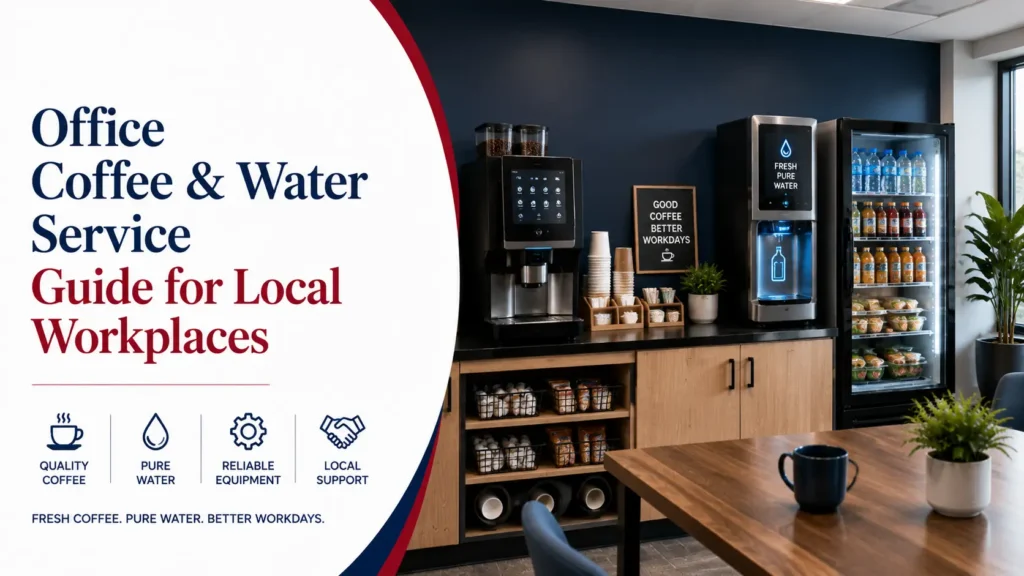
Coffee and drinking water are among the most frequently used refreshments in a workplace. Employees may start the morning with a fresh cup of coffee, refill a water bottle during the afternoon, prepare tea before a meeting, or need cold water after physical work. Providing these essentials sounds simple, but managing them internally can create ongoing responsibilities. Someone must purchase coffee, replace filters, monitor supplies, clean equipment, organize condiments, and respond when a brewer or dispenser stops working.
A managed office coffee and water service brings equipment, products, stocking, and support together in one organized program. The setup can be adapted for a small professional office, a multi-shift warehouse, a manufacturing facility, a healthcare workplace, a dealership, or another local business. For organizations across St. Charles County, the right program depends on employee count, beverage preferences, available space, operating hours, water quality, and how much the employer wants to provide.
This guide explains how workplace coffee and water programs work, which equipment options are available, what supplies may be included, and how to choose a local provider.
What Is Office Coffee and Water Service?
Office coffee and water service is a managed workplace refreshment program that provides brewing equipment, coffee products, water systems, supplies, restocking, and ongoing service.
Depending on the needs of the workplace, a program may include:
- Traditional coffee brewers
- Single-cup brewing systems
- Bean-to-cup machines
- Ground coffee or whole coffee beans
- Regular and decaffeinated coffee
- Tea, hot chocolate, and specialty drinks
- Cups, lids, stirrers, creamers, and sweeteners
- Bottleless water dispensers
- Hot and cold water systems
- Water filtration equipment
- Filter replacement
- Scheduled product delivery
- Brewer and dispenser support
The employer chooses the type of program it wants to provide. The service company then helps install suitable equipment and maintain the supply levels. Best Vending offers managed office coffee and water service for workplaces throughout St. Charles County and surrounding Missouri communities.
Why Workplaces Offer Coffee and Drinking Water
Coffee and water are practical break room essentials rather than occasional benefits. Employees use them throughout the day, and both can support a more convenient workplace experience.
Employees Spend Less Time Leaving the Workplace
When coffee and drinking water are available onsite, employees do not need to drive to a coffee shop or convenience store for every beverage. This is especially useful for offices with short breaks, warehouses located away from retail areas, and facilities where employees cannot easily leave the property during a shift.
Beverages Remain Available Across Multiple Shifts
A workplace coffee program does not need to follow restaurant hours. Early morning, evening, weekend, and overnight employees can use the equipment whenever the break room is open. Multi-shift facilities should plan supply levels so later teams receive the same access as daytime employees.
The Break Room Becomes More Useful
A comfortable beverage station gives employees a natural place to pause, refill a cup, or speak with coworkers. The station does not need to be elaborate. Clean equipment, organized supplies, fresh products, and dependable water can make a basic break room more functional.
Beyond providing coffee and water, these programs can support workplace culture, employee convenience, and a better break room experience. Explore the benefits of office coffee service for businesses looking to improve employee amenities.
Visitors and Customers Can Be Better Accommodated
Law offices, medical practices, dealerships, financial firms, real estate offices, and other customer-facing businesses may also provide coffee and water to guests. A well-maintained beverage area can support reception spaces, conference rooms, waiting rooms, and client meetings.
Internal Supply Management Is Reduced
An unmanaged coffee station requires employees to track products, place orders, replace supplies, and troubleshoot equipment. A professional workplace coffee service can handle much of that routine work through planned deliveries, equipment support, and supply monitoring. Some workplaces prefer managing coffee supplies internally, while others choose a managed service to reduce daily responsibilities. Our comparison of office coffee service vs buying coffee supplies explains the differences between these approaches.
How Office Coffee Service Works
An office coffee service begins with an assessment of the workplace’s needs. The provider reviews how many people will use the equipment, when they will use it, and what types of drinks they prefer.
1. Workplace Review
The provider may ask about:
- Number of employees
- Number of shifts
- Daily visitors
- Available counter space
- Electrical access
- Water connections
- Current coffee consumption
- Preferred coffee styles
- Tea and hot chocolate demand
- Existing water equipment
- Supply storage
- Cleaning responsibilities
These details help determine which brewer and water system can best support the expected daily use.
2. Equipment Recommendation
A small office may need one single-cup brewer. A larger facility may require several traditional brewers, thermal servers, or a bean-to-cup machine. Equipment should be selected for actual demand. An undersized brewer can create long lines, while an oversized system may take up unnecessary space and increase product waste.
3. Product Selection
The workplace chooses a starting selection of coffee, tea, and related supplies.
The initial assortment may include:
- Regular coffee
- Decaffeinated coffee
- Light, medium, and dark roasts
- Whole-bean or ground coffee
- Flavored coffee
- Tea
- Hot chocolate
- Creamers
- Sugar and alternative sweeteners
- Cups and lids
- Stirrers and napkins
Product choices can be adjusted after employees begin using the program.
4. Installation and Setup
The provider installs the approved equipment, confirms electrical or plumbing requirements, and checks that the station can be serviced safely. Employees may also receive simple instructions for brewing, cleaning, and reporting equipment problems.
5. Delivery and Ongoing Support
Coffee, cups, condiments, filters, and other products are restocked according to usage. Service frequency may change if the workplace grows, adds a shift, hosts more visitors, or changes equipment.
Types of Office Coffee Equipment
No single brewer is right for every location. Each format has practical advantages depending on volume, variety, speed, and employee preferences. Selecting the right machine depends on workplace size, beverage demand, available space, and the type of experience an employer wants to provide. Our guide on the best office coffee machines compares different equipment options for workplace environments.
| Coffee Equipment | Best Feature | Suitable Workplace |
|---|---|---|
| Traditional batch brewer | Makes several cups at once | Medium and large offices |
| Single-cup brewer | Offers individual drink choices | Small and medium offices |
| Bean-to-cup machine | Grinds beans for each drink | Workplaces wanting a premium experience |
| Thermal brewer | Keeps coffee hot without a warming plate | Meetings and high-volume use |
| Pour-over brewer | Simple setup with no direct water line | Locations with limited plumbing access |
Traditional Batch Coffee Brewers
A traditional brewer prepares a full pot or thermal container of coffee at one time. This setup works well when several employees want the same coffee during predictable periods, such as morning arrival, scheduled breaks, or meetings. Batch brewing can be efficient for larger groups, but someone needs to prepare the coffee and monitor freshness.
Single-Cup Brewing Systems
Single-cup equipment allows each employee to choose a drink and brew it individually. Depending on the system, choices may include regular coffee, flavored coffee, decaf, tea, and hot chocolate. Single-cup systems provide variety and reduce the chance of unused coffee sitting in a pot. However, each drink takes time to prepare, so one machine may not be enough for a busy break period.
Bean-to-Cup Coffee Machines
Bean-to-cup machines grind coffee beans and prepare a drink for each user. They may offer several drink styles depending on the equipment, such as regular coffee, espresso-based drinks, or different strength settings. These machines can create a more café-style experience, but they require suitable product supply, cleaning, maintenance, and enough daily usage to justify the equipment.
Thermal Coffee Brewers
Thermal brewers keep coffee in an insulated server rather than on a warming plate. This can be useful for meetings, reception spaces, and workplaces where coffee needs to remain available for an extended period.
Pour-Over Brewers
A pour-over brewer does not require a direct water connection. Water is manually added before brewing. This format may work in a small office or temporary setup, although employees must refill the brewer as needed.
How to Choose the Right Coffee Brewer
Equipment should be chosen around workplace needs rather than appearance alone.
Consider Employee Count
The number of employees provides a starting point, but daily visitors and shift schedules also affect demand. A 20-person office that hosts customers throughout the day may use more coffee than a larger office with remote or hybrid employees.
Review Peak Usage Times
Most coffee use is not evenly distributed across the day. Demand may rise sharply during:
- Morning arrival
- Shift changes
- Scheduled breaks
- Staff meetings
- Training sessions
- Client events
The brewer should be able to handle these peak periods without creating long wait times.
Decide How Much Variety Employees Need
Batch brewing provides fewer choices but serves groups quickly. Single-cup and bean-to-cup systems provide more variety but prepare one drink at a time. Workplaces should balance speed, variety, cost, and available space.
Check Plumbing and Electrical Requirements
Some coffee machines connect directly to a water line. Others need to be filled manually.
Before installation, the provider should verify:
- Nearby electrical outlets
- Water line availability
- Counter dimensions
- Drainage requirements, if applicable
- Cabinet clearance
- Equipment ventilation
- Service access
Plan for Cleaning and Daily Care
Even managed equipment needs routine care between service visits. Employees may need to empty drip trays, wipe surfaces, discard used coffee grounds, rinse containers, and keep the station organized. The provider should explain which tasks belong to the workplace and which are handled during service.
Coffee Products and Break Room Supplies
A complete coffee program includes more than the brewer itself.
Coffee Selection
Coffee choices may include different origins, roast levels, formats, and flavor profiles.
Common categories include:
- Light roast
- Medium roast
- Dark roast
- Regular coffee
- Decaffeinated coffee
- Whole-bean coffee
- Ground coffee
- Flavored varieties
- Single-cup coffee portions
The best starting mix is usually a small group of popular choices rather than a large selection that creates storage problems.
Tea and Other Hot Drinks
Not every employee drinks coffee. Tea, hot chocolate, and other hot beverages can make the station more inclusive.
Possible options include:
- Black tea
- Green tea
- Herbal tea
- Decaffeinated tea
- Hot chocolate
- Specialty drink mixes
Creamers and Sweeteners
A workplace may offer:
- Powdered creamer
- Liquid creamer
- Flavored creamer
- Dairy alternatives
- Sugar
- Sugar substitutes
- Honey
Perishable creamers need suitable refrigeration and date monitoring.
Disposable Supplies
Managed service may also include:
- Hot cups
- Cold cups
- Lids
- Sleeves
- Stirrers
- Napkins
- Filters
- Coffee liners
- Cleaning products approved for the equipment
Supply levels should be reviewed with coffee usage so the workplace does not run out of cups while coffee remains available.
Why Water Quality Matters for Office Coffee
Coffee is mostly water, so water quality can affect aroma, taste, equipment performance, and employee satisfaction. Water containing noticeable chlorine, minerals, sediment, or other taste and odor issues may produce inconsistent coffee. Mineral buildup can also affect internal components over time.
Because water makes up a major part of every brewed drink, understanding filtration, minerals, and water conditions is important for consistent results. Learn more about how water quality affects office coffee taste and workplace coffee performance.
A suitable water filtration system may help:
- Improve taste and odor
- Reduce certain sediments
- Support more consistent brewing
- Limit scale buildup in compatible equipment
- Improve the taste of tea and cold drinking water
- Reduce reliance on stored water bottles
The right filter depends on local water conditions, equipment, usage, and the specific issue being addressed.
A provider should not assume that one filter solves every water-quality concern. The system must be selected according to the workplace and manufacturer requirements.
What Is an Office Water Service?
An office water service provides workplace drinking water equipment, filtration, maintenance, and replacement filters. Instead of repeatedly purchasing individual bottles or storing large containers, businesses can use a point-of-use system connected to the building’s water supply.
A typical service may include:
- Bottleless water dispenser
- Hot and cold water
- Filtration equipment
- Filter replacement
- Equipment sanitation
- Drip tray maintenance
- Service support
- Cups or related supplies, depending on the program
The setup can be placed in a break room, reception area, conference space, production office, or another accessible location.
Types of Office Water Equipment
Bottleless Water Dispensers
Bottleless dispensers connect to the building’s water line and pass water through a filtration system. They can reduce the need to store, lift, and replace large water jugs. Many models provide cold water, hot water, or both.
Countertop Water Systems
A countertop dispenser may work where floor space is limited. The counter must be strong enough for the equipment, and the system may still need a water connection and nearby outlet.
Freestanding Water Coolers
Freestanding systems provide a larger dispensing area and may offer storage or multiple temperature options. They require suitable floor space and should be placed where employees can refill containers without blocking walkways.
Hot Water Dispensers
A hot water dispenser supports tea, hot chocolate, oatmeal, and other products. Temperature, safety controls, and cleaning requirements should be reviewed before installation, especially in schools or public areas.
Choosing between different hydration solutions depends on installation requirements, maintenance preferences, and workplace usage. Learn more about office water systems and the differences between bottleless and bottled water options.
Water Filtration for an Office
Water filtration for an office should be planned around water conditions, equipment needs, and employee demand.
Filtration equipment may be designed to address:
- Chlorine taste or odor
- Sediment
- Certain minerals
- Scale buildup
- General taste concerns
The exact performance depends on the filter type and system specifications. Not every filter removes every possible substance. Businesses with a specific water safety concern should rely on appropriate water testing and qualified guidance rather than assuming that a standard office filter provides complete purification.
Filter Replacement Matters
A filter has a limited service life. Delayed replacement may reduce performance and affect flow or taste.
Replacement schedules are influenced by:
- Water usage
- Filter capacity
- Local water conditions
- Equipment type
- Manufacturer guidelines
A managed service should track replacement intervals and inspect the equipment during scheduled visits.
Bottleless Water Systems vs. Bottled Water Coolers
| Feature | Bottleless Water System | Bottled Water Cooler |
|---|---|---|
| Water source | Building water line | Delivered water container |
| Bottle storage | Not required | Required |
| Bottle lifting | Not required | Usually required |
| Supply continuity | Based on building water access | Based on available bottles |
| Filtration | Built into the system | Depends on supplied water |
| Installation | May require a water connection | Usually simpler |
| Best fit | Permanent workplace installation | Temporary or limited-plumbing locations |
Bottleless systems can reduce bottle handling and storage, but they require a suitable water connection. Bottled coolers may be useful where plumbing access is unavailable, although workplaces must manage deliveries, empty containers, and storage.
Combining Coffee and Water Service
Coffee and water are closely connected, so managing both through one provider can simplify break room service.
An integrated program may offer:
- A filtered water line for the coffee brewer
- Drinking water beside the beverage station
- Hot water for tea and cocoa
- Coordinated coffee and filter deliveries
- One service contact
- Combined equipment planning
- Simplified supply reviews
The coffee brewer and water dispenser should still be evaluated separately. A large warehouse may need several water points but only one central coffee station. A customer-facing office may need coffee in a conference area and drinking water in the reception room.
Office Coffee and Water Service for Different Workplaces
Different facilities have different beverage needs.
Corporate Offices
Professional offices often need coffee for employees, conference rooms, client meetings, and reception spaces. A program may combine a single-cup or bean-to-cup brewer with filtered hot and cold water. Tea, decaf, creamers, and cups can help accommodate different preferences.
Warehouses and Distribution Centers
Warehouse employees may need water access across several areas, especially when work is physically demanding. Coffee service may be concentrated around break periods, while drinking water needs to remain easily accessible throughout the shift.
Manufacturing Facilities
Manufacturing workplaces may operate early, late, or overnight schedules. Equipment capacity and restocking should account for every shift. The provider should also consider dust, heat, equipment placement, and service access.
Healthcare Workplaces
Medical offices, clinics, and healthcare facilities may need coffee and water for employees working irregular schedules. Equipment should be placed where it does not interfere with clinical areas, sanitation requirements, or patient movement.
Schools and Education Facilities
Teacher lounges, staff offices, administrative buildings, and campus facilities may use coffee and water service. Equipment and hot water access should be planned around the users, campus rules, and room security.
Dealerships and Customer-Facing Businesses
Dealerships, repair centers, law firms, financial offices, and other customer-facing businesses may provide drinks to both employees and visitors. The station should be clean, simple to use, and stocked throughout business hours.
Building a Better Workplace Coffee Station
Equipment is only one part of the experience. The layout should make brewing, serving, and cleanup simple.
A practical station may include:
- Coffee brewer
- Water dispenser
- Coffee storage
- Tea organizer
- Cup and lid dispensers
- Creamer and sweetener storage
- Waste container
- Napkin holder
- Cleaning supplies
- Counter space for preparing drinks
Frequently used items should be visible and easy to reach. The area around the brewer should also have enough room for employees to prepare drinks without blocking access to refrigerators, microwaves, or other break room equipment.
How Coffee and Water Supplies Are Restocked
Service frequency should reflect actual workplace usage.
During a regular visit, the provider may:
- Refill coffee products
- Restock tea and hot chocolate
- Replace cups and lids
- Add creamers and sweeteners
- Review product usage
- Replace water filters when due
- Inspect equipment
- Check for leaks
- Review dispenser operation
- Record product requests
Employees should have a clear contact method for reporting an urgent equipment problem between scheduled visits.
Coffee Equipment Maintenance and Service
Coffee brewers use water, heat, valves, pumps, filters, and other components that require regular care.
Service needs may include:
- Brewer calibration
- Filter replacement
- Scale management
- Water flow checks
- Temperature checks
- Cleaning
- Part replacement
- Leak inspection
- Grinder adjustment for bean-to-cup equipment
Employees should not attempt technical repairs unless authorized. The workplace should report unusual taste, low water flow, leaking equipment, inconsistent temperature, error messages, or brewing failures as soon as they appear.
How to Estimate Workplace Coffee Demand
Coffee demand varies, but several questions help with planning:
- How many employees regularly drink coffee?
- How many cups does the average user drink?
- Are visitors offered coffee?
- Does the workplace operate more than one shift?
- Are employees onsite every day?
- Do meetings increase usage?
- Is tea or hot chocolate also popular?
- Are remote and hybrid schedules reducing daily traffic?
Initial estimates should be reviewed after the program begins. Actual product use is more useful than assumptions when adjusting delivery levels.
Supporting Sustainability in the Beverage Station
A workplace can reduce waste and manage resource use without making unsupported environmental claims.
Practical steps may include:
- Using bottleless water equipment where suitable
- Providing a bottle-refill point
- Reducing unnecessary cup waste
- Offering reusable mugs
- Ordering supplies according to real demand
- Avoiding excess creamer and sweetener inventory
- Maintaining equipment so it operates correctly
- Recycling compatible packaging where local programs accept it
Reusable cups can reduce disposables, but the workplace still needs a clear cleaning and storage plan.
Environmental benefits vary by equipment, energy use, delivery frequency, product packaging, and local recycling options.
Complementary Break Room Services
Coffee and water can work alongside food and snack programs. A larger workplace may combine its beverage station with a workplace micro market offering sandwiches, salads, snacks, and cold drinks.
An employer that wants to provide selected refreshments as a company benefit may add an office pantry service. The pantry can include coffee-pairing snacks, breakfast products, fruit, beverages, and other employer-sponsored items.
The combined program should avoid unnecessary duplication. For example, a workplace may provide filtered water at no charge while selling bottled specialty drinks through vending or a micro market.
How to Choose an Office Coffee and Water Provider
A provider should offer more than equipment installation. Service quality affects drink availability, supply organization, filter replacement, and equipment reliability.
Choosing the right provider depends on equipment options, maintenance support, product availability, and the needs of your workplace. Our guide on how to choose an office coffee service explains the factors businesses should consider before selecting a workplace coffee partner.
Review Equipment Options
Ask whether the provider offers several brewer and dispenser types rather than recommending the same machine for every workplace.
Confirm Product Variety
The available selection should include options for different tastes, including regular coffee, decaf, tea, creamers, sweeteners, and suitable cold-water equipment.
Understand Delivery Scheduling
Find out how deliveries are planned and what happens when usage changes between visits.
Ask About Equipment Support
Clarify:
- How service requests are submitted
- Who handles repairs
- Whether replacement equipment is available
- How quickly problems are reviewed
- Which cleaning tasks belong to the workplace
- Who manages filter replacement
Discuss Water Filtration
Ask what the proposed filtration system is designed to address and how often its filters will be replaced. Avoid broad promises that a system removes every contaminant unless its specifications support that statement.
Evaluate Local Service Coverage
Businesses comparing office coffee service in St. Charles County should ask where the service team is located and which communities are included in regular delivery routes.
Review the Complete Break Room Program
Workplace needs may expand beyond coffee and water. A provider offering vending, micro markets, pantry programs, and related services may make future changes easier.
Local Office Coffee and Water Service in St. Charles County
Workplaces across St. Charles County have different beverage needs based on industry, employee count, location, and schedules.
Best Vending serves local businesses in communities including:
- St. Charles
- St. Peters
- O’Fallon
- Wentzville
- Surrounding St. Charles County areas
- Nearby Missouri service communities
An office in St. Charles may need coffee for meetings and clients. A warehouse in O’Fallon may prioritize cold drinking water and high-capacity equipment. A manufacturing facility in St. Peters may require service across several shifts. A growing Wentzville workplace may need a program that can expand as employee count increases.
Local planning should consider:
- Number of daily users
- Work shifts
- Visitor traffic
- Break room space
- Water line access
- Coffee preferences
- Drinking water demand
- Equipment placement
- Delivery frequency
- Service response
A workplace assessment helps match equipment and product levels to the actual facility.
Common Coffee and Water Service Mistakes
Choosing a Brewer That Is Too Small
One small single-cup machine may create long waits in a large workplace. Equipment should be selected around peak use rather than average daily consumption alone.
Offering Too Many Products at Launch
An oversized selection can create storage problems and leave slow-moving products unused. Begin with several dependable choices and expand based on demand.
Ignoring Water Quality
Poor-tasting water can affect both drinking water and brewed coffee. Filtration should be considered as part of the coffee program rather than as a separate afterthought.
Forgetting Later Shifts
Second and third-shift employees should have access to stocked supplies and functioning equipment.
Delaying Filter Replacement
Filters should be replaced according to usage and manufacturer guidance.
Overlooking Daily Cleaning
Managed service does not eliminate all workplace cleaning. Spills, drip trays, counters, and shared surfaces may need attention between visits.
Failing to Define Service Responsibilities
The employer and provider should understand who manages supplies, cleaning, technical repairs, filter changes, and service requests.
Plan a Better Coffee and Water Program
A useful beverage station should match the workplace rather than follow a fixed template. Employee count, peak demand, coffee preferences, water quality, equipment space, and shift schedules all affect the right setup.
Reliable service is just as important as product selection. Coffee, cups, and condiments need to remain stocked. Filters should be replaced on schedule. Equipment problems should have a clear reporting process.
Best Vending provides workplace coffee and water solutions for offices, warehouses, manufacturing facilities, healthcare workplaces, schools, dealerships, and other organizations throughout St. Charles County and nearby Missouri communities. Contact us to discuss coffee equipment, drinking water systems, filtration, product delivery, and a service plan built around your workplace.
Frequently Asked Questions
An office coffee program may include brewing equipment, coffee, tea, cups, lids, filters, creamers, sweeteners, delivery, and equipment support. The exact products depend on the selected program.
The best brewer depends on employee count, peak demand, drink variety, available space, and water access. Batch brewers work well for groups, while single-cup and bean-to-cup systems provide more individual choice.
Yes. Programs can include regular coffee, decaffeinated coffee, tea, hot chocolate, and other beverages based on workplace preferences.
A bottleless dispenser connects to the building’s water line and passes water through a filtration system before dispensing it. Depending on the equipment, it may provide cold, hot, or room-temperature water.
Replacement timing depends on filter capacity, water usage, local conditions, equipment type, and the manufacturer's recommendations. A managed provider should track the schedule for the installed system.
Filtration may improve coffee taste when the source water has noticeable chlorine, sediment, odor, or mineral-related issues. The result depends on the water conditions and the type of filter installed.
Delivery frequency is based on employee count, product use, storage space, shifts, and visitor demand. The schedule can be adjusted as consumption changes.
Yes. Equipment capacity, product quantities, and delivery schedules can be planned around early, evening, weekend, and overnight employees.