
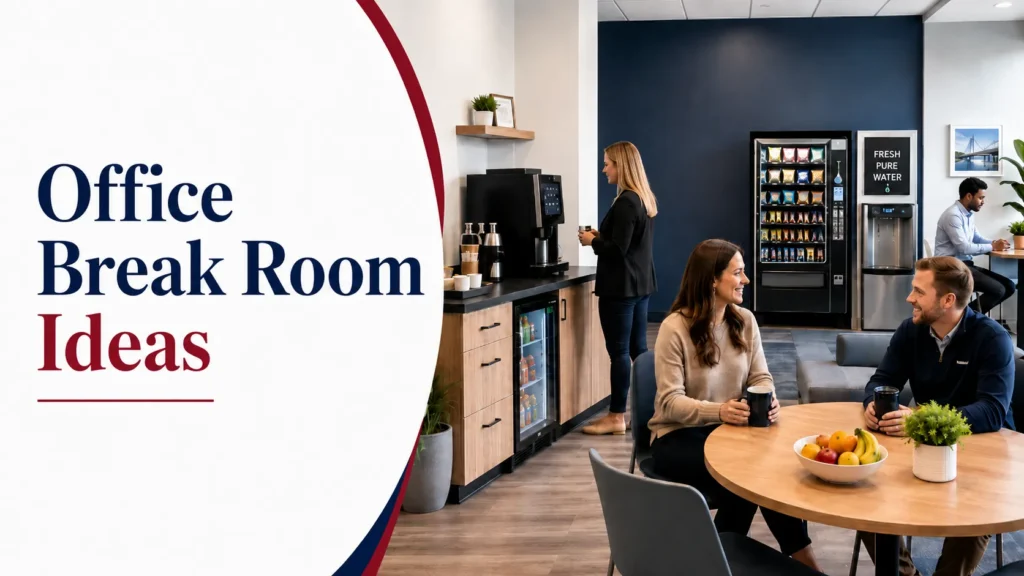
A break room can be much more than a place where employees eat lunch. When it is comfortable, well stocked, and easy to use, it gives people a place to step away from work, recharge, and connect with coworkers. The most useful break room ideas are not always expensive or complicated. Small updates to seating, food access, coffee, water, lighting, and organization can make a noticeable difference in how employees use the space.
For businesses in St. Charles County, the right setup depends on the size of the team, the type of work being done, and how employees move through the day. An office with 20 employees will need something different from a warehouse that operates across several shifts. This guide covers practical office break room ideas for offices, schools, warehouses, manufacturing facilities, healthcare workplaces, and other local businesses.
What Makes a Good Office Break Room?
A good office break room gives employees a clean, comfortable place to eat, rest, and recharge. Useful features often include:
- Comfortable seating
- Easy access to snacks and drinks
- Coffee and filtered water
- A refrigerator and microwave
- Clear storage and waste areas
- Good lighting
- Fresh food or vending options
- Charging outlets
- A layout that supports both quiet breaks and casual conversation
The right mix of break room amenities depends on the workplace. A smaller office may only need coffee, water, and a few snacks. A larger facility may benefit from vending machines, a micro market, or a managed pantry program.
Start With How Employees Actually Use the Space
Before buying new furniture or adding equipment, look at how employees currently use the break room. Some teams take scheduled breaks at the same time. Others come and go throughout the day. Warehouses and manufacturing facilities may have employees working early mornings, evenings, or overnight shifts. Healthcare teams may need food and drinks available outside standard lunch hours.
A short employee survey can provide helpful information. Ask what people use most, what is missing, and what would make the space more comfortable.
Questions could include:
- Do employees bring lunch or buy food nearby?
- Is the current refrigerator large enough?
- Are coffee and water available throughout the day?
- Do people want healthier snacks?
- Is there enough seating during busy break periods?
- Would employees use fresh food or grab-and-go meals?
- Are overnight or weekend teams getting the same access as daytime staff?
These answers make it easier to choose employee break room ideas that match real needs instead of guessing.
Plan the Break Room Around Your Workplace Type
Different industries require different layouts and refreshment options.
Corporate Offices
Office employees often use break rooms for coffee, lunch, quick meetings, and short mental breaks. Comfortable seating, reliable Wi-Fi, charging outlets, coffee, water, and light snacks usually work well.
Larger offices may also benefit from fresh food, self-checkout options, or a stocked pantry. Smaller offices can keep things simple with a coffee station, filtered water, and organized snack storage.
Warehouses and Manufacturing Facilities
Employees in warehouses and manufacturing plants may not have enough time to leave the building during a break. Fast access to filling snacks, cold drinks, fresh food, and coffee can make the space more useful.
These facilities also need durable furniture, easy-to-clean surfaces, and enough seating for shift changes. Break rooms serving multiple shifts should have refreshment options available beyond normal business hours.
Schools and Education Facilities
Teacher lounges, staff rooms, and campus break areas need convenient food and drink options that fit busy schedules. Coffee, water, snacks, and grab-and-go meals can support teachers and staff who may only have a short break between classes. Schools may also want a balanced product mix that includes healthier choices alongside familiar favorites.
Healthcare Workplaces
Medical offices, clinics, and healthcare facilities often operate on long or irregular schedules. Staff members may need coffee, water, snacks, and meals at different times of day. A well-planned break room can give employees a quiet place to rest during demanding shifts. Separate areas for eating and quiet recovery can be especially helpful in healthcare settings. Facilities serving employees, visitors, and overnight teams can also consider hospital vending machines for healthcare and public facilities when refreshments need to remain available beyond cafeteria or normal business hours.
Choose Seating That Fits the Available Space
Furniture has a major effect on whether employees actually use a break room. A crowded room with too many chairs feels uncomfortable. A large room with only one small table can feel empty and uninviting. The best layout makes good use of the available space without blocking walkways, equipment, or storage.
Consider using a mix of:
- Standard tables for meals
- Small two-person tables
- Counter seating for quick breaks
- Softer chairs for quiet rest
- Bench seating along a wall
- Outdoor seating, when space allows
Employees do not all take breaks the same way. Some want to talk with coworkers, while others prefer a quieter place to sit alone. Providing more than one type of seating can support both.
Make Food and Drinks Easy to Access
A break room becomes more valuable when employees can find food and drinks without leaving the workplace. Traditional vending machines remain a practical choice for many offices, warehouses, schools, and public-facing facilities. They take up limited space and can provide snacks, cold beverages, and quick meal options throughout the day.
Larger teams may need more variety. A workplace micro market can provide fresh food, salads, sandwiches, drinks, snacks, and self-checkout in an open retail-style setup.
Here is a simple comparison:
| Refreshment Option | Best Fit For | Main Advantage |
|---|---|---|
| Vending machines | Small to medium workplaces | Compact and easy to use |
| Micro markets | Larger offices and multi-shift facilities | More fresh food and product variety |
| Office pantry | Employers providing snacks as a benefit | Flexible product selection |
| Coffee and water | Nearly every workplace | Daily convenience and hydration |
The best option depends on employee count, available space, product demand, and operating hours.
Add Coffee and Water Employees Will Use
Coffee and water are two of the most common break room essentials. A basic coffee maker may work for a very small office, but larger teams often need equipment that can handle frequent use. Single-cup brewers, bean-to-cup machines, traditional brewers, tea options, and related supplies can all be part of a workplace coffee setup.
Water quality matters too. Filtered water can improve taste and make it easier for employees to refill bottles throughout the day. Some workplaces may also want sparkling or flavored water options.
A managed office coffee and water service can help businesses keep brewers, supplies, filters, and beverage products organized without asking employees to manage them. Place coffee and water stations where they are easy to reach, but avoid creating traffic near refrigerators, microwaves, or doorways.
Offer a Better Mix of Snacks
A useful snack program includes more than candy and chips. Employees have different tastes, schedules, and dietary needs. Some may want a quick treat, while others are looking for protein, fresh food, or something lighter.
A balanced product mix may include:
- Chips, crackers, and pretzels
- Candy and baked snacks
- Protein bars and nuts
- Fresh fruit
- Yogurt
- Sandwiches and wraps
- Sparkling water
- Juice and tea
- Low-sugar drinks
- Gluten-free or plant-based choices
Healthy options should be easy to find, not hidden behind less nutritious products. Clear labeling and organized displays can help employees make quick choices during short breaks.
Consider an Office Pantry Program
Some employers choose to provide snacks and drinks as an employee benefit. An office pantry can be as simple as a shelf with packaged snacks and bottled drinks. It can also be a larger managed program with rotating products, coffee pairings, healthier choices, and regular restocking.
A professionally managed office pantry service can be tailored around the company’s budget, team size, workplace culture, and product preferences.
Pantry programs work especially well for:
- Offices competing for talent
- Teams with long meetings
- Hybrid workplaces
- Companies welcoming clients or visitors
- Employers focused on workplace culture
- Businesses that want food and drinks available at no cost to employees
Clear storage and regular restocking are important. Without a system, pantry shelves can quickly become cluttered or inconsistent.
Use Lighting to Make the Room Feel Comfortable
Harsh lighting can make a break room feel like an extension of the work floor. Whenever possible, use natural light. Keep windows clear and avoid placing tall furniture where it blocks sunlight. If natural light is limited, warm overhead lighting and small lamps can make the room feel more welcoming.
Light-colored walls can also help a smaller room feel more open. A few plants, framed local photos, or simple artwork can add personality without making the room feel crowded. Decor does not need to be expensive. Even small changes can make the space feel less clinical.
Create Separate Areas for Different Break Activities
A single open room can become noisy, especially when several employees take breaks at the same time. Dividing the room into small zones can make it easier to use. One area may include tables for meals, while another has quieter seating. Coffee, vending, microwaves, and waste bins can be grouped together to reduce traffic around the seating area.
Possible zones include:
Food Preparation Area
Place refrigerators, microwaves, countertops, sinks, utensils, and napkins in one organized area.
Refreshment Area
Keep coffee, water, vending machines, pantry shelves, or micro market equipment together when the room layout allows it.
Dining Area
Use tables and chairs that are easy to clean and comfortable for a normal lunch break.
Quiet Area
A few softer chairs away from appliances can give employees a place to sit without joining a group conversation.
This type of layout is especially useful when developing small office break room ideas because each part of the room has a clear purpose.
Keep the Break Room Clean and Easy to Maintain
Even the best design will not work if the room is regularly messy. Employees are more likely to respect a space that has clear storage, accessible cleaning supplies, and enough trash and recycling bins. Labels can help people return items to the correct place.
A simple maintenance plan should cover:
- Refrigerator cleanouts
- Counter and table cleaning
- Trash removal
- Recycling
- Appliance maintenance
- Pantry inventory
- Coffee supply restocking
- Vending or micro market service
- Water filter replacement
Assigning all break room responsibilities to one employee can become frustrating. A managed service can reduce that workload by handling stocking, product rotation, equipment support, and vending machine inventory management instead of leaving routine refreshment tasks to office or facility staff.
Add Technology Where It Improves Convenience
Technology should make the break room easier to use, not more complicated. Cashless vending allows employees to pay with credit cards, tap-to-pay, and mobile wallets. Micro market kiosks can support self-checkout for food, snacks, and drinks. Charging stations help employees keep phones and devices powered during breaks.
A shared screen may be useful for company updates, safety messages, or announcements. Keep it optional and avoid filling the entire break with workplace messaging. Employees still need a chance to disconnect.
Include Break Room Amenities Employees Value
Not every workplace needs the same features, but some break room amenities are useful across many industries.
Popular options include:
- Reliable coffee
- Cold, filtered water
- A clean refrigerator
- Enough microwaves
- Comfortable seating
- Healthy snacks
- Fresh food access
- Charging outlets
- Secure storage
- Outdoor seating
- Quiet areas
- Games or puzzles
- A community bulletin board
Choose amenities based on employee needs rather than trends. A ping-pong table will not help much if employees have nowhere comfortable to eat lunch. Businesses can also review how to choose office amenities employees will actually use before investing in new break room features.
Make the Space Work for Different Shifts
Daytime employees often receive the best access to food, coffee, and clean facilities. Second- and third-shift teams may find empty shelves, cold coffee, or limited choices.
Multi-shift workplaces should plan for:
- Products that remain available overnight
- Regular restocking based on shift demand
- Fresh food rotation
- Coffee equipment that employees can use safely
- Clear service and support information
- Enough seating during shift changes
Warehouses and manufacturing facilities often benefit from warehouse vending machines for multi-shift teams because snacks, drinks, and selected food can remain available when nearby restaurants are closed. Healthcare facilities may use a similar approach for employees working outside normal business hours.
Plan Around the Available Budget
Break room improvements do not have to happen all at once. Start with the changes employees will notice most. In many workplaces, that means clean seating, better water, reliable coffee, and convenient food access.
Low-Cost Improvements
- Reorganize cabinets and counters
- Add clear labels
- Improve lighting
- Replace worn utensils
- Add plants or artwork
- Create a charging area
- Add a suggestion board
Mid-Range Improvements
- Replace tables or chairs
- Add a better coffee brewer
- Install filtered water
- Add shelving
- Improve storage
- Expand snack options
Larger Improvements
- Add vending machines
- Install a micro market
- Build a pantry program
- Renovate the kitchen area
- Create separate dining and quiet zones
- Add outdoor break space
Budget decisions should reflect daily use. A practical feature that employees use every day is usually more valuable than a decorative upgrade.
Support Employee Wellness Without Making the Room Feel Restrictive
A healthier break room does not require removing every treat. People appreciate having choices. A balanced program can include familiar snacks alongside fruit, protein items, lower-sugar drinks, and fresh meals. Hydration is another important part of employee wellness. Filtered water should be easy to access, and refill stations should be kept clean.
Comfort also matters. Quiet seating, natural light, and a pleasant environment can help employees step away from work for a few minutes. Wellness works best when the room supports employees instead of telling them what they should choose. Food access, hydration, and convenient refreshments can also play a practical role in an employee wellness program, especially when employees work long or irregular schedules.
Think About Accessibility
Every employee should be able to use the break room comfortably. Keep walkways clear and leave enough space around tables, appliances, vending machines, and doorways. Frequently used products should be within easy reach. Instructions on coffee machines, kiosks, or appliances should be simple and readable.
Consider:
- Wheelchair-accessible seating
- Counter heights
- Easy-to-open storage
- Clear product labels
- Visible pricing
- Allergy information
- Simple payment instructions
- Adequate lighting
Accessibility should be part of the initial layout, not an afterthought.
Use Local Service for Easier Support
Businesses often focus on products and equipment but overlook ongoing service. A break room program needs regular stocking, equipment maintenance, product adjustments, and a clear way to report problems. Local support can make those tasks easier.
Best Vending provides St. Charles County refreshment services for offices, warehouses, schools, healthcare facilities, and other workplaces. A local provider can review the space, recommend suitable equipment, and adjust the program as employee needs change.
Break Room Planning Checklist
Use this checklist before updating your workplace break room:
- How many employees use the room?
- Do several shifts share the space?
- Is there enough seating during busy periods?
- Are coffee and water easy to access?
- Do employees have food available onsite?
- Are healthier options included?
- Is the room easy to clean?
- Are appliances in good condition?
- Is the space accessible?
- Who handles stocking and service?
- Would vending, a micro market, or pantry service fit best?
- Can employees share feedback after changes are made?
A clear plan can prevent spending money on features that employees rarely use.
Build a Break Room Employees Will Actually Use
Useful break room ideas begin with the people who use the space every day. A comfortable chair, reliable coffee, cold water, fresh food, or a quiet place to sit can matter more than an elaborate design.
St. Charles County businesses should consider team size, shift schedules, available space, employee preferences, and ongoing service needs before making changes. The right combination of seating, refreshments, equipment, and support can turn an underused room into a practical part of the workplace.
Best Vending helps local businesses plan vending, micro market, coffee, water, and pantry programs that fit the way their teams work. Contact the team to discuss refreshment options for your office, warehouse, school, healthcare facility, or other workplace.
Frequently Asked Questions
Most office break rooms need comfortable seating, clean tables, a refrigerator, a microwave, coffee, water, trash and recycling bins, and access to snacks or meals. The exact setup depends on team size and workplace type.
Small offices can make better use of limited space with wall-mounted shelves, compact tables, a single-cup coffee brewer, filtered water, organized snack storage, and a small vending machine or pantry shelf.
Vending machines work well in smaller spaces and provide simple access to snacks and drinks. Micro markets offer more variety, including fresh food and meals, and usually fit larger offices or multi-shift facilities.
Include filtered water, healthier snacks, fresh food options, comfortable seating, natural light, and a quiet place to rest. Wellness is easier to support when employees have several practical choices.
There is no fixed schedule. Review the room when employee numbers change, equipment becomes unreliable, products stop selling, or staff feedback shows the space is no longer meeting their needs.
Start with cleaning, organization, lighting, seating, coffee, water, and better snack choices. These changes usually have a bigger daily impact than expensive decorations.