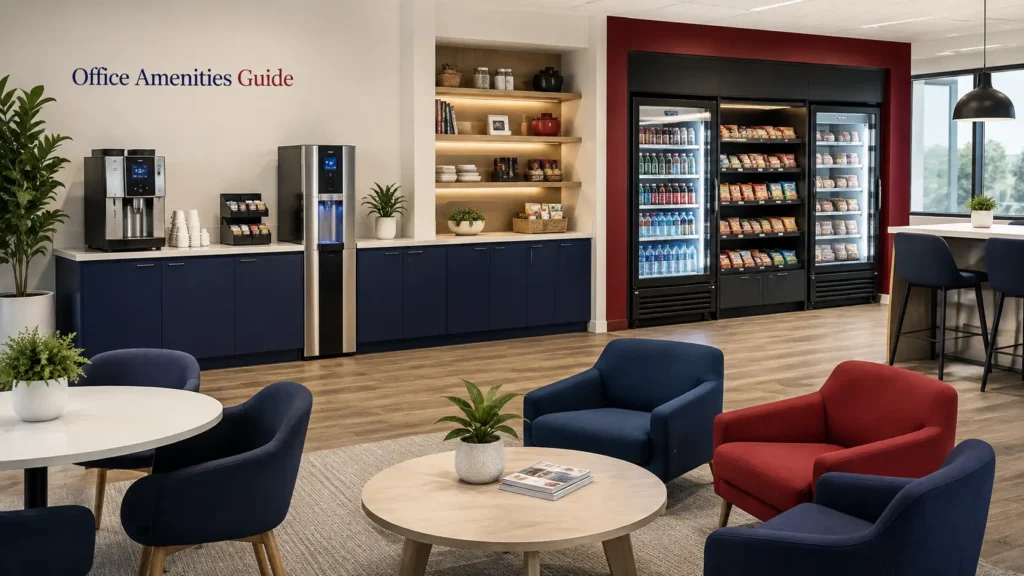
The best office amenities are not always the most expensive or impressive. They are the services, equipment, and shared spaces that solve everyday problems for employees. A useful amenity may help someone get drinking water, prepare coffee, find a quick meal, store lunch, or take a comfortable break without leaving the workplace.
Choosing the right mix requires more than copying another company’s break room. Employee count, work schedules, available space, visitor traffic, and the type of work being performed all affect what will provide real value. A professional office may prioritize coffee and meeting refreshments, while a warehouse may need hydration, filling food, and reliable access across several shifts.
Businesses should begin by identifying what employees currently lack. From there, they can compare different workplace amenities, determine which services should be managed internally, and decide where an outside provider would reduce administrative work.
What Should a Workplace Prioritize First?
Most workplaces should begin with basic comfort and convenience. Employees need clean drinking water, a suitable place to sit, food storage, meal preparation equipment, and access to refreshments during the hours they work. Additional amenities should build on those essentials rather than replace them.
The exact order will vary by location. A warehouse with physical work and limited nearby restaurants may prioritize cold water and substantial food options. A client-facing office may place more importance on coffee, filtered water, and a clean reception beverage area.
Before adding new equipment, review the problems employees experience today. If people leave the property for every drink, the workplace may need onsite beverage access. If office staff spend hours shopping for supplies, a managed program may be more valuable than another piece of equipment.
Understand How Employees Use the Workplace
Employee headcount provides a useful starting point, but it does not fully explain demand. A 40-person hybrid office may have fewer people onsite than a 25-person facility operating across several fixed shifts. Daily attendance, break schedules, and visitor traffic often matter more than the total number of people employed by the company.
Businesses should also consider the physical demands of the work. Warehouse, manufacturing, maintenance, and distribution employees may prefer cold drinks, protein-focused snacks, breakfast items, and more substantial food. Professional offices may see greater demand for coffee, tea, lighter snacks, and products suitable for meetings.
Employee feedback can help with initial planning, but requests should be compared with actual use after launch. People may ask for certain products and then consistently choose something else. A successful program remains flexible enough to respond to real demand instead of treating the first selection as permanent.
Match Amenities to the Type of Workplace
Different environments create different employee needs. The most suitable employee amenities depend on operating hours, access to nearby food, workplace layout, and whether the location also serves customers or visitors.
Corporate and Professional Offices
Office teams often use coffee, filtered water, refrigerators, microwaves, snack areas, and comfortable seating throughout the day. Hybrid attendance should be considered so products do not expire during low-traffic periods. Meeting rooms and reception areas may also need separate beverage supplies from the employee break area.
A smaller office may need only a compact coffee station and a limited snack selection. A growing workplace may benefit from managed delivery, refrigerated products, or a broader food program that reduces trips outside the building.
Warehouses and Manufacturing Facilities
Industrial workplaces often need high-capacity equipment and reliable access across first, second, and third shifts. Hydration, filling snacks, cold beverages, breakfast products, and meal options may be more important than a decorative lounge area. Restocking schedules should protect availability for later teams instead of allowing daytime employees to use the entire supply.
Equipment placement also deserves careful attention. Machines, coolers, and seating should be easy to reach without interfering with production areas, safety routes, or shift movement. Durable, easy-to-clean surfaces are usually more practical in these settings. Facilities operating first, second, and third shifts can also review how warehouse vending machines for multi-shift teams support food, drinks, hydration, and reliable access throughout the workday.
Customer-Facing Businesses
Dealerships, medical offices, financial firms, law offices, and service centers may provide refreshments for both employees and visitors. The business should clearly separate staff amenities from products intended for customers. Reception areas usually need a simpler, more polished setup than employee break rooms.
Coffee, filtered water, and individually packaged refreshments can work well in waiting areas. Employee spaces may require a broader selection, food storage, and equipment designed for heavier daily use. Healthcare organizations with staff, visitors, and irregular operating hours can also explore healthcare vending solutions for staff and visitors when refreshments need to remain accessible beyond normal business hours.
Compare the Main Office Amenity Options
Workplace food and beverage programs can be delivered through several formats. Each option serves a different level of demand, available space, and payment preference.
| Amenity Option | Main Strength | Best Fit |
|---|---|---|
| Vending equipment | Compact, secure product access | Small and medium workplaces |
| Self-checkout market | Broader food variety and fresh meals | Larger or high-traffic locations |
| Employer-sponsored pantry | Company-funded employee benefit | Offices with a defined monthly budget |
| Coffee station | Convenient daily hot beverages | Most workplace types |
| Filtered water station | Reliable hydration access | Offices, warehouses, and public-facing facilities |
| Shared kitchen appliances | Supports food brought from home | Workplaces with suitable space |
Vending Equipment
Vending works well when the workplace needs secure access to snacks and cold beverages without using a large amount of floor space. Modern equipment may accept cards, mobile wallets, and contactless payments, which makes it easier for employees who do not carry cash. Machine capacity should match traffic so popular products do not remain unavailable between service visits.
A small workplace may need one combination machine, while a busier location may require separate snack and beverage equipment. Refrigerated machines can also provide selected fresh items when demand and service frequency support them.
Self-Checkout Markets
A self-checkout market uses open shelving, refrigerated coolers, food displays, and a payment kiosk. Employees can pick up products, read labels, compare choices, and purchase several items in one transaction. This format usually provides more fresh food and package variety than enclosed vending equipment.
Larger offices, warehouses, and multi-shift facilities can review available workplace micro market options when traditional machines no longer provide enough capacity. The location should have suitable space, controlled access, and enough regular users to support the market.
Employer-Sponsored Pantry
An employer-sponsored pantry allows a company to provide selected snacks, drinks, or breakfast items as an employee benefit. The business establishes a budget and approves the types of products included. Employees generally do not complete a separate transaction for approved pantry items.
This format can work well for offices that want greater control over the employee experience. However, the program still requires product planning, restocking, storage, and clear spending limits.
Coffee and Water Stations
Coffee and drinking water are among the most frequently used workplace amenities. A managed station may include brewing equipment, regular and decaffeinated coffee, tea, cups, creamers, sweeteners, filtered hot water, and cold drinking water. Equipment should match employee count and peak use rather than appearance alone.
A managed office coffee and water program can simplify product delivery, filter replacement, and equipment support. It can also reduce the need for office staff to monitor supplies and purchase replacements.
Plan Around Space, Access, and Daily Traffic
Available space should be reviewed before any equipment is selected. A machine or cooler may fit the measured floor area but still block a doorway, appliance, seating area, or service route. Employees also need enough room to browse, prepare drinks, complete payment, and move away without creating a bottleneck.
Electrical outlets, water connections, ventilation, counter depth, refrigerator door clearance, and delivery access should all be checked during planning. Equipment should not interfere with accessibility routes, fire exits, sinks, or waste containers. A site review can prevent expensive changes after installation.
The layout should also reflect peak traffic. A narrow coffee station may work during most of the day but become crowded when an entire shift takes a break at the same time. In these cases, equipment capacity and traffic flow should be planned together.
Decide What the Employer Will Provide
Not every amenity needs to follow the same payment model. Employers may provide coffee, filtered water, fruit, or selected snacks while employees purchase additional products from vending equipment or a self-checkout market. This combination gives the company budget control while still offering broader choice. When refreshments are offered as an employee benefit, businesses can also consider how food access, hydration, and balanced choices contribute to a successful employee wellness program.
Employer-sponsored programs should have clear limits. The business should define which products are included, how often they are delivered, and who approves changes. Referring to every service as free can create confusion because equipment, product levels, and service terms often depend on workplace size and expected use.
Some organizations choose a subsidized model instead. The employer covers part of the purchase price while employees pay the remaining amount. The arrangement should be explained clearly so employees understand which items are complimentary and which require payment.
Consider Ongoing Service Before Installation
The quality of workplace amenities depends heavily on what happens after launch. Equipment that looks modern on installation day can quickly lose value if products remain empty, filters are not replaced, or no one responds to technical problems. Businesses should compare service processes as carefully as they compare products.
Restocking frequency should reflect actual use, work shifts, fresh food dates, and seasonal demand. A provider should be able to adjust quantities when popular products sell faster or when employee attendance changes. Later shifts should also receive a fair selection rather than whatever remains after daytime use.
Equipment support is equally important. The workplace should know how to report payment issues, brewer problems, water leaks, refrigeration concerns, or failed product delivery. Responsibilities for daily cleaning, technical repair, and product rotation should be documented before service begins.
Review Whether the Amenities Are Working
A workplace should evaluate its amenities after employees have had time to use them. The review does not need to be complicated. Usage patterns, service requests, product availability, and brief employee feedback can show whether the program is meeting its purpose.
A useful review considers whether employees are using the equipment, whether popular items remain available, and whether internal supply work has decreased. It should also identify overcrowded stations, slow-moving products, and problems affecting later shifts. These findings can guide changes in equipment, stocking, or product selection.
Amenities should also be reviewed when the workplace grows, changes shifts, or adopts a hybrid schedule. A setup that worked for one stage of the business may become inefficient as daily attendance and employee needs change.
Office Amenities for St. Charles County Businesses
Businesses across St. Charles, St. Peters, O’Fallon, Wentzville, Chesterfield, Maryland Heights, Earth City, and surrounding Missouri communities operate in very different environments. Some are close to restaurants and convenience stores, while others are located in industrial areas where leaving during a short break is difficult. Local conditions should be considered alongside employee count and workplace type.
A professional office may need coffee, drinking water, food storage, and meeting refreshments. A warehouse may need hydration, substantial food, and access across several shifts. A healthcare workplace may prioritize reliable service during irregular hours, while a dealership may need separate amenities for employees and waiting customers.
Businesses planning a broader refreshment program can review Best Vending’s office break room ideas guide for additional information about layout, service formats, and workplace planning. The final setup should still be based on the daily operation of the individual location.
Choose Amenities Around the Way Your Team Works
Useful workplace amenities begin with real employee needs rather than trends. Water, coffee, food access, storage, seating, and reliable service often provide more daily value than features selected mainly for appearance. The right combination should match employee schedules, physical work demands, available space, and the company’s budget.
A phased approach may work best for many businesses. The workplace can begin with its highest-priority needs and expand once usage becomes clear. This makes it easier to control spending, evaluate service quality, and avoid installing equipment that employees rarely use.
Best Vending has served local businesses since 1978 and provides managed workplace refreshment solutions throughout St. Charles County and nearby Missouri communities. Its service options can support offices, warehouses, manufacturing facilities, healthcare workplaces, schools, dealerships, and other organizations with different schedules and employee needs.
Frequently Asked Questions
The most useful amenities depend on the workplace, but drinking water, coffee, comfortable seating, food storage, meal preparation equipment, and access to snacks or meals are commonly valued. These options solve practical needs employees face during the workday.
A small business should begin with employee count, daily attendance, available space, and the problems employees currently experience. Compact coffee, water, storage, and snack solutions are often more practical than installing a large program before demand is clear.
The employer may provide selected products, subsidize purchases, or allow employees to pay through vending equipment or a self-checkout system. The right model depends on company budget, culture, and the type of benefit being offered.
Multi-shift facilities often need cold drinking water, filling snacks, fresh food, cashless payment, and enough capacity for evening and overnight employees. Restocking should be planned so later shifts receive a useful selection.
Yes. Many workplaces begin with coffee, water, seating, and basic snack access. Additional equipment or services can be introduced after employee demand, available space, and ongoing costs are better understood.
Responsibilities depend on the service agreement. A managed provider may handle product delivery, rotation, restocking, filter changes, and equipment support, while the workplace remains responsible for routine cleaning and internal communication.
The setup should be reviewed after launch and whenever employee count, schedules, attendance, or workplace needs change. Product usage and service history can help determine whether equipment or delivery levels should be adjusted.
Space requirements depend on the selected equipment. A coffee or snack station may fit along a small wall or counter, while a larger food market requires shelves, coolers, checkout space, and room for service access.