
Businesses reviewing their complete setup can use Best Vending’s office vending machine guide to compare equipment capacity, payment methods, product selection, placement, and ongoing service requirements.
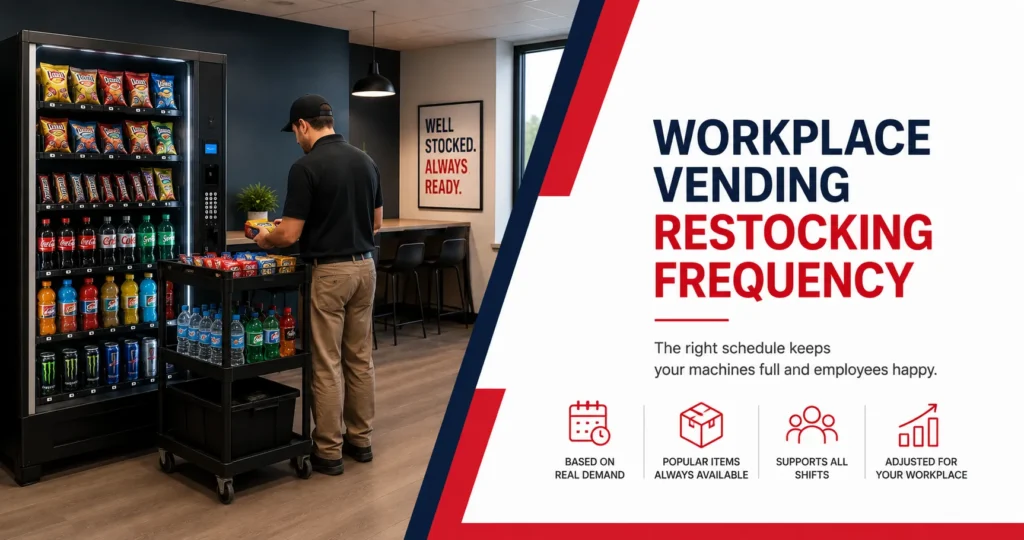
Workplace vending machines should be restocked according to actual product demand rather than one fixed schedule. A busy warehouse may need service several times per week, while a small professional office may require weekly or less frequent visits. Employee count, operating hours, machine capacity, product type, and shift schedules all affect the right frequency.
A reliable service schedule should keep popular products available without loading excessive quantities that may expire or remain unsold. This is especially important for refrigerated food, which requires closer date rotation than packaged snacks or bottled drinks. The provider should review usage regularly and adjust the schedule when workplace demand changes.
Businesses should not wait until every machine is nearly empty before requesting service. Frequent shortages, limited options for later shifts, and repeated employee complaints are signs that the current refill schedule may no longer fit the workplace.
What Determines a Vending Machine Refill Schedule?
The number of employees using the machine is an important starting point, but it does not provide the full answer. Two workplaces with the same headcount may need completely different service schedules if one operates during standard office hours and the other runs three shifts seven days a week.
Machine capacity also affects how long products remain available. A compact combination machine may require more frequent visits than separate high-capacity snack and beverage machines serving the same number of employees. The provider should consider how many product selections are available and how quickly the most popular rows become empty.
Several factors usually influence the final schedule:
- Daily employee and visitor traffic
- First-, second-, and third-shift headcount
- Snack, beverage, and fresh-food demand
- Machine size and product capacity
- Scheduled break times
- Seasonal changes and overtime
- Distance from other food and drink options
- Product expiration and refrigeration requirements
A service provider should combine these factors with real transaction and inventory information. This creates a schedule based on how the location operates instead of applying the same service plan to every workplace.
How Often Do Vending Machines Get Refilled in Offices?
A small or medium office may need vending service approximately once per week, although the schedule can vary depending on attendance and machine size. An office with predictable weekday traffic is generally easier to plan than a location with changing shifts or public access.
Hybrid work can make demand less consistent. Some days may have high attendance because of meetings or company events, while other days may be quiet. The provider may begin with conservative quantities and adjust once regular purchasing patterns become clearer.
Office vending should also be evaluated alongside coffee, water, pantry items, and food brought from home. A workplace with several refreshment options may place less demand on one snack machine than an office where vending is the only onsite source of food and drinks.
Businesses reviewing their complete setup can use Best Vending’s office vending machine guide to compare equipment capacity, payment methods, product selection, placement, and ongoing service requirements.
How Often Should Warehouse Vending Machines Be Restocked?
Warehouses, manufacturing plants, and distribution centers often require more frequent vending service than small offices. These facilities may have larger teams, physical work demands, scheduled breaks, and continuous operations across multiple shifts.
A high-traffic warehouse may need several visits per week, larger product quantities, or multiple machines in different employee areas. The exact frequency should be based on purchases by time of day rather than total weekly sales alone. A machine can appear successful overall while still becoming empty before the evening or overnight shift begins.
Cold drinks may move particularly quickly in industrial environments. Bottled water, sports drinks, soda, energy drinks, and ready-to-drink coffee can create high beverage demand during long or physically active shifts. A facility may need separate drink equipment so beverage shortages do not reduce space for snacks.
Scheduled overtime, seasonal hiring, and changes in production can quickly increase demand. Warehouse managers should notify the provider before a major schedule change so stocking quantities can be increased in advance.
What Restocking Schedule Works for Schools?
School vending schedules depend on who uses the equipment, when the machines are available, and which products are approved. Staff-only machines may have steady weekday demand, while student-accessible equipment may experience heavier traffic during specific periods.
School calendars also create seasonal changes. Summer breaks, holidays, testing periods, sports events, and after-school programs can affect product demand. A service schedule that works during a normal school week may not fit an event-heavy period or reduced summer operation.
The provider should coordinate with school administrators regarding building access, approved service times, product requirements, and machine availability. Restocking should occur without disrupting student movement, classes, meal service, or security procedures.
Packaged products generally allow more flexible service intervals than fresh food. Refrigerated products require closer monitoring and should only be stocked at levels supported by reliable demand.
How Often Should Healthcare and Public Facility Machines Be Serviced?
Healthcare facilities may need more frequent service because employees, visitors, contractors, and support teams may use the equipment throughout extended operating hours. Hospitals and larger medical facilities may also have overnight demand that does not appear in a daytime-only assessment.
Public buildings can vary widely. A small municipal office may need limited service, while a courthouse, community center, or high-traffic government facility may require greater capacity and more frequent refilling. Public access can make demand less predictable than a controlled employee-only workplace.
Machine locations should be evaluated separately. A staff break room may sell different products from a public waiting area, even when both machines are inside the same building. One location may require additional beverages while another needs more packaged snacks.
The provider should also account for building access and service restrictions. Restocking may need to occur during approved hours or through designated entrances, which should be considered when the service plan is created.
Do Snacks, Drinks, and Fresh Food Need Different Schedules?
Yes. Product type has a major effect on restocking frequency and service procedures. Shelf-stable snacks can usually remain in the machine longer than refrigerated meals, but they still require expiration-date checks and product rotation. Workplaces deciding which packaged products deserve that machine space can review our guide to the best vending machine snacks for offices, warehouses, schools, and other facilities.
Beverages often sell in higher quantities and occupy more physical space. Bottles and cans take up more space than many packaged snacks, so drink machines may run low even when several rows remain stocked. Bottled water and popular sodas may need additional capacity during warm weather or high-traffic periods. For more detailed beverage planning, businesses can review our guide to vending machine drinks, including water, soft drinks, tea, sports drinks, energy drinks, and other high-demand categories.
Fresh food requires the closest attention. Sandwiches, salads, wraps, yogurt, breakfast items, and prepared meals need reliable refrigeration and regular date checks. The provider must balance availability with realistic demand so the machine offers useful choices without creating unnecessary waste.
A workplace may therefore receive different service attention for different equipment. The snack machine may have enough inventory for the week while a refrigerated machine requires closer review.
How Does Remote Inventory Monitoring Support Restocking?
Compatible vending equipment can transmit sales and inventory information to the service provider. This may show which products have sold, which selections are running low, and whether demand has changed since the previous visit.
Remote information helps route teams prepare more accurately before arriving at the workplace. Instead of loading a truck based only on a standard product list, the provider can bring more of the items the location is actually using. This can reduce repeated shortages and excess inventory.
Technology does not replace physical service. Route personnel still need to inspect product dates, machine cleanliness, payment readers, refrigeration, and dispensing components. They may also identify damaged packaging or other issues that do not appear in transaction data.
Best Vending’s vending technology provides more information about connected equipment, cashless payments, remote monitoring, and service operations.
What Happens During a Restocking Visit?
A proper restocking visit involves more than placing products into empty rows. The route professional should review the machine’s current condition, rotate products, inspect dates, and confirm that equipment is functioning as expected.
The visit may include checking payment readers, coin mechanisms, bill acceptors, refrigeration, lighting, and product delivery components. The route professional can also identify selections that repeatedly sell out or products that remain unsold through several service cycles.
Product placement may be adjusted during the visit. A popular item could receive an additional row, while a slow-moving selection may be replaced with another choice. These small changes help the machine respond to workplace demand without requiring new equipment.
Service information should be documented so future visits reflect what was learned. A reliable program improves over time rather than repeating the same stocking quantities regardless of results.
Signs Your Vending Machines Need More Frequent Restocking
An empty machine is the most obvious warning, but businesses should watch for patterns before the equipment reaches that point. A vending program may need more frequent service even when a few products remain available.
Common signs include:
- Popular snacks or drinks repeatedly sell out
- Water is unavailable before the next service visit
- Evening and overnight employees have limited choices
- Several machine rows remain empty at the same time
- Employees regularly request emergency refills
- Fresh-food selections are too limited between visits
- Seasonal or overtime demand is not reflected in stock levels
- Different departments compete for one small machine
One occasional shortage does not always require a schedule change. An unusual meeting, weather event, or company gathering can temporarily increase demand. Repeated shortages across several service cycles are a stronger indication that capacity or visit frequency should be adjusted.
The provider may respond by increasing product quantities, visiting more often, replacing low-capacity equipment, or installing another machine. The best solution depends on why the shortage is occurring.
Can Machines Be Restocked Too Often?
Yes. Visiting more frequently than necessary can create inefficient service routes and may not solve the real problem. A machine could appear empty because the wrong products were stocked rather than because visits are too far apart.
Overstocking also creates concerns. Packaged products may remain unsold for long periods, while fresh food may reach its expiration date before employees purchase it. Filling every machine to maximum capacity is not always the best inventory decision.
A balanced schedule keeps dependable quantities available while allowing the provider to rotate products properly. High-demand items should receive more capacity, but slow sellers should not be repeatedly added simply to make every row appear full.
The provider should review several service cycles before making major changes. This helps separate temporary demand from a lasting shift in workplace use.
Why Must Later Shifts Be Reviewed Separately?
Total daily sales can hide shortages during later shifts. A machine may sell a strong number of products while still providing poor service to second- and third-shift employees because most inventory is purchased earlier in the day.
Providers should examine when products sell and which categories disappear first. If water, protein snacks, or breakfast items are consistently unavailable overnight, quantities or service timing should be adjusted.
The workplace can help by providing accurate headcount for each shift. Planned overtime, weekend operations, and seasonal staffing should also be communicated because they may create demand outside the usual schedule.
Equal access does not mean every shift will purchase identical products. Overnight employees may select more coffee drinks and breakfast items, while afternoon teams may purchase more cold beverages. Restocking should reflect these differences.
How Seasonal Demand Changes Vending Service Frequency
Workplace demand can change throughout the year. Water, sports drinks, iced tea, and other cold beverages may sell more quickly during warm weather, especially in warehouses or facilities with outdoor activity.
Holiday schedules and office closures may reduce demand in professional workplaces. Schools may have extended breaks, while manufacturing facilities may increase production and overtime during a busy season. The provider should adjust service levels rather than maintaining the same quantities throughout the year.
Workplace events can also create temporary spikes. Training sessions, open houses, company meetings, and visiting contractors may bring more people onsite than usual. Advance notice allows the provider to prepare without permanently changing the regular schedule.
Seasonal planning is most effective when the employer and provider communicate. Transaction data can show what happened after demand changed, but the workplace may know about upcoming schedule changes before the machine data reflects them.
Vending Machine Restocking in St. Charles County
Businesses across St. Charles, St. Peters, O’Fallon, Wentzville, Chesterfield, Maryland Heights, Earth City, and nearby Missouri communities have different operating schedules and product needs. A small office may have predictable weekday traffic, while a warehouse may operate around the clock.
Local service routes can support faster adjustments when employee count or product demand changes. The provider can review workplace usage, increase popular selections, and modify service timing as the location develops.
The right restocking schedule should be based on the individual workplace rather than a general promise that every machine will receive the same number of visits. Machine capacity, employee traffic, product types, and facility access all influence the final plan.
Best Vending’s snack vending service can be planned around the workplace’s equipment, products, schedules, and expected use.
Build a Restocking Schedule Around Actual Use
There is no single answer to how often vending machines should be restocked. High-traffic and multi-shift facilities may need several visits per week, while smaller workplaces may be served weekly or on another demand-based schedule.
The most reliable approach considers employee headcount, machine capacity, product type, transaction data, shift patterns, and onsite inspections. These factors help the provider keep useful products available without creating unnecessary overstock or waste.
A restocking schedule should also remain flexible. Workforce growth, overtime, seasonal demand, and changes in employee preferences can affect how quickly inventory moves. Regular review allows the provider to adjust service before recurring shortages reduce employee trust in the machines.
Frequently Asked Questions
Workplace vending machines may be restocked several times per week, weekly, or on another demand-based schedule. The frequency depends on employee traffic, machine capacity, work shifts, product types, and actual purchasing patterns.
A small office may need service approximately once per week or less frequently when employee attendance and sales are limited. The provider should adjust the schedule after reviewing actual use.
Warehouses often require more frequent service because they may have larger teams, several shifts, physical work demands, and concentrated traffic during scheduled breaks. Some high-volume locations may require multiple visits per week.
They can be. Bottled and canned drinks use more machine space, and popular beverages may sell quickly. The exact schedule depends on demand and equipment capacity.
Fresh-food equipment generally needs closer review than machines containing shelf-stable products. Service frequency should support expiration checks, product rotation, safe refrigeration, and realistic demand.
Compatible equipment may transmit transaction and inventory information to the service provider. This can help identify low-stock products and support more accurate service planning.
The business should report the pattern to the vending provider. The provider may increase quantities, assign more rows to popular items, change visit frequency, or recommend additional equipment.
No. Machines in different departments or break areas may have different traffic and product demand. Each location should be reviewed according to its actual use.