
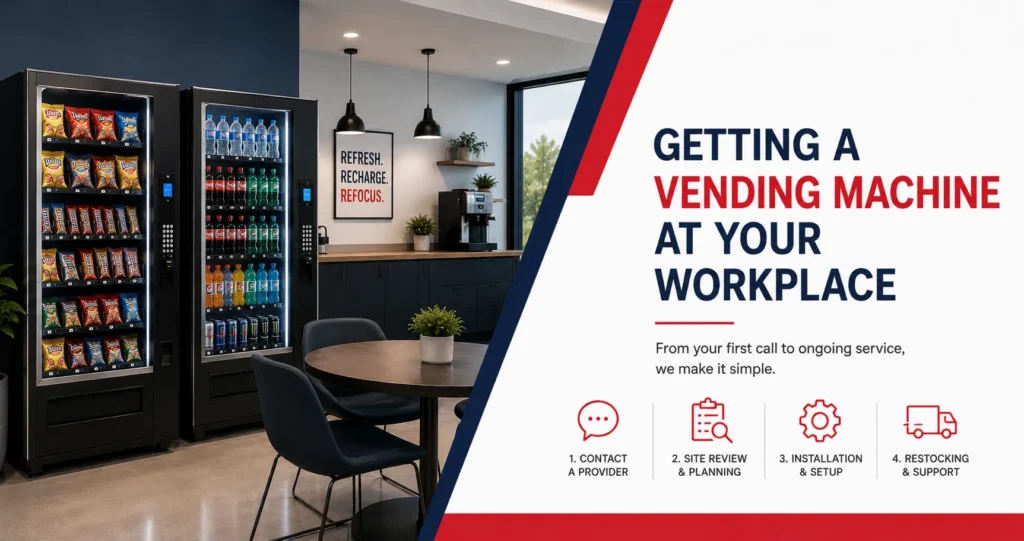
To get a vending machine installed at your workplace, begin by contacting a local vending provider and sharing basic information about your location. The provider will usually need to know how many people use the building, which shifts they work, where the equipment could be placed, and what types of products employees want.
A site review typically follows the initial conversation. The provider evaluates employee traffic, available floor space, electrical access, delivery routes, and whether one combination machine or several pieces of equipment would serve the location better. Once the setup is approved, the provider installs the equipment, stocks the opening product selection, activates payment systems, and establishes a service schedule.
The process is generally easier when the workplace has a clear internal contact and realistic expectations about demand. A vending program should be designed around daily use rather than simply placing a machine in an empty corner.
Who Can Request a Vending Machine for a Workplace?
A business owner, office manager, HR representative, facilities manager, property manager, school administrator, or another authorized workplace contact can request vending service. The person making the request should understand the building’s operating schedule and have permission to discuss equipment placement and service access.
Employees may suggest adding vending machines, but the final request usually needs to come from someone who can approve the installation. The provider may need authorization to enter the building, connect equipment to power, and schedule recurring service visits.
It helps to identify one primary workplace contact before the process begins. This person can coordinate the site review, answer questions about building access, communicate employee preferences, and report future service concerns.
What Information Does a Vending Provider Need?
The provider needs enough information to estimate demand and recommend suitable equipment. Employee count is important, but operating hours, shift patterns, customer traffic, and access to nearby food options also affect the recommendation.
A workplace with 40 employees operating around the clock may have different needs from an office with 75 employees who work hybrid schedules. Similarly, a warehouse located far from restaurants may generate more vending demand than an office next to several food businesses.
Before contacting a provider, collect the following information:
- Approximate number of employees onsite each day
- First-, second-, and third-shift headcount
- Standard operating hours and weekend schedules
- Number and location of existing break rooms
- Available electrical outlets and floor space
- Current coffee, water, pantry, or food services
- Preferred snacks, drinks, and fresh-food categories
- Building access and delivery restrictions
The information does not need to be perfect during the first conversation. A site review and early service data can help refine the final equipment and product plan.
Is There a Minimum Number of Employees Required?
There is no universal employee minimum that applies to every vending placement. A provider evaluates whether the expected usage can support the equipment, product inventory, delivery time, maintenance, and ongoing restocking.
A small workplace may still qualify when attendance is consistent, and employees have limited nearby food options. A larger hybrid office may generate less demand if only a portion of the workforce is present on a typical day.
Public traffic can also affect placement. A small business serving customers, tenants, visitors, or contractors may have enough total activity to support vending even when the internal employee count is limited.
The provider should evaluate the individual location rather than make a recommendation based on headcount alone. When traditional vending is not the best fit, a smaller refreshment setup or another service format may be considered.
What Happens During a Vending Machine Site Review?
A site review helps determine whether the proposed machine location is practical and safe. The provider inspects the available space, employee traffic, power supply, entrances, hallways, and the route that service personnel will use for deliveries.
The machine must fit without blocking doors, emergency exits, accessibility paths, lockers, appliances, seating, or employee movement. There should also be enough room for the equipment doors to open during restocking and maintenance.
The provider may review several possible locations rather than approving the first available wall. A central break room may generate the most use, while a machine placed near a noisy production area or distant hallway may be less convenient.
The review also helps identify whether one machine is enough. Large workplaces, multi-shift facilities, or buildings with several departments may need multiple vending locations to reduce walking time and congestion.
What Space and Power Does a Vending Machine Need?
Most workplace vending machines require a suitable electrical connection and enough floor space for the machine body, door clearance, ventilation, and service access. Exact dimensions and electrical requirements depend on the selected equipment.
The floor should be level and capable of supporting the machine. Uneven surfaces can affect equipment stability, product delivery, and refrigeration performance. The proposed location should also remain dry and reasonably protected from extreme heat or cold.
A vending machine should not be connected through an unsuitable extension cord or placed where employees can easily unplug it. Refrigerated equipment needs dependable power so drinks and fresh products remain at appropriate temperatures.
The provider should confirm all equipment requirements before installation. Building management or an electrician may need to address the area when suitable power is not already available.
Which Type of Vending Machine Should You Install?
The right equipment depends on employee demand, available space, and the types of products the workplace wants to offer. A small office may use one combination machine, while a warehouse may need separate snack and beverage equipment with greater capacity.
Combination Vending Machines
A combination machine holds snacks and drinks in one unit. It can work well in smaller offices, employee lounges, and locations where floor space is limited.
The main limitation is capacity. A combination machine may not hold enough cold drinks or high-demand products for a busy workplace. Popular selections may sell out faster when one cabinet must divide space between several product categories.
Separate Snack and Beverage Machines
Separate machines provide more product rows and greater beverage capacity. They can serve medium and large workplaces where employees purchase snacks and cold drinks throughout the day.
This setup also allows the provider to restock each category according to demand. A warehouse may need additional water and sports drinks without reducing the available snack selection.
Refrigerated Food Machines
Refrigerated equipment can hold sandwiches, wraps, yogurt, breakfast products, and selected prepared meals. These machines are most useful where employee demand supports regular fresh-food rotation.
Fresh food requires closer service, dependable refrigeration, and careful date management. The provider should evaluate expected purchases before recommending a large refrigerated selection.
Micro Markets
A micro market may be a better fit when a workplace needs more variety than vending equipment can provide. It combines open shelving, refrigerated coolers, and self-checkout technology for snacks, drinks, meals, and fresh food.
Larger businesses can compare this option through Best Vending’s micro market service. Traditional machines may still be installed in smaller employee areas while a central market serves the main break room.
How Are Vending Machine Products Selected?
The provider normally recommends an initial product mix based on workplace type, employee count, schedules, and expected demand. Employees may also submit requests for specific snacks, drinks, breakfast items, or better-for-you options.
The opening assortment should include familiar products and enough variety to test different categories. It does not need to include every requested item because machine space, package dimensions, supplier availability, and expected sales must also be considered.
Product decisions become more accurate after the machine has been operating for several service cycles. Transaction data and route observations can show which items sell consistently, which products need more rows, and which selections should be replaced.
Second- and third-shift demand should be reviewed separately. A product may appear popular overall while still selling out before overnight employees begin their breaks.
What Payment Options Can Be Installed?
Modern vending machines may accept coins, bills, credit cards, debit cards, contactless cards, and mobile wallets. Available options depend on the equipment, installed payment reader, network connection, and payment processor. Before choosing the hardware, businesses can compare these vending machine payment methods in more detail, including cash, cards, tap-to-pay, and mobile wallets.
Cashless payments are useful in workplaces where employees rarely carry physical currency. Tap-to-pay cards and mobile wallets can also make purchases faster during short or scheduled breaks.
Some public facilities and schools may still need cash acceptance because the machines serve a broader range of users. Mixed-payment equipment can provide digital convenience without removing access for people who prefer cash.
Payment instructions and refund information should be visible on the machine. Employees need a clear way to report a failed transaction or a product that did not dispense.
Who Pays for Workplace Vending Machines?
The financial arrangement depends on the provider, equipment, expected usage, installation needs, and service agreement. Businesses should not assume that every vending placement follows the same pricing model or that equipment is automatically provided without conditions.
In traditional vending, employees generally purchase their own products. The provider manages equipment, inventory, payment processing, and regular stocking according to the agreement.
Some employers choose to subsidize selected products or provide an employer-sponsored pantry instead. In those arrangements, the business may cover some or all of the product cost based on an approved budget.
All equipment responsibilities, service terms, possible fees, and product arrangements should be confirmed before installation. Clear written expectations help prevent confusion after the program begins.
What Happens on Installation Day?
Before installation, the provider confirms the equipment, location, delivery access, and building contact. Large vending machines require a clear route through entrances, hallways, elevators, and doorways.
The equipment is moved into position, leveled, connected to power, and tested. Refrigerated machines may need time to reach the correct operating temperature before cold products are loaded.
The provider should check the payment reader, bill acceptor, coin mechanism, product prices, and dispensing components. The provider then stocks the approved opening assortment and confirms that products dispense correctly.
The workplace contact should receive basic service information before the provider leaves. Employees should know how to use the payment system and where to report a vending or refund problem.
How Long Does Vending Machine Installation Take?
The overall process can vary from one location to another. A straightforward office placement may move quickly once the site, equipment, and service terms are approved. Larger facilities with multiple machines, restricted delivery access, or building preparation may require additional coordination.
Installation time can also depend on equipment availability and whether electrical work or layout changes are needed. The provider should not promise an exact timeline before reviewing the site and confirming the equipment.
Businesses can help prevent delays by preparing the installation area, reserving delivery access, and ensuring the authorized contact is available. Building security and property management should also be informed when required.
The service program begins after the machines are installed and stocked. The initial weeks are important because early purchase patterns help the provider adjust products and refill frequency. Once regular usage becomes clearer, vending machine restocking frequency can be adjusted around employee count, shifts, machine capacity, and the products that sell fastest.
What Ongoing Service Should Be Included?
A vending machine program is not a one-time installation. Its usefulness depends on reliable restocking, product rotation, payment support, equipment maintenance, and communication with the workplace.
Ongoing service may include:
- Scheduled product delivery and machine refilling
- Expiration-date checks and inventory rotation
- Product selection changes based on demand
- Card reader and payment-system review
- Refrigeration and dispensing inspections
- Repair coordination and technical support
- Refund or failed-purchase assistance
- Adjustments for new shifts or employee growth
The service frequency should be based on actual use. A high-traffic warehouse may need several visits per week, while a smaller office may follow a less frequent schedule.
Best Vending’s office vending machine guide explains how equipment, products, payments, placement, and ongoing service work together in a managed workplace program.
How Should a Workplace Prepare Before Installation?
The installation area should be cleared before the delivery team arrives. Furniture, storage boxes, waste containers, and other obstacles should be moved so the machine can be brought into the space safely.
The workplace should also confirm electrical access and building entry. Loading docks, elevators, security desks, and restricted entrances may require advance scheduling.
Employees should receive a brief announcement explaining when the machine will become available, which payment methods it accepts, and how service issues can be reported. Clear communication can reduce confusion during the first few days.
The internal contact should also collect initial product feedback without promising that every requested item will be added immediately. Product demand should be reviewed over several service cycles before major changes are made.
Common Reasons a Vending Installation Is Delayed
One common reason is incomplete information about the workplace. Employee headcount, shift schedules, building access, and equipment location may need to be confirmed before the provider can finalize a recommendation.
Space limitations can also create delays. A machine may fit the floor measurement but still be unable to pass through a narrow doorway or turn through a hallway. Delivery routes should be reviewed before equipment is scheduled.
Electrical preparation may be another issue. Refrigerated equipment requires dependable power, and the selected location may not have a suitable outlet. Building management may need to approve or complete electrical work first.
Installation can also be delayed when the employer and provider have not agreed on service expectations in advance. Product ownership, payment methods, cleaning responsibilities, restocking, and equipment support should be understood before the machine arrives.
Workplace Vending Installation in St. Charles County
Businesses across St. Charles, St. Peters, O’Fallon, Wentzville, Chesterfield, Maryland Heights, Earth City, and nearby Missouri communities have different vending needs. Professional offices may need compact snack and drink access, while warehouses may require high-capacity equipment for several shifts.
Local service planning should consider building access, nearby food choices, employee break length, daily attendance, and service routes. A location with limited nearby restaurants may generate stronger demand than a similar-sized workplace in a busy commercial area.
Businesses can review Best Vending’s service area information to see how workplace refreshment services support local communities. The final equipment recommendation should still be based on an individual site review.
Get the Setup Right Before the Machine Arrives
Getting a vending machine installed begins with accurate information about the workplace. Employee count, shifts, traffic, available space, power, and product demand help the provider recommend suitable equipment and a realistic service schedule.
The site review is an important part of the process because it confirms that the machine can be delivered, installed, and serviced safely. It also helps determine whether the workplace needs one combination machine, separate snack and beverage equipment, refrigerated food, or a larger self-checkout market.
The program should remain flexible after installation. Employee demand, product sales, seasonal changes, and workplace growth can all affect the original setup. Ongoing review allows the provider to adjust products, capacity, and service without starting the process again.
Frequently Asked Questions
Contact a workplace vending provider and share information about employee count, schedules, available space, and desired products. The provider can then complete a site review and recommend suitable equipment.
Requirements vary by provider and location. Employee count, daily attendance, public traffic, operating hours, and expected purchases all help determine whether the location can support vending service.
Space requirements depend on the machine. The location must provide enough room for the equipment, door clearance, ventilation, employee access, and future restocking or maintenance.
Yes. Modern vending equipment generally requires dependable electrical power, especially when it includes refrigeration, lighting, card readers, or digital controls.
Many modern machines can accept credit cards, debit cards, contactless cards, and mobile wallets. Available payment methods depend on the equipment and installed reader.
Under a managed vending agreement, the provider generally handles product delivery, restocking, inventory rotation, payment equipment, and technical service. Exact responsibilities should be confirmed before installation.
Employees can usually submit product requests, but the provider must also consider machine compatibility, supplier availability, pricing, and actual demand. The assortment can be adjusted after purchasing patterns become clearer.
Yes. Additional machines or a micro market may be considered when employee count, product demand, shift schedules, or workplace layout changes.