
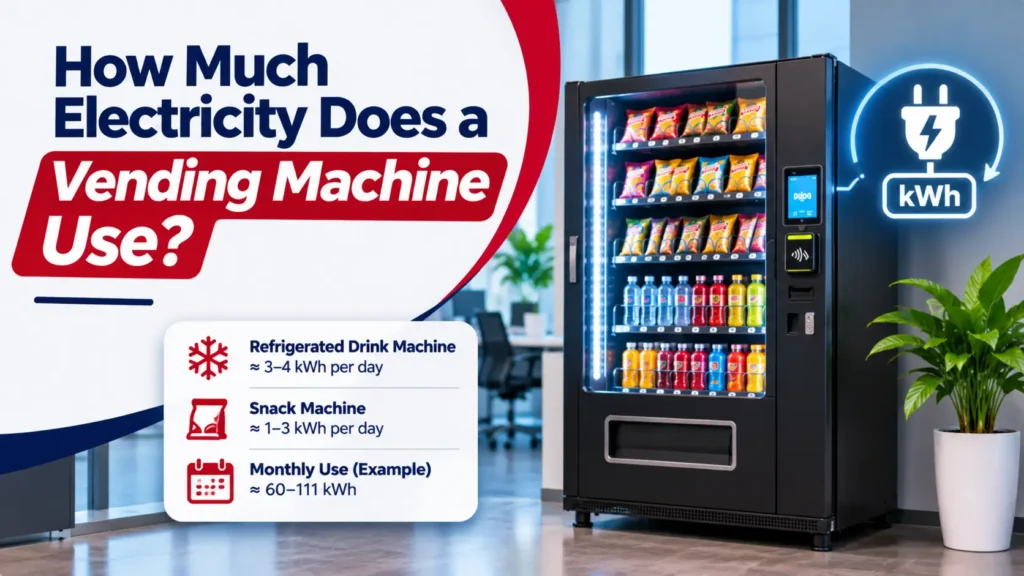
A modern refrigerated beverage vending machine can use approximately 3 to 4 kilowatt-hours (kWh) of electricity per day, or 90 to 120 kWh over a 30-day month. At an electricity rate of $0.12 per kWh, that translates to an estimated monthly electricity cost of $10.80 to $14.40.
Non-refrigerated snack vending machines generally consume less electricity because they do not need a cooling system. However, actual energy consumption depends on the machine’s size, age, refrigeration system, operating environment, and energy-saving features.
Understanding vending machine power consumption can help office managers, business owners, and facility managers estimate operating expenses and choose equipment that meets their workplace needs without unnecessary energy costs.
How Much Electricity Does a Vending Machine Use Per Day?
Vending machine electricity consumption varies depending on the type of equipment and the functions it performs. A machine that keeps beverages cold requires more energy than a machine that dispenses shelf-stable snacks without refrigeration, all else being equal.
According to the U.S. Department of Energy, its 2023 purchasing guide compares three refrigerated beverage vending machine examples with a refrigerated capacity of 30 cubic feet. Their maximum daily energy consumption ranges from 3.23 to 3.99 kWh.
The following table illustrates how different daily consumption levels translate into monthly and annual electricity use.
| Machine or Consumption Scenario | Daily Energy Use | Monthly Energy Use | Annual Energy Use |
| Low-consumption example | 1 kWh | 30 kWh | 365 kWh |
| Moderate-consumption example | 2 kWh | 60 kWh | 730 kWh |
| High-efficiency refrigerated beverage machine example | 3.23 kWh | 96.9 kWh | 1,179 kWh |
| ENERGY STAR beverage machine benchmark | 3.71 kWh | 111.3 kWh | 1,354 kWh |
| Less-efficient beverage machine benchmark | 3.99 kWh | 119.7 kWh | 1,456 kWh |
| Higher-consumption example | 6 kWh | 180 kWh | 2,190 kWh |
Monthly estimates assume 30 days of operation, while annual figures assume 365 days. The 1, 2, and 6 kWh figures are illustrative consumption scenarios rather than ratings for specific vending machine models.
Actual electricity use should be verified against the manufacturer’s specifications or measured directly at the workplace.
How Much Power Does a Vending Machine Use in Watts?
Vending machine wattage measures the electrical power a machine draws at a particular moment. Electricity consumption, measured in kilowatt-hours, represents how much energy the machine uses over a period of time.
These measurements are related, but they are not interchangeable.
| Measurement | What It Represents |
| Watts (W) | Electrical power drawn at a given moment |
| Kilowatts (kW) | Electrical power expressed in thousands of watts |
| Kilowatt-hours (kWh) | Total electricity consumed over time |
For example, an appliance drawing 800 watts continuously for 24 hours would consume 19.2 kWh of electricity.
However, a refrigerated vending machine does not necessarily operate continuously at its maximum rated wattage. Its compressor cycles on and off to maintain the required temperature, while lighting, electronic controls, and payment systems may continue operating.
A machine consuming 3.71 kWh per day has an equivalent average power draw of approximately 155 watts over 24 hours, even though its instantaneous power demand may be considerably higher.
This is why checking the rated wattage alone is not enough to determine a vending machine’s daily electricity consumption or operating cost.
How Much Does a Vending Machine Cost in Electricity Per Month?
A refrigerated vending machine consuming 3 to 4 kWh per day would cost approximately $10.80 to $14.40 per 30-day month at an electricity rate of $0.12 per kWh.
The actual vending machine electricity cost depends on two main factors:
- The amount of electricity the machine consumes.
- The electricity rate charged to the business.
Vending Machine Electricity Cost Formula
Use the following formula to estimate monthly electricity expenses:
Monthly electricity cost = Daily energy consumption (kWh) × Number of days × Electricity rate per kWh
For example, if a vending machine consumes 3.7 kWh per day and your business pays $0.12 per kWh:
3.7 × 30 × $0.12 = $13.32 per month.
Monthly Electricity Cost Comparison
| Daily Energy Use | At $0.10/kWh | At $0.12/kWh | At $0.15/kWh | At $0.20/kWh |
| 1 kWh | $3.00 | $3.60 | $4.50 | $6.00 |
| 2 kWh | $6.00 | $7.20 | $9.00 | $12.00 |
| 3 kWh | $9.00 | $10.80 | $13.50 | $18.00 |
| 4 kWh | $12.00 | $14.40 | $18.00 | $24.00 |
| 6 kWh | $18.00 | $21.60 | $27.00 | $36.00 |
| 8 kWh | $24.00 | $28.80 | $36.00 | $48.00 |
These estimates represent electricity consumption charges for a 30-day period. They do not include equipment rental, product costs, maintenance, commercial demand charges, or other service-related expenses.
Businesses should use their actual utility rates for a more accurate calculation.
How Much Electricity Do Different Types of Vending Machines Use?
The type of vending machine installed in your workplace has a significant influence on its electricity requirements.
Non-Refrigerated Snack Vending Machines
Traditional snack vending machines typically use electricity to operate dispensing mechanisms, lighting, electronic controls, and payment systems.
Because shelf-stable products such as chips, crackers, granola bars, and packaged snacks do not require refrigeration, these machines generally have lower energy requirements than comparable refrigerated equipment.
They can be a practical option for smaller workplaces looking to provide convenient refreshments while limiting electricity consumption.
Refrigerated Beverage Vending Machines
Beverage vending machines require electricity to keep bottled and canned drinks at their intended serving temperatures. Their refrigeration systems, compressors, fans, lighting, and electronic controls contribute to overall energy use.
Modern equipment with efficient compressors, improved insulation, and suitable temperature controls can help reduce unnecessary electricity consumption.
Combination Vending Machines
Combination vending machines provide snacks and beverages in a single unit. Their energy consumption depends on cabinet size, refrigerated capacity, temperature settings, and whether the entire machine or only certain compartments require cooling.
A combination machine may be suitable for workplaces that need both snacks and cold drinks but have limited space for separate equipment.
Fresh Food Vending Machines
Machines offering refrigerated sandwiches, salads, dairy products, and other perishable refreshments require reliable temperature control. Energy consumption varies according to refrigeration capacity, product temperature requirements, insulation, and operating conditions.
Energy-saving settings must never compromise food safety or required storage temperatures.
What Affects Vending Machine Power Consumption?
Two vending machines of similar size may consume different amounts of electricity. Equipment design, placement, maintenance, and workplace conditions all influence operating efficiency.
1. Refrigeration and Temperature Settings
Refrigeration is often the main source of electricity consumption in beverage and fresh food vending machines. The cooling system must maintain the appropriate internal temperature while responding to changes in the surrounding environment.
Machines located in warmer areas may require more frequent compressor operation than those installed in temperature-controlled break rooms.
2. Machine Size and Capacity
Larger refrigerated machines may require more energy because they have additional internal space to cool. Choosing equipment based on actual employee demand can help businesses avoid unnecessary capacity and operating expenses.
A smaller workplace may not need the same equipment as a manufacturing facility with hundreds of employees.
Our guide to choosing a vending machine for a small business explains how workplace size, product demand, and available space influence equipment selection.
3. Lighting and Electronic Components
Vending machines may include LED lighting, digital displays, electronic control boards, card readers, and wireless communication systems.
Although these components generally draw less power than refrigeration systems, their consumption can accumulate because some remain active throughout the day.
Modern vending machine payment systems offer convenient card and mobile payment options while adding electronic components that should be considered when reviewing equipment specifications.
4. Machine Age and Condition
Older machines may consume more electricity because of less-efficient components, deteriorating door seals, aging insulation, or worn refrigeration equipment.
Poor maintenance can also reduce cooling efficiency and increase compressor operating time.
Regular equipment inspections help identify issues that could contribute to unnecessary energy consumption.
5. Equipment Placement and Airflow
A refrigerated machine installed near a heat source, in direct sunlight, or against a wall without sufficient ventilation may have difficulty releasing heat.
Proper placement allows the cooling system to operate under more suitable conditions.
Before installation, businesses should assess available space, electrical connections, ventilation, and equipment access. Our workplace vending machine installation guide covers these important preparation requirements.
6. Restocking and Product Temperature
Loading a refrigerated machine with warmer beverages can temporarily increase the amount of cooling required. Frequent door openings and unsuitable stocking practices may also introduce additional heat into the cabinet.
An organized replenishment schedule and effective vending machine inventory management can help providers match product quantities to workplace demand and reduce unnecessary handling.
Vending Machine Electricity Costs for Missouri Businesses
For businesses throughout St. Charles County and surrounding Missouri communities, electricity expenses depend on the local utility provider, applicable commercial rate structure, equipment selection, and operating environment.
Offices with climate-controlled break rooms may provide more suitable conditions for refrigerated vending equipment than facilities with significant temperature fluctuations.
Warehouses, manufacturing plants, and other workplaces that experience warmer indoor conditions during Missouri summers should pay particular attention to equipment ventilation and placement.
When estimating electricity expenses, review your commercial utility bill instead of relying solely on national or regional averages. Some commercial electricity plans also include demand charges, which are not reflected in simple per-kWh calculations.
Best Vending works with businesses across St. Charles, St. Peters, O’Fallon, and surrounding communities. Explore our Missouri vending service areas to learn more about local workplace refreshment coverage.
How to Improve Vending Machine Energy Efficiency
Businesses can help reduce vending machine electricity consumption by choosing appropriate equipment and maintaining suitable operating conditions.
Choose Energy-Efficient Equipment
When evaluating refrigerated beverage vending machines, ask about rated daily energy consumption and available energy-efficiency certifications. The ENERGY STAR vending machine program provides information about certified refrigerated beverage machines designed to meet specific efficiency requirements.
Compare the energy specifications of individual models rather than assuming that all new machines consume the same amount of electricity.
Use Energy-Saving Features
Some vending machines include programmable lighting controls, low-power operating modes, and other energy-management features. These settings may reduce electricity consumption during evenings, weekends, or periods of low workplace activity.
Ask your vending provider to configure approved energy-saving settings according to the machine’s operating requirements and the products it contains.
Refrigeration should never be disabled when doing so could compromise product quality or food safety.
Maintain Proper Ventilation
Keep vending machines away from direct sunlight and major heat sources where possible. Follow the manufacturer’s recommended clearance around refrigeration equipment to allow sufficient airflow.
Avoid placing boxes, furniture, or other objects where they could block ventilation openings.
Keep Equipment Properly Maintained
Dirty refrigeration components, damaged seals, and worn equipment can cause cooling systems to work harder than necessary. Routine inspections and appropriate maintenance can help identify these problems before they contribute to higher operating costs.
Electrical and refrigeration repairs should be handled by qualified service professionals.
Select the Right Machine for Your Workplace
An energy-efficient vending program begins with equipment that matches actual demand. A small office may benefit from compact snack vending or combination equipment, while a larger workplace may require separate snack and beverage machines.
Choosing unnecessary refrigerated capacity can increase electricity expenses without providing additional value to employees.
How Can You Measure a Vending Machine’s Actual Electricity Consumption?
The most accurate way to understand vending machine electricity costs is to measure the energy consumed under normal operating conditions.
Follow these steps:
- Check the manufacturer’s documentation for rated daily or annual energy consumption.
- Confirm the machine’s electrical requirements with your vending provider.
- Use a suitable electricity meter rated for the equipment, with professional assistance where necessary.
- Monitor consumption for several days, including normal business activity and periods of lower demand.
- Divide the total recorded energy consumption by the number of days measured.
- Multiply the average daily consumption by your electricity rate and the number of operating days.
For example, if a vending machine consumes 26 kWh over seven days, its average daily electricity consumption is approximately 3.71 kWh. At a rate of $0.12 per kWh, its estimated 30-day electricity expense would be approximately $13.37.
Measurements taken over longer periods may provide a more representative estimate, particularly when workplace attendance and surrounding temperatures change.
Who Pays the Electricity Bill for an Office Vending Machine?
In many full-service vending arrangements, the host business provides the installation space and electricity, while the vending provider manages the equipment, product stocking, and agreed maintenance responsibilities.
However, responsibilities vary depending on the service agreement.
Before installation, businesses should confirm:
- Who is responsible for electricity expenses?
- Are there any equipment rental or installation charges?
- Who handles routine equipment maintenance?
- What happens if a machine develops an electrical or refrigeration fault?
- Can inefficient equipment be replaced or upgraded?
Our guide to understanding a vending machine contract explains the responsibilities businesses should review before entering a vending service agreement.
Clarifying these arrangements in advance helps avoid unexpected expenses and misunderstandings.
Is an Office Vending Machine Worth the Electricity Cost?
For many workplaces, the electricity required to operate a vending machine can be a manageable expense compared with the convenience of providing on-site refreshments.
However, electricity consumption should not be evaluated in isolation.
Businesses should also consider:
- Employee demand for snacks and beverages.
- Available break room space.
- Equipment capacity and expected usage.
- Installation and maintenance responsibilities.
- Convenience for employees working extended shifts.
- Overall service costs and contractual arrangements.
A machine that is appropriately sized, maintained, and positioned can provide a more practical workplace refreshment solution than equipment selected without considering operational requirements.
Choose an Efficient Vending Solution for Your Workplace
Understanding how much electricity a vending machine uses makes it easier to estimate operating expenses and choose suitable workplace equipment. From non-refrigerated snack machines to modern beverage and combination units, the right solution depends on employee demand, available space, electrical requirements, and operating conditions.
Best Vending provides professionally managed vending machine services for offices, warehouses, manufacturing facilities, and other workplaces throughout St. Charles County and surrounding Missouri communities.
Our team can help you evaluate refreshment options based on your workplace requirements, equipment needs, and ongoing service expectations.
Contact Best Vending today to discuss a vending solution for your business.
Frequently Asked Questions
A modern refrigerated beverage vending machine may consume approximately 3 to 4 kWh per day, based on published energy benchmarks for certain models. Non-refrigerated snack machines generally consume less, while older or larger refrigerated equipment may consume more.
A machine consuming 4 kWh per day would cost approximately $0.48 to operate for 24 hours at an electricity rate of $0.12 per kWh. The actual cost depends on energy consumption and the applicable utility rate.
A machine consuming 3 to 4 kWh per day would use approximately 1,095 to 1,460 kWh per year if it operates every day. Actual annual consumption varies depending on equipment efficiency and operating conditions.
Yes. Electronic controls, payment terminals, lighting, and refrigeration systems may continue using electricity when no purchases are being made. Refrigerated machines must maintain suitable product temperatures even during periods of inactivity.
Vending machine wattage varies by model and operating condition. A machine consuming 3.7 kWh per day has an equivalent average power draw of approximately 154 watts, although its instantaneous demand may be higher when refrigeration or dispensing components operate.
Refrigerated vending machines should not be switched off if doing so could compromise product safety or quality. Instead, ask your provider about manufacturer-approved low-power modes, lighting controls, and other energy-saving settings.
It can. Higher surrounding temperatures may cause refrigerated vending machines to operate their cooling systems more frequently. Proper ventilation and installation away from direct sunlight and heat sources can help minimize unnecessary energy consumption.
If each machine consumes 3.7 kWh per day, two machines would consume approximately 222 kWh over 30 days. At $0.12 per kWh, their combined monthly electricity cost would be approximately $26.64.
Businesses can reduce unnecessary electricity consumption by selecting appropriately sized equipment, maintaining proper ventilation, using approved energy-saving features, and arranging regular equipment maintenance.