
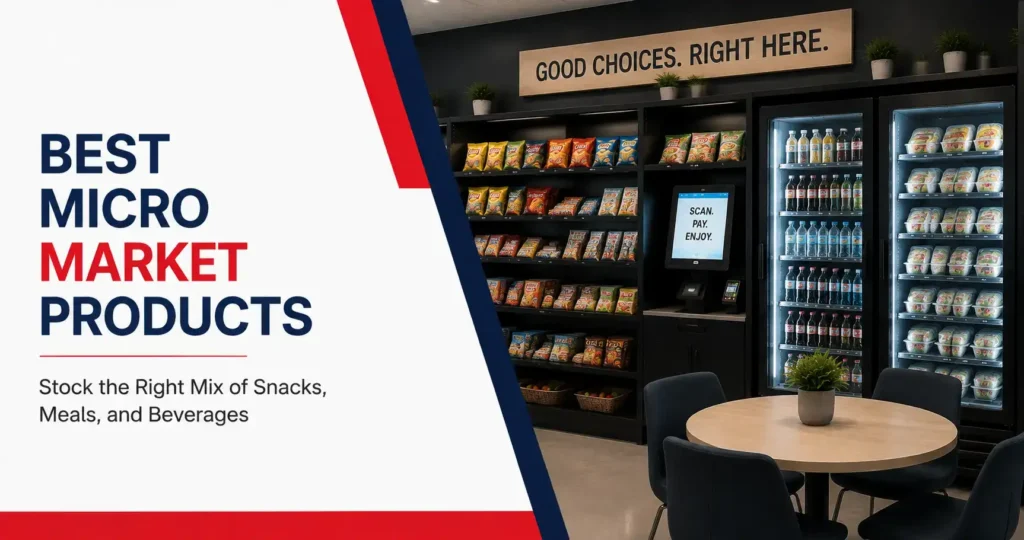
A workplace micro market becomes valuable when employees can find food and drinks that fit their daily routines. Filling shelves with random snacks may create variety at first, but a successful market needs a balanced mix of familiar favorites, fresh meals, beverages, healthier choices, and products suited to different schedules.
Choosing the right micro market products also requires more than copying the selection from another workplace. An office with mostly daytime employees may need breakfast items and lighter lunches, while a warehouse operating several shifts may require filling meals, high-demand beverages, and convenient snacks available throughout the day and night.
Product selection is only one part of building a successful workplace market. Our micro market vending guide explains how products, technology, setup, and ongoing service work together.
What Makes a Strong Micro Market Product Mix?
A strong product mix gives employees enough variety without overwhelming the market with similar items. The best selection combines familiar snacks, fresh food, beverages, breakfast choices, and better-for-you options while leaving enough room to adjust products as buying patterns become clear.
Micro market product selection should also reflect how long employees remain onsite, when they take breaks, and what nearby food options are available. A workplace located close to restaurants may see different demand than a facility where employees have limited time to leave the property during a scheduled break.
Balance Familiar Favorites With New Choices
Employees are more likely to use a market when they recognize several products immediately. Popular chips, candy, bottled drinks, crackers, and snack bars can provide a reliable foundation, especially during the first weeks after installation.
That does not mean every shelf should be filled with the same traditional choices. New flavors, premium snacks, protein-focused products, and seasonal options can be introduced gradually. Sales data and employee feedback can then show which additions deserve permanent space.
Give Each Product Category a Clear Role
Every category should serve a different need. A person taking a five-minute break may only want a drink and a snack, while someone staying onsite for lunch may need a sandwich, salad, side item, and beverage.
Organizing the market around those different needs makes the overall selection more useful. It also prevents shelf space from being consumed by too many products that serve essentially the same purpose.
Plan for More Than One Type of Employee
Not every employee wants the same thing at the same time. Some people prefer familiar comfort foods, while others look for lower-sugar drinks, vegetarian meals, protein snacks, or smaller portions.
A balanced workplace market should create choice without making broad dietary claims. Clear labels and visible product information help employees decide what fits their preferences.
Best Micro Market Snacks for the Workplace
Micro market snacks remain important even when a market offers full meals because employees often need something quick between meetings, during a short break, or before the end of a shift. The strongest snack selection usually combines salty, sweet, protein-focused, and lighter choices rather than relying heavily on one category.
Open shelving gives micro markets more flexibility than traditional vending equipment, allowing for different package sizes, shapes, and product types. That extra flexibility makes it easier to create a snack assortment that feels more like a small convenience store than a row of similar packaged items.
Salty Snacks and Familiar Favorites
Chips, pretzels, popcorn, crackers, and similar products remain popular because they are portable, familiar, and easy to eat during a short break. Offering several flavors and package sizes can provide variety without dedicating too much shelf space to one brand or snack type.
The selection should be reviewed regularly. If several nearly identical products sell slowly while another category sells out, that shelf space can be used more effectively.
Protein and More Filling Snacks
Protein bars, nuts, trail mix, meat snacks, cheese packs, and similar products give employees options that are more filling than candy or chips. These products may be especially useful in warehouses, manufacturing facilities, healthcare workplaces, and other environments where employees work longer or physically demanding shifts.
They can also complement fresh meals by giving employees smaller options when they do not want a full lunch.
Sweet Snacks and Treats
Candy, cookies, pastries, chocolate, and other sweet items still have a place in a well-planned market. A workplace refreshment program does not need to remove every indulgent option to create a balanced selection.
The better approach is to offer variety. Employees can choose a treat when they want one while still having access to water, fresh food, protein snacks, fruit, and other alternatives.
Fresh Food Should Be a Core Part of the Market
Fresh food is one of the biggest differences between a micro market and a traditional snack-only break room. Refrigerated cases allow workplaces to provide breakfast, lunch, and meal-style choices that employees can inspect before buying, which can make the market more useful throughout the workday.
The right fresh-food assortment depends on sales volume and refrigeration capacity. Too little variety can make the market feel limited, while too much perishable inventory can increase waste. Product rotation should therefore respond to actual buying patterns rather than remaining fixed after launch.
Sandwiches, Wraps, and Grab-and-Go Meals
Sandwiches and wraps are practical workplace choices because they are easy to carry, familiar to most employees, and available in several portion sizes. A market can rotate different proteins, vegetarian options, and flavor profiles so the refrigerated section does not feel repetitive.
Prepared meals can also work well where employees remain onsite for lunch or work extended shifts. Their success depends on convenience, portion size, freshness, and whether reheating equipment is available nearby.
Salads and Lighter Lunch Options
Salads can broaden the market beyond traditional convenience food and provide another option for employees who prefer a lighter lunch. They work best when the selection changes enough to provide variety without creating excessive perishable inventory.
Protein additions, grain-based salads, and side items can make the refrigerated assortment more flexible. Clear product labels help employees compare ingredients and choose what fits their preferences.
Breakfast Food for Early Shifts
Breakfast sandwiches, yogurt, fruit, oatmeal cups, pastries, protein items, and similar products can make a market more useful before the traditional lunch period. Early-shift employees may arrive before nearby restaurants are open or may have limited time to stop elsewhere.
Breakfast choices can be particularly relevant for manufacturing, distribution, healthcare, and warehouse environments where shifts begin early in the morning.
Businesses considering a broader fresh-food program can review Best Vending’s micro market services to see how open shelving, refrigerated cases, and self-checkout can support a more complete workplace food selection.
Which Micro Market Beverages Should Be Stocked?
Micro market beverages often account for a large share of everyday break room use because employees purchase drinks at different times throughout the day, not only during lunch. Water, carbonated drinks, tea, juice, energy beverages, and other cold options can serve very different needs.
Beverage choices should reflect workplace conditions as well as employee preferences. A climate-controlled office may have different demand than a warehouse or industrial facility where employees are moving throughout the shift and may purchase cold drinks more frequently.
Water and Everyday Hydration
Bottled water is one of the most practical products in almost any workplace market. Sparkling water, flavored water, and other unsweetened or lower-sugar options can broaden the selection without replacing standard bottled water.
Water demand can be especially high in warehouses, manufacturing environments, gyms, and other workplaces where employees are physically active or move between warmer and cooler areas during the day.
Soda, Tea, Juice, and Familiar Drinks
Traditional soft drinks remain popular in many workplaces, so eliminating them may reduce employee satisfaction with the market. A stronger beverage mix usually includes regular, diet, and zero-sugar options alongside tea, juice, and flavored drinks.
Different package sizes can also help employees choose between a quick drink and something they plan to keep during a longer break.
Energy and Functional Beverages
Energy drinks, sports drinks, electrolyte beverages, and similar products can perform well in certain workplace environments. Their demand often depends on shift length, employee demographics, and the physical nature of the work.
These products should be stocked based on actual sales rather than assumptions. A category that performs strongly in a warehouse may see much less demand in a small professional office.
Workplaces that want separate everyday beverage support can also combine their market with an office coffee and water service, allowing the micro market to focus more heavily on food, snacks, and packaged cold drinks.
Healthy and Dietary Choices Need Real Variety
Adding one protein bar and one low-sugar beverage does not create a meaningfully better-for-you selection. Employees who actively look for particular food choices need enough variety to make the market useful rather than feeling like healthier products were added only as an afterthought.
A stronger approach includes several categories and clearly labeled products. The market can offer traditional favorites alongside options that are lower in sugar, higher in protein, plant-based, gluten-conscious, or portion-controlled without turning the entire program into a restrictive wellness menu.
Better-for-You Packaged Snacks
Useful options may include nuts, trail mix, whole-grain snacks, protein bars, popcorn, and fruit-based snacks in different portion sizes. The exact assortment should depend on demand rather than trying to follow every food trend at once.
Placement matters as well. Better-for-you items should be easy to find instead of being grouped in an overlooked corner of the market.
Fresh Options With Different Preferences in Mind
Fresh-food variety can include salads, fruit, yogurt, vegetable-based meals, wraps, protein packs, and selected vegetarian or plant-based choices. Availability should reflect employee demand and supplier options.
Clear labeling is more useful than making broad claims about a product being “healthy.” Employees can make better decisions when ingredients, nutrition information, and product descriptions are easy to review.
Lower-Sugar and Alternative Beverages
The beverage cooler can also offer sparkling water, unsweetened tea, zero-sugar drinks, and other lower-sugar alternatives alongside traditional beverages.
Offering several options gives employees meaningful choice while allowing the provider to use sales data to determine which products deserve more cooler space.
Product Selection Should Match the Workplace Type
There is no single list of best micro market products that works equally well in every facility. Employee schedules, physical activity, access to nearby food, break length, workplace culture, and the number of people using the market can all influence purchasing patterns.
A market serving a professional office may perform best with lighter lunches, breakfast foods, coffee drinks, and premium snacks. A distribution center may need more filling food, larger beverage capacity, and products that remain available across multiple shifts.
Corporate Offices
Professional offices often benefit from a balanced mix of fresh lunches, breakfast products, premium snacks, bottled beverages, and recognizable brands. Smaller workplaces may need a more focused assortment based on available space and employee count. Learn more about small office micro markets and how compact locations can plan their product mix. Employees may also value smaller portion sizes and products that are easy to take back to a desk.
Hybrid schedules should be considered because demand may vary significantly between busy office days and days when fewer employees are onsite.
Warehouses and Manufacturing Facilities
Warehouses and manufacturing facilities may require larger beverage inventories, more filling meals, breakfast items, protein snacks, and products that can serve multiple shifts. Businesses operating multiple shifts can also review our guide on warehouse micro markets to understand how product selection, capacity, and service frequency support industrial workplaces.
Service frequency also matters because high-demand products should not disappear early in the day and leave second- or third-shift employees with a limited selection.
Healthcare and Educational Workplaces
Healthcare employees and education staff may use the market at irregular times rather than during one predictable lunch period. Portable meals, water, coffee beverages, breakfast products, and quick snacks can therefore be especially useful.
Product availability should match the hours employees are actually onsite rather than assuming everyone follows a standard nine-to-five schedule.
Sales Data Should Guide Micro Market Product Selection
The opening product mix is only a starting point. Once employees begin using the market, actual sales can show which snacks, meals, and beverages deserve more space and which products should be replaced. This is one of the main advantages of treating product selection as an ongoing process.
A market that never changes can gradually become less useful. Employee preferences, workforce size, seasons, shift schedules, and even nearby food options can change, so product decisions should respond to current behavior rather than relying indefinitely on the original assortment.
Best Sellers Need Enough Space
When a particular beverage, snack, or meal sells consistently, the market may need additional shelf facings or cooler space for that product. Increasing capacity for proven sellers can reduce frequent sellouts between service visits.
The provider should balance demand with variety so one popular category does not crowd out every alternative.
Slow Sellers Should Be Reviewed
Products that consistently remain on the shelf may need different placement, a smaller allocation, or replacement with another option. Fresh-food items require even closer attention because slow sales can create unnecessary waste.
Removing a slow seller does not mean the category itself is unsuccessful. A different flavor, size, brand, or price point may perform better.
Employee Requests Add Context to Sales Data
Sales data shows what employees currently purchase, but feedback can reveal what is missing. Someone may repeatedly request a particular drink or vegetarian meal that has never been stocked, so sales reports alone would not identify that unmet need.
Combining purchasing data with employee feedback can lead to a more useful long-term assortment.
Seasonal and Shift-Based Demand Can Change the Product Mix
Employee preferences do not remain the same throughout the year. Weather, holidays, work schedules, staffing changes, and seasonal workloads can influence what sells. A flexible market can respond to those patterns without completely redesigning the assortment each time demand changes.
Shift differences can be just as important. Daytime employees may purchase more lunch items, while overnight teams may rely heavily on breakfast foods, energy drinks, filling snacks, and refrigerated meals when nearby restaurants are closed.
Warmer-Weather Product Demand
During warmer periods, bottled water, sparkling water, sports drinks, chilled beverages, fruit, and lighter fresh-food options may become more popular.
Facilities with physically active employees may experience even stronger seasonal beverage demand, which can require additional cooler capacity or more frequent restocking.
Colder-Weather and Seasonal Choices
Cooler months may create more interest in filling snacks, breakfast items, pastries, and products that pair well with coffee. Seasonal flavors can also provide variety when they fit the workplace audience.
Rotating a small number of seasonal products is usually more practical than changing the entire market at once.
Supporting Different Shifts
A market serving several shifts should not be planned only around what daytime employees purchase. Product capacity and service schedules should allow later teams to find meaningful choices as well.
Reviewing sales by time of day can help identify whether certain products need to be stocked differently for overnight or early-morning employees.
Planning Micro Market Products for St. Charles County Workplaces
St. Charles County businesses include professional offices, warehouses, manufacturing facilities, schools, healthcare workplaces, dealerships, and other organizations with very different refreshment needs. A workplace in St. Charles may prioritize lunch options and lighter snacks, while an O’Fallon warehouse may need larger beverage capacity and filling food across several shifts.
That makes local micro market product planning a site-specific process. Employee count, work schedules, nearby restaurants, break length, fresh-food demand, existing coffee service, and previous vending sales can all help determine which categories deserve the most space from the beginning.
Start With the Workforce
The first assortment should reflect the people who will use the market rather than a generic product list. Workforce size, shift structure, and daily routines provide useful clues about breakfast, lunch, snack, and beverage demand.
After launch, those assumptions should be tested against actual purchases and adjusted as needed.
Keep the Assortment Flexible
A workplace may grow, change shifts, or develop new preferences over time. The product mix should be able to respond without requiring a completely new market.
Flexible shelving and regular product reviews make it easier to introduce new choices, reduce slow sellers, and increase space for popular items.
Coordinate the Market With Other Break Room Services
Some employers may already provide selected snacks or beverages through an employer-sponsored pantry program. In that situation, the micro market should complement what is already available rather than duplicate every item. Employers comparing these two workplace refreshment options can learn more in our guide on micro market vs office pantry and how each approach supports employee needs.
Best Vending’s office pantry service can work alongside a micro market when the employer wants to provide certain refreshments directly while leaving additional food and beverages available for employee purchase.
Build a Micro Market Employees Will Actually Use
The best micro market products are not determined by the longest product list. A stronger market combines familiar snacks, fresh meals, beverages, breakfast choices, and better-for-you options in proportions that match the workforce. It should also change over time as sales patterns reveal what employees value most.
Best Vending works with St. Charles County workplaces to plan product assortments around employee count, schedules, fresh-food demand, beverage needs, and existing break room services. Regular restocking and product review can then keep the market aligned with actual use instead of leaving the same assortment in place indefinitely.
A well-managed workplace micro market gives employees practical options throughout the day while helping employers provide a break room that supports different preferences, schedules, and meal needs.
Frequently Asked Questions
The useful mix usually includes packaged snacks, fresh meals, breakfast items, cold beverages, water, protein-focused products, and several better-for-you choices. The exact assortment should reflect employee preferences, shift schedules, workplace type, and actual purchasing patterns rather than following a universal product list.
Common fresh-food choices include sandwiches, wraps, salads, yogurt, fruit, breakfast items, protein packs, and prepared meals. The amount of fresh inventory should match sales volume because refrigerated products require regular rotation and closer attention to product dates.
A balanced snack selection can include salty snacks, sweet treats, nuts, trail mix, protein bars, granola bars, and other packaged options. Offering several categories provides more useful variety than filling most of the shelves with similar products.
Water, soda, tea, juice, energy drinks, sports drinks, and sparkling water can all perform well depending on the workplace. Sales patterns should determine how much cooler space each category receives over time.
A workplace market benefits from having several better-for-you choices alongside traditional products. Nuts, protein snacks, fruit, salads, yogurt, water, lower-sugar drinks, and other options can give employees more flexibility without removing familiar snacks and beverages.
There is no fixed schedule for changing the assortment. Product decisions should respond to sales performance, employee requests, seasonal demand, availability, and fresh-food turnover. Strong sellers can receive more space, while consistently slow products can be reduced or replaced.
Yes. A multi-shift workplace may need different product capacity throughout the day. Early or overnight employees may purchase more breakfast foods, filling meals, energy beverages, and quick snacks, while daytime teams may create stronger lunch demand.
Yes. An employer-sponsored pantry can provide selected snacks or drinks directly to employees, while the micro market offers a wider selection for purchase. Coordinating the two programs can reduce duplication and make better use of available shelf and cooler space.